Changing Times For Georgia Florida Rivalry
Changing Times For Georgia Florida Rivalry



 By: Ron Reagin
TheSouthernSportsEdition.com news services
The Georgia-Florida rivalry is older than the people who will fill Mercedes-Benz Stadium on October 31.
Whether you count the first meeting as 1904 or 1915, the series has been played almost every year since 1926, mostly on neutral ground in Jacksonville. Fans on both sides have spent generations arguing about who started it, who hates whom more, and who really owns the Okefenokee Oar.
This year the game leaves Jacksonville for the first time in a long stretch because of stadium construction. It will still matter. But the larger question is whether games like this still mean what they used to mean to the people on the field and on the sideline.
Name, Image and Likeness money and the transfer portal have changed the incentives. Players can now move for playing time, more money, or both, often after one season.
Coaches can leave with a buyout and walk on to the opposing sideline of a rival the next year. Administrations and boards of trustees will write large checks to fire one coach and hire another if they believe it improves the odds of a championship. The lifelong investment in a single program, the kind that used to define these series, is harder to find.
The longtime fans are still there. They still make the trip, still argue about the past games, officiating, coaching and still treat the matchup like something that belongs to their families.
The players and coaches who actually decide the games have more options than any previous generation. Some of them still care deeply about the school they represent. Many others are evaluating opportunities the way free agents do. That is not an insult. It is the system the sport created.
Vince Dooley devoted his career to Georgia football. He coached the Bulldogs for 25 years, won a national championship, and built a lasting standard in Athens.
He did not treat the job as a stepping stone. He stayed, he built, and he remained connected to the place long after he stopped coaching. Kirby Smart seems to be continuing the traditions that he lived during this time growing up in South Georgia and playing for the Bulldogs.
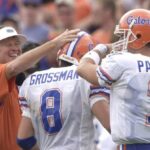
Steve Spurrier did the same at Florida. He won a Heisman Trophy there, returned as head coach, and built the program into a national power with multiple national titles.
When he left for South Carolina, he still understood what it meant to beat the Gators in their own stadium. His 2010 and 2014 wins in the Swamp were the only ones South Carolina had managed until Shane Beamer’s team did it in 2026.
After he retired from coaching, Spurrier came back to Gainesville as an athletic ambassador. He has an office in the stadium he named the Swamp and the field is now named after him.
He shows up for the Gators everyday and talks about the Swamp as home. These Hall of Fame coaches define what a rivalry should look like, and they instilled those traditional values of hard work and perseverance in their players.
Most coaches do not stay that long or return that way. Most players do not grow up dreaming of one school, put in the work, and stay for four years even when the money or the snaps are better somewhere else. The old model still exists in pockets, but it is no longer the default.
Rivalries are not disappearing. Georgia and Florida will still draw a crowd in Atlanta, and the fans who have followed the series for decades will still care about the result.
What is changing is the number of people on the field and on the staff who treat the game as part of a larger story rather than a single Saturday and a contract year.
Vince Dooley and Steve Spurrier still show what the traditional version looks like.
Online

Radio/Podcasts