MLB
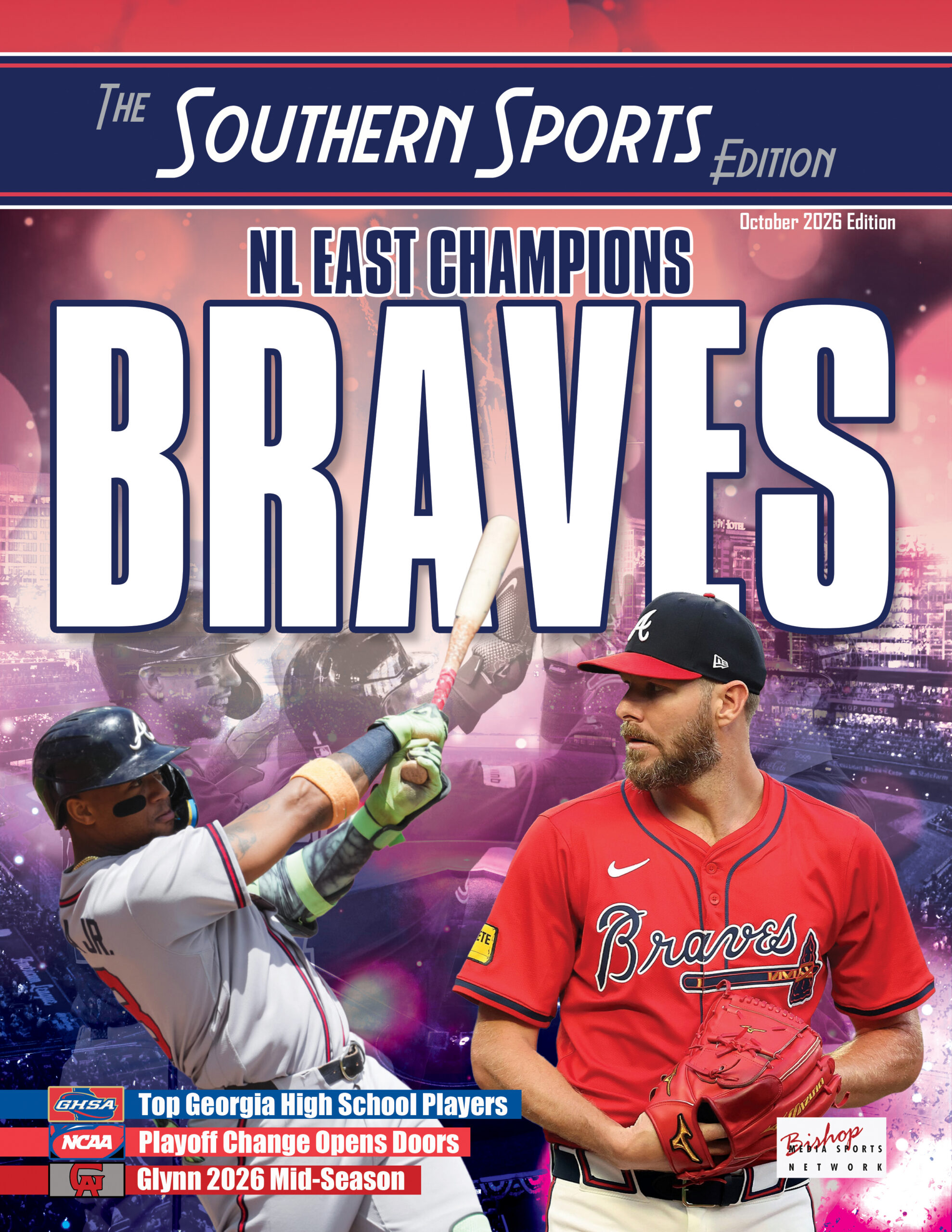
How The Atlanta Braves Won The NL East



 By: Colin Lacy
TheSouthernSportsEdition.com news services
Has the Atlanta Braves season in 2026 been flawless? No. That being said however, most teams in baseball would trade their seasons with the Bravos in a heartbeat.
When you factor in all of the adversity that seemed to be never ending for the franchise, the season has been almost unbelievable.
Think back to the middle of February. Spring training is supposed to be the time of unrealistic optimism, but for Atlanta, it was a time of blow after blow.
Just when camp was beginning, the Braves learned that Jurickson Profar was popped for the second time for the league’s performance enhancing drugs policy and would miss the entire season.
Just days later, Atlanta learned that pitchers Joe Jiminez, Spencer Schwellenbach, Spence Strider all were hit with the injury bug.
Throughout the season there has been numerous impact injuries with AJ Smith-Shawver, Bryce Elder, Strider…again, Reynaldo Lopez just to name a few.
Through all of the injury bugs (almost felt like an infestation), the Braves sat atop the NL East virtually from opening day. The lead ballooned to as many as 10 ½ games in May but had the division at an arm’s length the entire back half of the regular season and wrapped up their seventh NL East title in the last nine years with a September 20th win over the Astros in Houston.
How did the Braves overcome everything? The old adage of “everyone has to deal with injuries at some point” is true, but the Braves felt like it was a decade worth in one season.
To me, it starts at the top. First year manager Walt Weiss should be heavily in the conversation for Manager of the Year award and was the perfect person in order to keep this team on the same page.
Weiss has shown he has been the perfect combination of old school baseball mind, and the willingness to embrace the new school additions to the game.
While the household names of Matt Olson, Drake Baldwin, and Ronald Acuna Jr (when he’s been healthy), have done their parts to get the Braves to the promise land of the postseason, it’s been the unsung heroes for the Bravos that have made this season possible.
Names like Mauricio Dubon who have done a little bit of everything for Atlanta, Mike Yastremski, Tyler Mahle and others have raised their standard to a new level in 2026 to propel Atlanta to where they wanted to be.
Nobody embodies this more than Martin Perez. How fitting was it that Perez started the game that clinched the NL East title for the Braves.
Perez was a non-roster invitee to Spring Training then was designated for assignment by the club on April 12th.
Yet not only was it his Sunday September 20th start that secured the division title for the Braves, a Perez start really kickstarted the pitching resurgence down the back stretch.
Atlanta broke into the month of August with a spot start for Martin Perez that found out he was starting about an hour and a half before first pitch. How did it kickstart something?
Perez took a no-hitter into the 7th inning. While I understand that is just one of 162, that is what really started a stretch of impressive starting pitching for Atlanta.
The Braves were plagued by borderline horrendous starting pitching for about a month, but the strong Perez open sparked the pitching staff that was bolstered by the semi-unknown Tyler Mahle at the trade deadline.
While there have been blips on the year for the Braves, they have continued to overcome, continued to fight for the clubhouse, and will enter the postseason as the 3-seed and have to play in the opening round, but who woulda thought that the postseason was in the cards for the Braves after hit after hit (and not in the good way) they have endured thru the season.
Georgia Well-Represented In MLB All-Star Game
 By: Joseph Stuckey
TheSouthernSportsEdition.com news services
The 96th Major League Baseball All-Star Game is set to take place Tuesday, July 14th at Citizens Bank Park in Philadelphia, Pennsylvania. It was announced several years ago that the game would take place in Philadelphia in conjunction with the celebration of America’s 250th birthday.
This year is just like many others, with the All-Star rosters loaded with players from the baseball hotbed of the state of Georgia.
To start on the American League side is former Appling County standout and current Minnesota Twin Byron Buxton.
This is his 3rd All-Star Game selection (2022, 2025, 2026) and is slated to be a starter for the American League. Heading into the All-Star break, he has a .271 batting average and is tied for 6th in home runs.
Next representing the Toronto Blue Jays is Dylan Cease from Milton, Georgia. He has a 2.56 ERA this season, along with the second most strikeouts with 148. This is his first All-Star Game.
C.J. Abrams from Alpharetta, Georgia, will be starting for the National League, representing the Washington Nationals. He already has 20 home runs and 67 RBIs on the season. This is his second All-Star Game (2024 & 2026).
Brandon Marsh is from Buford, Georgia, and will be starting for the National League from the hometown Philadelphia Phillies in his first All-Star appearance. He is batting over .300 and has 15 home runs on the season.
The St. Louis Cardinals’ young superstar Jordan Walker will be representing the National League and will be participating in Monday night’s Home Run Derby. He is from Stone Mountain, Georgia, and this is his first All-Star appearance.
There are also several representatives from the Atlanta Braves making the trip to the always hostile city of brotherly love.
The Braves and Phillies are arch-rivals, and one can assume the local fans may not show the Braves All-Star selections much love during their time in town.
We will start with their young superstar catcher and reigning National League Rookie of the Year, Drake Baldwin, who has had a very solid season so far and ranks in the top 75 in average, home runs, RBIs, and OPS. This is his first All-Star appearance.
Next is veteran Ozzie Albies, who will be attending his 4th All-Star Game (2018, 2021, 2023, 2026). He also has a near .300 batting average and 14 home runs on the season.
Reigning National League Cy Young Award winner Chris Sale will also be making the trip to Philadelphia. He has a 2.27 ERA and 112 strikeouts on the season. This will be his 10th All-Star Game appearance (2012-2018, 2024-2026).
Next is relief pitcher Raisel Iglesias, who has 19 saves on the season. He also has a 2.30 ERA and a 1.12 WHIP. This is his first All-Star appearance.
Finally, Parkview product Matt Olson, who will be headed to his 4th All-Star Game (2021, 2023, 2025, 2026). He is currently tied for 6th in home runs with 25 and has a near .300 batting average.
As stated above, Georgia will be well represented in the City of Brotherly Love on Tuesday, July 14th.
Give Him A Raise?

 By: Capers Childs
TheSouthernSportsEdition.com news services
Every time Ronald Acuña Jr. steps to the plate, Braves fans are reminded that Atlanta may have one of the best deals in baseball. He’s one of baseball’s biggest stars, and he can change a game with just one swing or one stolen base.
However, injuries have repeatedly threatened his career. And the question remains: Should the Braves pay him more despite the risks?
Ronald Acuña Jr. is a star outfielder for the Braves. He made his MLB debut in 2018 and quickly established himself as one of the most talked about players in the sport.
He is best known as the only player in baseball history to hit more than 40 home runs and steal more than 70 bases in a single season.
Acuña is also a five-time All-Star, a three-time Silver Slugger Award winner, and the 2018 National League Rookie of the Year. His power, speed, and athleticism make him a rare talent that few players are able to match.
Acuña’s impact goes far beyond statistics. Whenever he is in the lineup, the Braves have a greater chance of winning.
Fans enjoy watching him play, and his jersey is one of the most recognizable in baseball. As the face of the franchise, he has become a huge part of the Braves’ success over the past several seasons.
Players who can influence games like this are difficult to replace, making Acuña one of the organization’s most valuable assets.
However, a major risk of keeping Acuña on the team is his injury proneness. In both 2021 and 2024, he tore his ACL and that forced him to miss significant playing time.
An injury like this can affect a player’s speed, agility, and overall athleticism, which is detrimental to someone whose game relies heavily on his quickness and explosiveness.
Just as Acuña seemed unstoppable, another injury would strike, raising questions about his future durability. Because of this, some people argue that giving him a larger contract could be a gamble.
Still, elite players are rare, and Acuña has consistently shown that he can overcome adversity. After recovering from his first ACL injury, he returned to have one of the greatest seasons in baseball history and won the National League MVP Award.
His ability to bounce back demonstrates his talent, his determination and work ethic.
The Braves know exactly what kind of player and teammate they have in Acuña, which makes investing in him less risky than taking a chance on an unknown player.
Injuries may always be part of Ronald Acuña Jr.’s story. But when he is on the field, few players can match his talent, energy, or influence on a game.
For the Braves, paying Acuña more would not simply reward past success…it would be an investment in the future of the franchise and the player who has become its face.
Byron Buxton Coming Home To Atlanta Braves?
By: Joseph Stuckey
TheSouthernSportsEdition.com news services
Former Appling County Pirate Byron Buxton has really been making a splash with the Minnesota Twins in recent years.
This season, as of 6/23, he has a .275 batting average and is 3rd in home runs with 25. He is making a strong case to represent the Twins and the American League in the All-Star Game in Philadelphia on July 14th.
The Baxley native was drafted by the Twins as the 2nd overall pick in the 2012 MLB draft and made his MLB debut for them on June 14th, 2015.
He has played his entire career for Minnesota and has established himself as one of the best players in baseball. He is arguably a top-5 outfielder who not only has a .300+ on-base percentage but should also eclipse the 200 home run mark before the end of the 2026 season.
Many locals consider him one of the top players ever to come out of South Georgia, alongside players like Buster Posey and Adam Wainwright.
He has also won a Gold Glove Award (2017) and a Silver Slugger Award (2025). If he were to make the All-Star Game this July in Philadelphia, it would be his 3rd appearance (2022 and 2025).
Buxton truly has become the face of the franchise for the Minnesota Twins; however, there are a lot of news articles and speculation that he could be headed back home to Georgia shortly.
Buxton is 32 years old, and it is highly unlikely the Minnesota Twins will make a World Series run anytime soon, so if Buxton has his eyes set on the World Series trophy, it may have to happen in another uniform.
Even though the Twins could go on a spending spree to build around Buxton, that is also highly unlikely. The big key to this is for Buxton to waive his no-trade clause; many baseball insiders have speculated for years that the team he may be willing to do this for is in his home state of Georgia.
The Atlanta Braves are considered to be a title contender this year and would love to upgrade their outfield before the postseason push. Even though the Braves should get injury-prone superstar Ronald Acuna Jr. back shortly, Buxton would make a fine addition to the Braves’ star-studded lineup.
The Braves have built a comfortable lead on the Phillies in the NL East and have the second-best record in baseball, only trailing the Los Angeles Dodgers.
In most people’s minds, things would have to go really badly for the Braves to lose the National League East division title, let alone miss the playoffs.
Meanwhile, the Minnesota Twins have a sub-.500 record and can only hope to squeak into the playoffs with a Wild-Card berth at this point.
So, as I mentioned above, if the Baxley native has his eyes set on the World Series trophy, he may not want to look too far from home.
Does Skubal To Braves Make Sense?
By: Colin Lacy
TheSouthernSportsEdition.com news services
As summer starts to run the thermostat up a couple degrees each day, another element begins to heat up as well…The MLB Trade Market.
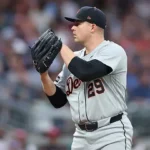
One name that keeps being brought up is the back-to-back reigning Cy Young Award Winner in Terik Skubal. While Skubal has been on the 15-day Injured List since the start of May with “Loose bodies in his left elbow” Skubal’s name is still the top target available in the trade market in 2026.
While there is a hefty portion of Braves Country that scoff at the notion of the Braves throwing their hat in contention for the prized left-hander and think “just another year we’re in the discussion, but no move,” this year may be the year that the blockbuster trade calls Atlanta home.
Skubal has been a Tiger his whole career since being the 9th round selection by Detroit in 2018 out of Seattle University.
The lefty made his MLB Debut about 2 years later in 2020 with 7 starts and 8 appearances with the big club, and the numbers have improved ever since.
Ever since 2023, Skubal hasn’t had an ERA above a 3.00 for the last 4 seasons. The 2024 and 2025 AL Cy Young Award Winner, recorded the most strikeouts in the AL in 2024 and 2nd most Ks in the AL last season in 2025.
So why now? Why would the Braves be the prime landing spot for the 29-year-old south paw?
One of the big reasons is when you look at all of the moves that Alex Anthopolous has made the last 4-5 years to lock up fixture pieces to long-term extensions, there are very few open spots in the lineup and defensive positions, so pitching is one of the few areas for opportunities.
Shortstop is the only position that would be up for grabs after 2027 if the current landscape for the Braves holds, and the only other contract that expires before 2029 is Ozzie Albies who comes to the end of his extension in 2028.
So not only is there not a ton of space to go and get another bat to bolster this already stout lineup, but it also has a backlog of talent in the minor leagues that is appealing to other teams (including the Tigers).
Cam Caminiti and JR Ritchie seem to be the prize picks for the Braves minor league organization but position players like Tate Southisene and Alex Lodise are young (19 & 22 respectively), but profile to have huge upsides down the line.
Alex Anthopolous has shown his willingness to part with young minor league pieces in order to bring in “right now” talent to win a World Championship and Skubal could be the next piece in this.
Now you may be asking “Why would the Braves go after someone that’s on the injured list right now?” Reports have stated that Skubal would start his rehab appearance beginning this weekend and could rejoin the big club after just one rehab start with High-A Western Michigan, so he is close to his return.
No doubt the price will be high. Skubal signed a 1 year, $32 million contract prior to this season, but I believe it could be worth it to not only have Skubal the rest of the season, but to sign him for a 3–4-year deal in addition to in order to bolster the already dangerous rotation for the next few years.
Chris Sale is 37, and has the club option throughout the 2028 season, but after that you’re probably looking for someone to replace the top of your rotation, and what better place to look than right down the line that’s already in place.
What Ronald Acunas Latest Injuries Means For Atlanta Braves Long Term?
 By: Michael Spiers
TheSouthernSportsEdition.com news services
There is a certain moment Braves fans have come to recognize, and unfortunately, it played out again over the weekend.
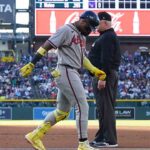
Ronald Acuña Jr. pulling up on his way down the first base line brought a familiar wave of concern, the kind that settles in quickly when a player of his caliber grabs at a leg and walks off the field.
The reaction was understandable. This is a player whose career has already been interrupted by multiple lower body injuries, and any sign of trouble in that area feels magnified.
The good news, though, is that this time it appears to be as minor as it could be.
Acuña has been diagnosed with a Grade 1 hamstring strain, the least severe version of the injury, and while it will require a stint on the injured list, the expectation is that he could return within a matter of weeks.
Even so, there is no such thing as a simple injury when it comes to Acuña. His history makes it difficult to view any setback in isolation.
Every missed game carries a little more weight, not just because of what he means to the lineup, but because of what he represents to the organization and its long-term aspirations.
What makes this situation different is the position the Braves find themselves in as a team. Atlanta is not trying to stay afloat. The Braves have opened the season as the best team in baseball, with the top run differential in the league.
They have created early separation in the standings and have done so while already dealing with injuries on the pitching side. That context shifts the conversation from survival to sustainability.
Acuña’s absence will be felt, regardless of how long it lasts. He is not simply another productive bat in the lineup. He is the tone setter, the player who can change the course of a game with one swing, one stolen base, or one burst of energy that lifts the entire team.
Even in a season when his traditional numbers have not fully taken off, the underlying metrics show he remains an elite presence at the plate.
The challenge now is not to replace him, because that is not realistic. Instead, the Braves must absorb the loss collectively.
That responsibility spreads across the roster, from the outfield rotation to the middle of the order.
Players like Michael Harris II become even more important, and others, including Austin Riley, find themselves under a brighter spotlight as the team looks for steady production.
Moments like this tend to reveal the true makeup of a team. The Braves have built a reputation for their ability to withstand adversity, often finding ways to maintain momentum despite injuries to key players. That resilience has become part of their identity, but the expectations surrounding this team have changed.
This is no longer a group trying to prove it belongs. This is a team expected to contend deep into October.
That expectation raises the stakes, but it does not require panic. Atlanta has the depth and balance to navigate a short-term absence from its biggest star.
It may mean a slight shift in approach, whether that involves manufacturing runs, leaning more heavily on pitching, or asking different players to step into larger roles.
In the larger picture, this stretch without Acuña should not define the Braves’ season. If anything, it presents an opportunity to reinforce what has already made them successful.
A team built for the long haul must be able to endure moments like this without losing its footing.
Ultimately, the focus remains on where this team is headed. The goal is not to dominate early, but to be at full strength when it matters most.
If Acuña returns healthy and the Braves continue to perform at a high level in his absence, this injury may become just a brief interruption in what still has the potential to be a special season.
I Am Iron Man
By: Michael Spiers
TheSouthernSportsEdition.com news services
In today’s sports world, we hear a lot about rest days, fatigue management, and carefully monitored workloads. Teams track every swing, every step, and every strain on a player’s body.
And then there’s Matt Olson, who seems to live by a much simpler philosophy.
Just show up and play.
The Atlanta Braves first baseman has quietly built one of the most impressive durability streaks in modern baseball. Olson has now played in more than 800 consecutive games, putting him among the longest streaks this century and creeping closer to the top ten all time.
For Braves fans, that number means something. Baseball is a grind. It’s 162 games spread over six months with very few days off.
Most players miss time somewhere along the way. Something usually pops up, like a sore hamstring, a tight back, a scheduled rest day. Olson just keeps playing.
He’s not chasing Cal Ripken Jr.’s legendary 2,632 game streak. No one realistically expects that record to fall anytime soon.
But Olson’s run still stands out because it’s happening in an era where teams are more cautious than ever about protecting players’ bodies.
And the thing Braves fans appreciate most is that Olson isn’t just showing up to keep the streak alive. He’s producing.
Everyone remembers the 54 home run season in 2023, when Olson crushed baseballs all summer and drove in 139 runs.
But even in the seasons around it, he’s been incredibly steady. Nearly 30 home runs. Around 100 RBIs. Extra base hits piling up all over the place. Night after night, the Braves know what they’re getting.
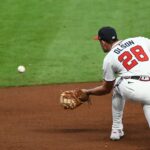
But Olson’s value goes way beyond the batter’s box. If you watch closely, you’ll notice how many throws he digs out of the dirt at first base. His size and reach turn bad throws into outs.
It’s the kind of thing that doesn’t always show up on highlight reels, but it saves runs and wins games over the course of a long season.
The funny part is Olson doesn’t make any of this sound complicated. He’s not the type who talks about extreme diets or crazy recovery routines. There’s no dramatic training method being marketed here. He just sticks to his routine, keeps himself in shape, and gets ready to play again the next day.
That mindset fits perfectly with the culture the Braves have built over the years. Atlanta has always valued players who take pride in being available. Austin Riley has been the same way, rarely missing games over the past several seasons.
The Braves lineup is usually the same group of guys every night, and that consistency matters. Baseball teams thrive on rhythm. Players get comfortable hitting around the same teammates, fielders learn each other’s tendencies, and the clubhouse builds trust.
Matt Olson has become one of the anchors of that environment and he understands what it means to wear a Braves uniform.
Olson grew up around Atlanta and watched the organization during its run of division titles when he was a kid. He knows the expectations that come with being part of this franchise.
And one of those expectations has always been simple. Be ready to play.
Eventually every streak comes to an end. Baseball has a way of reminding everyone that nothing lasts forever. But right now, Matt Olson keeps doing something that feels almost old school.
He shows up. He plays hard. And the next day, he does it all over again.
For us Braves fans, that kind of reliability is something worth appreciating every single night when the lineup card comes out.
Brawling Braves
By: Michael Spiers
TheSouthernSportsEdition.com news services
Baseball has changed a lot in recent years.
The pitch clock has sped things up, analytics are everywhere, and the league has made several rule changes to modernize the game.
But every once in a while, something happens that reminds you baseball still carries a little bit of its old-school edge.
That’s exactly what happened during the Atlanta Braves’ 7–2 win over the Los Angeles Angels when tensions between Braves pitcher Reynaldo López and Angels slugger Jorge Soler erupted into a bench-clearing fight.
The moment itself came in the fifth inning, but the frustration had clearly been building before that. Soler had already taken López deep earlier in the game with a home run, continuing a trend that has seen him have a lot of success against the Braves pitcher over the years.
Later in the game, Soler was hit by a pitch, which only added to the tension between the two.
Then came the pitch that set everything off.
López fired one high and inside that got dangerously close to Soler’s head. Whether it was intentional or just a pitch that got away from the pitcher is something people will debate, but from Soler’s point of view it was enough.
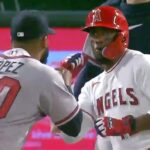
He immediately charged the mound, and within seconds punches were flying as both teams poured out of their dugouts.
For baseball fans, it was one of those chaotic moments that feels like it belongs in another era. Bench-clearing fights aren’t nearly as common as they used to be, but when they happen, they still grab everyone’s attention.
Part of what makes this one so interesting to me is the history involved.
Soler isn’t just another opposing player. He used to wear a Braves uniform and was a huge part of Atlanta’s championship run earlier in the decade.
López and Soler also share a past as former teammates. So, this wasn’t just two strangers going at it. There is a lot of familiarity between the players involved.
From Soler’s side, the situation probably felt suspicious. After already getting hit by a pitch earlier in the game, and then seeing another one come up near his head is the kind of thing that can flip a switch for a hitter.
In baseball, pitchers often work inside to keep hitters uncomfortable, but there’s always that thin line where it starts to look personal.
On the other hand, López said there was no intention behind the pitch. Pitchers miss their spots all the time, especially when facing someone who has historically hit them well.
Trying too hard to make the perfect pitch can sometimes lead to the exact kind of mistake that causes trouble.
In the middle of all the chaos was Braves manager Walt Weiss, who did something you don’t see every day.
Weiss jumped into the fray and actually tackled Soler to the ground in an effort to calm things down before someone got hurt. It was an unusual moment, but it probably helped keep the situation from getting even worse.
Despite the punches and the benches emptying, the fight ended without any serious injuries. Both players were tossed from the game, and eventually things settled down.
And once the dust cleared, the Braves took care of business on the scoreboard, finishing off a solid 7–2 win.
Moments like this always spark debate among fans. Some people think baseball needs to leave this kind of thing in the past. Others, like me, see it as proof that the game still has emotion and intensity behind it.
Either way, it was a reminder that even in today’s faster, more modern version of baseball, the competitive fire that has always defined the sport is still very much alive.
Sometimes, all it takes is one pitch that gets a little too close.
The Walking Dead
By: Michael Spiers
TheSouthernSportsEdition.com news services
For the past couple of seasons, it has felt like the Atlanta Braves have been playing two opponents at once: whoever is on the schedule and the relentless injury bug.
Unfortunately for Braves fans, the second opponent is already winning again in 2026, and the season hasn’t even officially begun.
Spring training is supposed to be a time for optimism. It is when teams fine tune their rosters, build momentum, and dream about October baseball.
Instead, the Braves once again find themselves scanning medical reports and patching together a pitching staff before Opening Day.
The latest blow came when Spencer Strider was scratched from his final spring start and placed on the injured list with an oblique strain.
Strider had shown encouraging signs this spring after working his way back from surgery and other injuries that affected the previous season.
Now he will begin the year on the shelf, leaving a major hole in the rotation before the first real pitch of the season is even thrown.
On its own, losing Strider would be a concern. He is one of the most dominant strikeout pitchers in baseball when healthy and a cornerstone of Atlanta’s pitching plans. But the real problem is that he’s just one name on a growing list.
Spencer Schwellenbach is already on the 60-day injured list after elbow surgery earlier this year. Hurston Waldrep is also sidelined following elbow surgery. Joey Wentz tore his ACL during a spring training game and will miss the entire season.
Suddenly the Braves are entering the season with a rotation that looks very different than what the front office envisioned when camp opened.
Chris Sale will almost certainly take the Opening Day start, but the rest of the rotation already feels like it is being assembled on the fly.
Reynaldo López is attempting to return after shoulder surgery and has shown a concerning drop in velocity during recent outings, though he insists it was simply mechanical issues.
Behind him are pitchers like Grant Holmes and Bryce Elder, with depth options such as José Suárez or Didier Fuentes potentially being forced into action earlier than expected.
It is the type of situation that makes Braves fans feel like they have seen this movie before. Over the last few seasons, Atlanta has had the talent to compete for championships, but injuries have repeatedly disrupted the plan. When one key player returns, another seems to go down.
The pitching staff in particular has been hit hard, and the cycle is continuing in frustratingly familiar fashion.
If you ask me, the thing that makes this year especially concerning is the timing.
These injuries are piling up before the regular season even begins. Teams expect to deal with injuries during a long 162 game season. They do not expect their roster to look like a triage unit in March.
Even the position player group has not been spared from setbacks.
Newly re-signed shortstop Ha Seong Kim is expected to miss time following finger tendon surgery, while catcher Sean Murphy is still recovering from hip surgery.
As we all know, Jurickson Profar will miss the entire season due to a PED suspension, and I hope he is never given the chance to put on a Braves jersey again.
Add it all together and the Braves are entering the year already short-handed.
The frustrating part is that this roster, when healthy, still looks like a legitimate contender. The core talent is there. The lineup can still produce runs and the pitching staff still has high end arms.
But baseball seasons are not played on paper, and championships rarely go to the team with the best roster on opening day. They go to the team that survives the grind of six months.
Right now, the Braves are already grinding before the real games even start.
Of course, there is still a long season ahead. Some of these injuries may turn out to be minor setbacks rather than long-term problems.
Pitchers will return. Young arms may step up. Baseball seasons often take strange and unpredictable turns. But the early signs are impossible to ignore.
For a team that has spent the last few years battling bad injury luck, the Braves appear to be picking up right where they left off.
Play Ball
By: Colin Lacy
TheSouthernSportsEdition.com news services
Just barely into March, and it already feels as if the Braves have been put through the ringer with unwelcome news as the organization works through spring training in North Port, Florida.
First it began with newly re-signed shortstop Ha-Seong Kim sustaining a finger injury in January that will keep him sidelined until May.
Soon after flocking to the Grapefruit League, right-handed pitchers Hurston Waldrep and Spencer Schwellenbach went down with injuries that required different arthroscopic surgeries on each. That will have two of the potential five man starting rotation sidelined until at least the summer.
Then as the squad was getting into the swing of things and the calendar turned to March, another bombshell was dropped when Jurickson Profar was popped with performance enhancements for the second consecutive season, and this time (barring an appeal from the MLB Player’s Association) Profar will miss the entirety of the 2026 season.
So, before questions are answered and roles are solidified from camp, Atlanta has lost two starting pitchers and a bat that was expected to be in the top four hitters of the lineup.
After you digest that predicament, I believe that puts the Braves safely as the team that has the most questions to answer going into the 2026 campaign. However, with all of those questions, there are some potential answers within arm’s reach.
After a disappointing season last year, the Braves still have a number of high-level pieces in the mix. It wouldn’t surprise anyone to have three All-Stars in the lineup with Ronald Acuna Jr, Austin Riley, and Drake Baldwin.
In addition, there are a number of players that have severely underachieved recently, and if Atlanta is able to get Ozzie Albies, Michael Harris II, and Matt Olson back to even close to their average career year, the Braves have an impressive lineup.
With that combination of talent and newly signed pieces of Mike Yastrzemski and Mauricio Dubon, the frontline of the Braves offense could be fine (albeit with very little depth coming from the bench).
On the pitching side, while there are many questions floating around the rotation, the firemen coming from the bullpen could be the best collection in baseball. The biggest addition of the offseason is signing Robert Suarez to bolster the back end of the bullpen in a big way.
Suarez has recorded 77 saves in his four-year big-league career including 40 in 2025 with San Diego. The Braves also re-signed Raisel Iglesias to return as the teams closer which puts Suarez in the 8th inning role.
Another bright spot for the Braves has been the early returns that have been spied around North Port with Spencer Strider getting back to normal.
Last season when Strider returned from injury, the velocity and hence the productivity was extremely down.
On the contrary, in spring training shows that Strider’s velo is mostly back (up to 97 already), which is an unbelievably encouraging site for Spencer who expects to slot into the #2 spot in the rotation behind Chris Sale. Reynaldo Lopez and Grant Holmes are expected to be at full force for the season and factor into the rotation in some fashion.
Then comes the last spot (or two) that will be up for grabs. Bryce Elder looks to be the front runner for the vacancy with Joey Wentz and Martin Perez trying to make a push to break camp with the club.
The Braves are an extremely difficult team to get a read on entering the season. On one hand, you could realistically make a case for the Braves winning 100 games and destined for the top of the NL East.
On the other hand, it feels like Atlanta is relying on the best-case scenario from here on out (which doesn’t follow the script for the Braves the past few years).
There is very little wiggle room on any front for this team at the present moment. With the Profar suspension freeing up between $15-18 million, options are dwindling for the beginning of the season for additions.
It feels as if the organization is confident with running the current selection out to open the year, then make moves around the deadline to bolster the club. I just hope they’re in a position for that to be able to make a difference.
Online
Radio/Podcasts