Statesboro Blue Devils 2026 Preview





 By: Colin Lacy
TheSouthernSportsEdition.com news services
Coming off a second-round appearance in the GHSA State Playoffs last season, Statesboro High has taken enormous steps forward each of past three years under Head Coach Matt Dobson and the Blue Devils’ staff.
2026 sets up to be more of the same with Statesboro looking to burst into a newly revamped region and make a deep run into the playoff field.
After a 2-2 start to the 2025 season last year, the Blue Devils went on a five-game winning streak with wins over Bradwell Institute, Lakeside, Brunswick, Evans and South Effingham.
Statesboro had hopes to win the region title up until the final week of the regular season last year with having to deal with a lot of adversity through the year.
A lot will be talked about with Beckham Jarrard (and rightfully so), but even when Jarrard missed multiple games with injury in the middle of the five-game win streak, the Blue Devils were able to continue to thrive.
Davis Harrison was able to take over and with contributions from Keon Childers, Gage Newsome, and other weapons.
While the roster continues to be littered with talent for Dobson, the main focus continues to be on Beckham Jarrard.
The now junior has had a busy offseason bouncing from some of the best college camps in the country and garnering well deserved attention from the top schools in the country just entering his junior campaign.
In two seasons for the Blue Devils, Jarrard has racked up over 2,800 passing yards, rushing for almost 700 more and scoring 28 combined touchdowns.
Jarrard is a phenomenal talent on the field, but to me what sets him apart as a next level talent is the mindset and dedication to, he has shown to the mental side of football.
We mentioned in a story from last season how Jarrard breaks down virtually every throw he makes (in a game and practice) on video with former NFL QB Coach Pat O’Hara.
While there are some questions that will be answered early in the season for “the Boro”, Matt Dobson and company believe that they have the answers to them.
Statesboro will have to find replacements for Keon Childers who was one of the best rushers and receivers in the region in the past few years along with Gage Newsome, the top receiver for the Blue Devils last year who both graduated after the 2025 season.
SHS will look to some returners to take a big step forward along with at least one transfer into the program.
Someone that has produced in a number of different roles for Statesboro already in his career but would be my pick to take a massive step for his senior year is Davis Harrison.
Harrison has worked as a receiver, quarterback (as we mentioned earlier), and now is listed on the roster as a tight end but is someone that is a leader in the squad that could really put up some big numbers this year.
The other player that I believe will have a massive year in his first year in a Blue Devil uniform is DJ Brooks.
Brooks transfers to Statesboro this year from cross-county rival Southeast Bulloch and looks to sure up the running back room for Statesboro with Keon Childers’ departure.
Brooks averaged over 6.0 yards per rush with a pair of touchdowns in limited action for Southeast Bulloch last year as a sophomore but is a physical player that can be a beautiful counter punch (and weapon for) to Jarrard.
Statesboro will try to improve on the 2nd round appearance last year that saw the final record sit at 8-4 and will be a force to be reckoned with in a much tougher region after the GHSA realignment.
Georgia Well-Represented In MLB All-Star Game

 By: Joseph Stuckey
TheSouthernSportsEdition.com news services
The 96th Major League Baseball All-Star Game is set to take place Tuesday, July 14th at Citizens Bank Park in Philadelphia, Pennsylvania. It was announced several years ago that the game would take place in Philadelphia in conjunction with the celebration of America’s 250th birthday.
This year is just like many others, with the All-Star rosters loaded with players from the baseball hotbed of the state of Georgia.
To start on the American League side is former Appling County standout and current Minnesota Twin Byron Buxton.
This is his 3rd All-Star Game selection (2022, 2025, 2026) and is slated to be a starter for the American League. Heading into the All-Star break, he has a .271 batting average and is tied for 6th in home runs.
Next representing the Toronto Blue Jays is Dylan Cease from Milton, Georgia. He has a 2.56 ERA this season, along with the second most strikeouts with 148. This is his first All-Star Game.
C.J. Abrams from Alpharetta, Georgia, will be starting for the National League, representing the Washington Nationals. He already has 20 home runs and 67 RBIs on the season. This is his second All-Star Game (2024 & 2026).
Brandon Marsh is from Buford, Georgia, and will be starting for the National League from the hometown Philadelphia Phillies in his first All-Star appearance. He is batting over .300 and has 15 home runs on the season.
The St. Louis Cardinals’ young superstar Jordan Walker will be representing the National League and will be participating in Monday night’s Home Run Derby. He is from Stone Mountain, Georgia, and this is his first All-Star appearance.
There are also several representatives from the Atlanta Braves making the trip to the always hostile city of brotherly love.
The Braves and Phillies are arch-rivals, and one can assume the local fans may not show the Braves All-Star selections much love during their time in town.
We will start with their young superstar catcher and reigning National League Rookie of the Year, Drake Baldwin, who has had a very solid season so far and ranks in the top 75 in average, home runs, RBIs, and OPS. This is his first All-Star appearance.
Next is veteran Ozzie Albies, who will be attending his 4th All-Star Game (2018, 2021, 2023, 2026). He also has a near .300 batting average and 14 home runs on the season.
Reigning National League Cy Young Award winner Chris Sale will also be making the trip to Philadelphia. He has a 2.27 ERA and 112 strikeouts on the season. This will be his 10th All-Star Game appearance (2012-2018, 2024-2026).
Next is relief pitcher Raisel Iglesias, who has 19 saves on the season. He also has a 2.30 ERA and a 1.12 WHIP. This is his first All-Star appearance.
Finally, Parkview product Matt Olson, who will be headed to his 4th All-Star Game (2021, 2023, 2025, 2026). He is currently tied for 6th in home runs with 25 and has a near .300 batting average.
As stated above, Georgia will be well represented in the City of Brotherly Love on Tuesday, July 14th.
Camden County Wildcats 2026 Preview
 By: Michael Spiers
TheSouthernSportsEdition.com news services
There is something different in the air around Chris Gilman Stadium.
Maybe it is the arrival of a new head coach. Maybe it is the return of August football in Kingsland. Or maybe it is simply the belief that Camden County football is ready to begin writing its next great chapter.
Whatever it is, the 2026 season feels important.
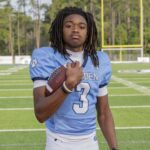
The Wildcats enter the year under first-year head coach Tucker Pruitt, a proven winner who brings a championship resume and a clear vision to Camden County.
Pruitt won big at Fitzgerald, captured a state championship, took teams deep into the playoffs, and spent last season leading Appling County to a region title.
Now, he steps into one of Georgia’s most tradition-rich programs with the task of restoring Camden to consistent statewide relevance.
That journey will not come with an easy schedule.
After a preseason scrimmage against Florida power The Bolles School on August 14, the Wildcats open the regular season at home against Brunswick on August 21. The Pirates went 9-3 last season and reached the playoffs before falling to Gainesville, giving Camden an immediate test against a strong coastal opponent.
One week later, Glynn Academy comes to Kingsland. The two programs have not met in several years, adding a little extra intrigue to a rivalry matchup that once carried plenty of familiarity. Glynn finished 6-5 last season, but records rarely matter much when old rivals get back together.
September will reveal even more about Camden’s toughness.
The Wildcats travel to Benedictine on September 4 to face a program that went 11-3 last season, won the Region 1-4A championship and came within one play of a state title, falling 42-39 to Creekside in the championship game. That matchup may be one of the best non-region measuring sticks on the entire schedule.
Camden then returns home for three straight games against Florida opponents. Amos P. Godby visits on September 11 after a 5-7 season in which it still finished second in its district. Ed White follows on September 18 after going 9-3 and winning its district. On September 25, Camden hosts West Broward, a team the Wildcats beat 32-13 last season, but one that finished 12-3 and should arrive looking for payback.
By the time Camden reaches its October 2 bye week, Pruitt and his staff should have a clear picture of where the Wildcats stand.
Then comes the gauntlet of play in the newly re-established Region 1-7A.
There may not be a tougher four-game stretch in Georgia high school football. Camden opens region play October 9 at Lowndes, last year’s region champion. The Vikings went 10-2 before falling to North Gwinnett in the second round.
Richmond Hill comes to Chris Gilman Stadium on October 16 after finishing 6-5 and reaching the playoffs. Then Camden travels to Valdosta on October 23 to face a Wildcats team that went 12-2, finished second in the region and reached the quarterfinals before losing to Buford.
The regular season closes October 30 at home against Colquitt County, another heavyweight that went 9-3 last season and advanced to the second round before falling to Grayson.
In other words, nothing will be handed to Camden County. But maybe that is exactly the point.
Pruitt has emphasized discipline, physicality, accountability and toughness since arriving in Kingsland. With veteran defensive coordinator Alan Rodemaker joining the staff and transfer quarterback Xavier Collins adding experience to the offense, the Wildcats have reasons for optimism.
The road back will be demanding, but Camden County has never been a program built on shortcuts. This is a place where expectations are earned under the lights, in the weight room and through the grind of Friday nights.
The 2026 season is more than a schedule. It is the beginning of a new era. And in Camden County, new eras still come with old expectations.
Brunswick High Pirates 2026 Preview
 By: Jason Bishop
TheSouthernSportsEdition.com news services
The Brunswick High Pirates had their 2025 season end at the hands of the Gainesville Red Elephants in the second round of the GHSA playoffs.
Last season ended in controversy as the Pirates and Red Elephants had the game called early due to a benches clearing brawl that made national headlines.
Despite the controversy BHS enters the 2026 season coming off of a 9-3 season and a region title.
They also come into 2026 as a team in transition. Gone are record-setting QB Grant Moore and 4-star TE Heze Kent; 2 vital cogs in the Pirates prolific offense from last year that bludgeoned defenses all season long.
Also gone is former Head Coach Garrett Grady who is now coaching in Douglas with the Coffee County Trojans.
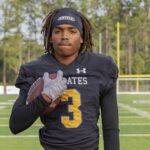
Enter Dr. Byron Slack to take over as the Pirates head man. Slack spent several years on the Camden County staff during the championship years and comes over from Cook County after spending 4 seasons as Head Coach with the Hornets.
Slack will make an emphasis on team discipline and bring out the best in the Pirates on defense; an area that has been inconsistent for the Pirates for over a decade.
Despite losing key cogs on offense BHS does return some key playmakers on offense. Most notably running backs Nigel Gardner, Josiah Gibbons and WR Waseem Murray.
Both Gardner and Gibbons rushed for over 1,000 yards and combined for almost 30 touchdowns last season.
Murray was the Pirates best playmaker in open space and was dangerous every time he got the ball in his hands. Murray had 700 all-purpose yards and 5 touchdowns.
At QB the Pirates will either have senior Keegan Walker or junior Eli Overton under center.
BHS will move up from 5A to 6A and play in Region 1-6A with Glynn Academy, Effingham, South Effingham, Bradwell Institute, Grovetown, Greenbriar and Lakeside.
Brunswick will kick off the season on August 21st against Camden ‘Between The Bricks’ at Glynn County Stadium.
The Pirates will take to the road the week after that to take on Groves. BHS gets a bye the following week and then return home in week 4 to take on national power Grayson at Glynn County Stadium.
Region play starts for the Pirates on September 18th against Grovetown up in Augusta.
BHS then hosts Greenbriar and then travels to Hinesville to square off with Bradwell on October 2nd.
Brunswick High will then take a bye to get ready for the City Championship game against the Glynn Academy Red Terrors on October 16. This game will go a long way in determining who will win the region.
Technically the Pirates will be the home team against Terrors and will be the first of three consecutive home games; the other two will be against South Effingham and Effingham.
Brunswick will close the regular season against Lakeside on the road in Augusta.
I am predicting the Pirates will be serious contenders to win the region. In my opinion who ever wins the City Championship Game will also hoist the region championship trophy at season’s end.
Bulloch Academy Gators 2026 Preview
By: Joseph Stuckey
TheSouthernSportsEdition.com news services
Recently, I was able to get my first glimpse of the 2026 Bulloch Academy Gators football team.
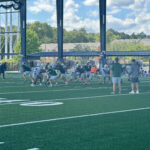
They met up with the Jenkins County War Eagles in a thud-style practice. So, my observations do have to be taken with a grain of salt, as a thud practice is padded, but tackles don’t get taken to the ground.
The Gators return a lot of impact players, not just from last season but also several who made an impact during the 2024 GIAA 4-A State Championship run.
The Gators have made 3 straight trips to the Elite Eight and beyond (2023: Final Four; 2024: state title; 2025: Elite Eight).
The 2027 class of athletes at Bulloch Academy has the potential to be the best in school history when it comes to players advancing to the collegiate level.
On the Offensive side, for the 3rd straight year, #6 Sam Hubbard is set to lead Mark Lefebvre’s Wing-T attack. Over the summer, Sam committed to play baseball for Georgia Southern after graduation.
Bulloch Academy always has an impressive offensive line, and this year looks to be no different, as Griff Sumner and Slaton Roberts look to lead the big guys up front in the trenches.
Also, along the O-line is senior Colin Grooms, who is very versatile and may serve as a tight end at times and rush the quarterback on defense as an edge.
When naming offensive weapons, you have to start with the versatile athleticism of #17 Rocco Reiss, who you will see play numerous positions throughout the season.
Then the receiving corps includes the very athletic Nick Eason Jr. and Georgia Southern commit Billy Crider.
#20 B.J. Smart looks to be the one who will take the most handoffs at running back; you will also see Maddox Lee and Connor Perry get involved on the offensive side of the ball.
On the flip side of the ball, Chris Kearson’s defense is anchored right up front on the defensive line by Kennesaw State commit Braylon Cone.
You will also see several other players rotated around on the D-line, including Bo Crider and then the aforementioned Colin Grooms coming off the edge.
At linebacker, one guy that really caught my eye was #9 Tate Williams, who will look to clean up what little gets by Cone and company.
In the secondary, the 2 cornerstones are J.B. Roach and Nick Eason Jr., who will look to defend opposing teams’ passing attacks.
As far as kickoffs and punting, it looks like it will be #16 Case Woodrum handling kickoffs, field goals, extra points, and punts.
There are also a few younger players I am interested in seeing develop over this season.
Quarterback Landon Mitchell looks to be the future starter after this season and has shown potential.
A few other players I look to make an impact are Jame Lee, Hunter Chance, and Camden Mager.
The expectations are high for this team as they head into the 2026 campaign. Many around Statesboro have State Championship aspirations, and this team definitely has the talent to make another deep run into the playoffs.
McIntosh County Academy Buccaneers 2026 Preview

By: Jason Bishop
TheSouthernSportsEdition.com news services
Coach Warren Bradley enters his 8th season as the McIntosh County Academy Buccaneers Head Coach in his second stint holding that position.
Bradley took over the Bucs program in 2019 and has stabilized MCA’s football ranks. Before the hiring of Bradley, the Bucs employed 5 different head coaches in 7 seasons.
Bradley has not only stabilized the program, but he also has re-vitalized winning habits into the Bucs program and turned MCA into a perennial playoff team.
In 2025 the Bucs made the playoffs for the again under Bradley. MCA has made the playoffs every season in Coach Bradley’s tenure in his second go-round.
Last season the Bucs finished 5-5 in the regular season and that was good enough to get into the playoffs as four seed. MCA finished the season overall at 5-6, losing in the first round of the GHSA playoffs to #1 seed Johnson County, 34-7.
MCA enters 2026 with high expectations as they are returning starting RB Earnest McIntosh for his senior season.
The Bucs also find themselves in a new region. Region 3-1A will consist of MCA, Portal, Montgomery County, Emanuel County Institute and Claxton. This region lines up far easier than the last two seasons for the Bucs. While the region added Montgomery County, gone are the powerhouses of Metter and Screven County.
The Bucs will kick off the 2026 campaign at home at The Ship in Darien against Long County on August 21st.
Week two will also be at home against former region foe Charlton County.
The Buccaneers will take to the road in week 3 against Georgia Military and then in week 4 pay a visit to Liberty County to take on the Panthers.
MCA will return home on September 18th against Jeff Davis and then will host Screven County the following week at The Ship.
After a bye the following week region play kicks off for the Bucs against ECI in Darien
The Buccaneers return to the road on October 23rd against the Claxton Tigers.
MCA returns home on Halloween weekend to take on Montgomery County and then will wrap up the regular season on the road against the Portal Panthers.
MCA is a legit contender to win the region in 2026.
Keep in mind the GHSA will be transitioning away from ranking teams according to how they finished in their region and instead will use power rankings rank playoff participants. What this does is place huge importance on non-region tilts as well as the region games as far as seeding.
I am picking MCA to finish the 2026 season with a 9-1 record and to win Region 3-1A.
Worst case for the Bucs, by my estimation, will be an 8-2 mark finishing second in the region.
The Buccaneers have not made a deep run in the playoffs in some time. I think this year that changes. I believe MCA is definitely an Elite 8 team, at worst, in 2026.
Valdosta Wildcats’ Dynamic Duo

 By: Ron Reagin
TheSouthernSportsEdition.com news services
Local restaurant and hangout, Big Nick’s was recently packed as friends, family, teammates, and coaches filled every seat and it was standing room only.
Valdosta High running backs Deron Foster and Marquis Fennell announced their college decisions in front of Valdosta’s faithful fans.
Foster, the every-down back, will head west to Oregon State. Fennell, the explosive playmaker, utility back, will take his talents to Stanford.
Before they head west, they will try to top last year’s performance for the Wildcats. The duo accounted for 64% of all touchdowns last season and 57% of total yards as juniors with both averaging over 100 yards per game in what was a tremendous offense top to bottom.
Deron Foster chose the Beavers over offers from Stanford, Liberty, and Georgia State. The decision came down to the opportunity to play for associate head coach and running backs coach Lee Marks, who has a strong track record developing backs, and new head coach JaMarcus Shephard’s vision.
Foster rushed for 1,329 yards and 15 touchdowns last season, adding 148 receiving yards and two more scores. He posted nine 100-yard rushing games and sees himself stepping in early in Corvallis.
Marquis Fennell had a long list of suitors, including Colorado, Florida State, and Georgia Tech, but chose Stanford for the combination of football opportunity and elite academics. His mother, Leslie, played a big role in emphasizing the long-term value of the education.
Fennell had a monster junior season with 2,505 all-purpose yards, including 1,480 rushing yards and 23 touchdowns on the ground, plus 764 receiving yards and 10 scores through the air.
He expects to be a versatile running back who can impact games from the backfield or out wide to present multiple problems for opposing defense.
Both backs rushed for over 1,000 yards. The last time the Wildcats had 2 rushers over 1,000 yards, was back in 1988 with Isaac Cesar and James Roberts.
Head coach Shelton Felton praised both as great players and even better young men and leaders.
“You’ve got Live at 5 (Foster), you’ve got Category 4 (Fennell),” Felton said. “They are really great kids on and off the field… I’m blessed to have those two as part of my program.”
Both players expressed relief at getting their commitments done early, though Foster admitted he’s not quite ready to move on from the Friday night lights. “There’s nothing like high school ball,” he said.
With unfinished business after falling just short of a state title, both are motivated for a bigger senior season in 2026.
“We all know we have unfinished business,” Fennell said.
This commitment night caps a special chapter for Valdosta’s backfield while setting the stage for what should be another strong year for the running back duo and the Wildcats.
Buford Wolves 2026 Preview
 By: Kenneth Harrison
TheSouthernSportsEdition.com news services
Buford is one of the most elite football programs in the state of Georgia and possibly the nation. They have won 15 state championships, with only one coming before the year 2001.
They also have multiple state championships in baseball, boys’ basketball, girls’ basketball, gymnastics, softball, volleyball, wrestling and girls’ track.
Last season they opened Philip Beard Stadium. It has a seating capacity of 10,000 at a cost of $62 million.
The Wolves finished last season going 15-0 and winning the state championship. They were also the consensus national champions.
They have a lot of talent on the team. Junior Edge Luke Nabors (6’4, 210 lbs.) is a four-star recruit. He has over thirty offers from teams like Georgia, Ohio State, Notre Dame, South Carolina, Florida State, Penn State, Texas, Clemson, Oregon, Indiana and Tennessee.
Junior WR Seven Rashad (6’5, 175 lbs.) is a three-star recruit.
Senior LB Ethan Hauser (6’3, 200 lbs.) is a three-star recruit that’s committed to Vanderbilt. They have another three-star LB, Brayden Watson who’s committed to Michigan.
Senior QB DJ Hunter (6’1, 190 lbs.) is taking over as the starter in 2026. He was the backup to Dayton Raiola (Oregon). Hunter is a dual-threat so he should be a new weapon for the offense. He’s a three-star player and he’s committed to James Madison.
Seniors CB Silas Nuckles (6’0, 175 lbs.) and S Jameer Cantrell (5’10, 175 lbs.) are also three-star recruits. Cantrell is committed to Arkansas.
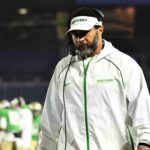
Bryant Appling has been the head coach at Buford since 2019. He has a record of 90-8 and he’s the first coach in GHSA history to win state titles in his first three seasons (2019-21).
Buford graduated 21 players from last seasons national championship team. They are expected to reload the talent but I think that will be tougher than expected. They are the #1 team in the 7A preseason poll.
Their schedule is listed below:
8/22: vs. Gainesville
9/4: @ Mallard Creek (North Carolina)
9/11: vs. Miami Central (Miami, FL)
9/18: @ #3 Grayson
9/25: @ Seckinger
10/9: @ Dacula
10/16: vs. Collins Hill
10/23: @ Mill Creek
10/30: vs. Discovery
11/6: vs. Central Gwinnett
They have a few tough non-region games to start the season.
Week 1 is a nationally televised game on ESPN against Gainesville. The Red Elephants advanced to the 5A state championship last season. They have moved up to 6A this season.
Former Grayson head coach Santavious Bryant has taken over the same position in Gainesville. He was 37-5 in three seasons at Grayson and he won a state championship in 2024. They have one of the most talented rosters in the state.
Miami Central in Week 2 will also be a tough game. The Rockets were 10-2 in 2025. South Florida is known for speed and they have very good players.
Week 4 at #3 Grayson will be the toughest test of the regular season. The Rams expected to repeat as state champions last year but lost in the state quarterfinals.
After this game, the rest of the schedule is easy. Seckinger (Buford, GA) is the newest school in Gwinnett County. They opened in August 2022 and they made their first playoff appearance last season.
Region 8-AAAAAAA play begins October 9th at Dacula. Mill Creek is the second-best team in the region but I don’t think they can challenge Buford.
I expect Buford to lose two regular season games. At worst they will be 7-3 if they lose to Gainesville, Miami Central and Grayson. I think they’ll be tough to beat in the playoffs.
Grayson Rams 2026 Preview
By: Kenneth Harrison
TheSouthernSportsEdition.com news services
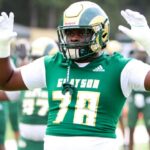
The GHSA preseason football rankings have been released. Grayson is ranked #3 in class 7A.
The Rams went 14-1 in 2024 and won the 6A state championship. They started 2025 ranked #1 and held that spot for most of the season. Their only loss came in the state quarterfinals, 34-14 to Carrolton.
Head coach Santavious Bryant led the Rams to a 37-5 record the last three seasons. He left to take over as the head coach at Gainesville after the season.
Grayson promoted defensive coordinator Greg Carswell to head coach.
“For a first-time head coach, this is a dream come true,” Carswell said. “I thank God for preparing me the six seasons I’ve had the opportunity to coach here on and off. I’m honored to be chosen to lead these young men. I love these kids so much and will take pride in pushing this program to the pinnacle of high school sports.”
They are coming off a 12-1 season, so we do not expect much to change with a new head coach.
“The standard at Grayson will never change,” Carswell said. “We have a relentless effort and approach to reach the highest level of success this program can reach. We will always play hard physical and dominate the trenches, but the fire, passion and energy that will exude from a coach Carswell team will be unmatched.”
They still have plenty of talent on the roster. Senior IOL Jordan Agbanoma is a four-star recruit and the tenth ranked player in the state for the class of 2027. Agbanoma is 6’2 and 300 pounds. He’s currently committed to Nebraska.
His teammate, KD Jones is a three-star IOL that is also committed to the Cornhuskers. Jones is 6’5, 303 pounds.
Junior Edge Elijah Tillman is 6’7, 215 pounds. He’s also a four-star recruit but that’s based more on his measurables. He should be a key contributor in 2026.
Senior CB Preston Glasco (6’2, 190 lbs.) is a three-star recruit and he’s committed to UConn.
Senior S Jalen Welch (6’3, 190 lbs.) is also a three-star recruit and he’s committed to Syracuse.
Senior DL Waylon Wooten (6’2, 300 lbs.) is committed to Georgia.
Senior QB David “Deuce” Smith (5’11, 190 lbs.) is a dual-threat. He became the starter after four-star QB Travis Burgess was injured last season. He passed for 2,355 yards and 24 touchdowns.
The season begins August 12th in the Corky Kell/Dave Hunter Classic at Mercedes-Benz Stadium (Atlanta) against North Gwinnett. The Bulldogs were 12-2 last season and they made it to the state semifinals.
Six of Grayson’s first seven games are on the road. Week 2 they travel to Sandy Creek. The Patriots have moved up to 4A but they were undefeated (15-0) and won the 3A state championship in 2025.
After a bye week the next game is at Langston Hughes. The Panthers are one of the top teams in 5A. They were 12-1 last season and they have a lot of talent.
On September 11th they travel to Brunswick. The Pirates were 9-3 last year and they have made the move to 6A this season.
The first home game of the season is the following week against #1 Buford. The Wolves were undefeated and won the 6A state title in 2025.
They face Carol City (Miami) October 2nd.
Region play begins after that with games @Archer, @Newton, South Gwinnett and Rockdale County.
I think Grayson will finish the regular season with a couple of losses but they will be tough to beat in the playoffs.
Valdosta Wildcats 2026 Preview
By: Ron Reagin
TheSouthernSportsEdition.com news services
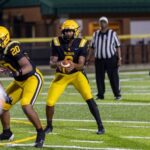
Few things matter more in the new Post-Season Ranking Formula (PSRF) era than building the right schedule.
In the Valdosta Wildcats’ case, wins also carry more meaning as they are racing to be the first high school program to reach 1,000 wins.
Valdosta’s 2026 slate looks like a smart, strategic effort designed for this new system to maximize wins both in the regular season and postseason.
Here is the Wildcats’ confirmed 2026 schedule:
Aug. 7: Worth County (Scrimmage)
Aug. 21: @ Jones County
Aug. 28: vs. Howard
Sept. 4: vs. Bradwell Institute
Sept. 11: vs. KIPP Atlanta Collegiate (Homecoming)
Sept. 25: vs. Stockbridge
Oct. 2: vs. Booker High (Sarasota, FL)
Oct. 16: @ Colquitt County
Oct. 23: vs. Camden County
Oct. 30: @ Lowndes (Winnersville Classic)
Nov. 6: vs. Richmond Hill (Senior Night)
The Wildcats will play six home games, three road games, and four tough Region 1-AAAAAAA contests.
Non-Region Breakdown: Valdosta’s non-region schedule looks well-balanced.
The road trip opener to Jones County and home games against Stockbridge and Booker High (Sarasota, FL) provide quality competition that should boost both OWP and OOWP.
Booker, a consistent playoff team in Florida, could prove to be a strong addition.
The home games against Howard, Bradwell Institute, and KIPP Atlanta Collegiate are winnable matchups that should help build the win column without being too soft.
But as we all know too well, you can never overlook an opponent that has nothing to lose. Those types of teams historically pull out all the stops to beat Valdosta.
The Region 1 Gauntlet: Region 1-AAAAAAA remains one of Georgia’s strongest regions year after year.
The late-season stretch: @ Colquitt County, vs. Camden County, @ Lowndes, and vs. Richmond Hill will be critical.
In a small five-team region, every result carries heavy weight under PSRF. Avoiding a late-season loss will be critical in maintaining a strong playoff seed.
From the unbiased broadcast booth, a 9-1 record with three region wins feels like the most realistic strong outcome.
That should position Valdosta comfortably inside the top 20 statewide with a favorable seed. However, most Valdosta fans will not be happy with anything but a championship.
The expectation to win, especially after a region championship and semifinal run last season, is even higher this year.
Strengths: Six home games help accumulate wins for the 35% winning percentage component.
Quality non-region opponents (especially Booker, Stockbridge, and Jones County) combined with a tough region give Valdosta a legitimate strength-of-schedule advantage without sacrificing winnable games.
Risks: As we’ve alluded to with the new PSRF, late-season swings are very real. The final four games are all region contests. A tough stretch in October and early November could drop the Wildcats several spots in the rankings even with a winning record. This risk is one that all Region 1 teams will be trying to avoid.
Overall, Valdosta’s 2026 schedule appears well-constructed for the PSRF era. It balances winnable home games with enough quality competition to reward a strong season.
Valdosta fans should be excited, as this slate gives the Wildcats a legitimate chance at a high seed and deep playoff run.