Georgia Bulldogs
The Baseball Celebration Epidemic



 By: Ron Reagin
TheSouthernSportsEdition.com news services
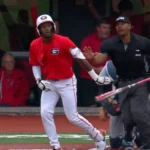
In the heat of the Athens Regional final, University of Georgia third baseman Tre Phelps delivered a massive two-run home run that flipped the script against Liberty in a must-win game.
It was definitely a huge momentum swing. But as Phelps rounded the bases, what should have been a moment of pure athletic accomplishment turned into controversy.
Phelps gestured toward the Liberty dugout on the first-base side and, after rounding first, waved again toward the first baseman and other players as he rounded the bases.
Umpire Javerro January saw it as taunting and unsportsmanlike conduct directed at an opponent. The crew promptly ejected the junior standout under NCAA Baseball Rule 2.26.f.
Head coach Wes Johnson, fiercely defending his player, was tossed as well. Georgia won the game 6-1 and advanced, but Phelps sat out Game 1 of the Super Regional.
The Call, the Debate, and the Rulebook: Social media exploded. Some called it a soft ejection, typical of over-sensitive umpires trying to kill emotion in today’s game.
Others praised the enforcement, arguing that bat flips, chest-thumping, and directed gestures cross into disrespect that has no place in baseball.
Coach Johnson later explained that Phelps was waving to family in the stands, but the umps interpreted the actions as taunting the opposition.
Most found that explanation laughable from Johnson. However, he had to do something, and trying to justify taunting is a tough spot for him. All of this could have been avoided if he had prepared his team for success.
The NCAA has drawn a clear line here. Rule 2.26 and related unsportsmanlike conduct provisions (including 5-17 in the rulebook) prohibit actions designed to intimidate, distract, or show poor sportsmanship toward opponents or umpires.
A player (non-pitcher) ejected gets an automatic one-game suspension on top of the ejection. The goal? Keep the game moving cleanly without escalating into benches-clearing brawls or turning every big play into a personal showdown.
Not an Isolated Incident: Ejections Across the Regionals: This wasn’t the only high-profile ejection during the 2026 NCAA Regionals. Tensions boiled over in multiple brackets, with six players and coaches tossed across three different regionals (Athens, Hattiesburg, and Lincoln).
In the Hattiesburg Regional elimination game, Virginia pitcher John Paone was ejected for verbal taunting against Southern Miss.
Teammate Kyle Johnson was also ejected during that same chaotic contest, tied to emotions on a home run trot (possibly involving profanity or similar unsportsmanlike language). Virginia still pulled out a wild 15-11 victory in 10 innings to eliminate the Golden Eagles.
In the Lincoln Regional, Arizona State’s Landon Hairston, the Big 12 Player of the Year, was ejected for unsportsmanlike conduct after flipping his bat dramatically following a strikeout. These incidents underscore how quickly emotions can spill over in postseason play.
Preserving the Game’s Integrity: This isn’t about killing joy. Home run trots, high-fives, and dugout celebrations are part of the excitement that makes college baseball special.
But there’s a difference between celebrating your success and directing mockery and verbal jabs at the other team.
Baseball has long prided itself on a certain decorum that separates it from sports where trash-talk and in-your-face antics have become somewhat normalized. We can hope that other sports take notice and make changes accordingly for fans, players, coaches, and officials.
Critics argue the rule is inconsistently applied or overly punitive, especially with the automatic suspension (and harsher penalties for pitchers). Supporters counter that without a significant penalty, we risk a slippery slope where every big moment becomes an immature taunting contest.
Umpires have discretion but they’re expected to maintain order, especially in highly competitive moments.
Georgia moved on without Phelps in Game 1, proving depth and resilience. But the incident, along with the others, sparked broader, tougher conversations: How much emotion is too much? Where’s the line between emotion and disrespect?
My Take as a Baseball Fan: Across the SEC and all of baseball, we love loud and competitive games. We cheer the big swings and the comebacks.
But we also respect the game’s traditions, the post-game handshake line, and the idea that you let your bat do the talking.
All these players are talented athletes who will have plenty more moments to shine and celebrate accordingly. These incidents served as a reminder that even in victory or defeat, how you carry yourself matters. We can all learn from that.
The NCAA isn’t trying to turn college baseball into a library. They’re trying to prevent it from becoming a sideshow.
By upholding the rules firmly across multiple regionals, the NCAA is sending a message that the game’s integrity comes first, no matter how big the moment, how heated the at-bat, or how passionate the player.
Here’s hoping these high-profile players and events help coaches, players, and officials make better decisions in tense moments. Baseball needs its stars playing, not sitting. Baseball and other sports as a whole benefit when the focus stays on competition, not confrontation.
Who Are The 2026 Diamond Dawgs?
 By: Michael Spiers
TheSouthernSportsEdition.com news services
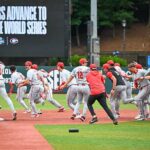
For Georgia baseball fans, the wait is finally over. For the first time since 2008, the Bulldogs are headed back to Omaha and the College World Series.
After nearly two decades of watching other programs celebrate on college baseball’s biggest stage, Georgia has earned its place among the final eight teams standing. Now comes the exciting part. The Dawgs must finish the job.
Just getting to Omaha is an accomplishment. The College World Series is one of the most difficult events in sports to reach, requiring teams to survive the grind of the regular season, the SEC schedule, conference tournaments, regionals, and super regionals. Georgia has done all of that and enters Omaha as the highest remaining national seed.
What makes this run even more special is how complete it has been. These Bulldogs didn’t sneak into the field or catch lightning in a bottle at the right time.
They won the SEC regular season championship. They captured the SEC Tournament title for the first time in program history. They rolled through both the regional and super regional rounds with five consecutive postseason victories.
This team has earned every bit of the national attention it’s receiving.
For longtime Georgia fans, reaching Omaha brings back memories of the program’s proud history. The Bulldogs won the national championship in 1990 and made several College World Series appearances during the 2000s. But since the heartbreaking runner-up finish in 2008, Omaha has felt frustratingly distant.
That is why this trip feels different. There is a sense that Georgia isn’t simply happy to be invited. Head coach Wes Johnson and his players have consistently carried themselves with confidence and purpose throughout the season.
The message has been clear. This is not a celebration trip. This is a championship pursuit.
The Bulldogs certainly have the offensive firepower to make that dream a reality. Georgia enters the College World Series leading the nation with 174 home runs.
Every inning feels dangerous for opposing pitchers because there are threats throughout the lineup. One swing can change a game, and Georgia has produced those swings all season long.
Led by veteran stars and an experienced lineup, the Bulldogs have demonstrated an ability to score in bunches and deliver in pressure situations. Their offense has become one of the most feared units in college baseball.
Of course, Omaha is never easy. Georgia opens against a talented Texas team that has its own championship aspirations.
The Longhorns are making their 39th College World Series appearance and have played some of their best baseball during the postseason.
A victory over Texas would immediately position Georgia as a serious favorite to reach the championship series.
The road beyond that won’t get any easier. Alabama, Oklahoma, North Carolina, Ole Miss, West Virginia, and Troy all arrive in Omaha believing they can win the national title. Nobody gets this far by accident.
Still, there is plenty of reason for Bulldog fans to believe. This team has already accomplished things that few Georgia squads ever have. The Bulldogs have shown resilience, confidence, and the ability to rise to every challenge placed before them. They have excelled under pressure and embraced the expectations that come with being one of the nation’s best teams.
Most importantly, they have given Georgia fans something priceless. Hope.
Hope that the championship drought that stretches back to 1990 is nearing its end.
Hope that the celebration that slipped away in 2008 can finally be completed in 2026.
Hope that when the final out of the College World Series is recorded, it will be Georgia players dogpiling on the field.
Omaha is where champions are made. The Bulldogs have waited 18 years for another chance. Now they have it. And Bulldog Nation cannot wait to see what happens next.
Georgia Diamond Dawgs National Title Contenders
By: Michael Spiers
TheSouthernSportsEdition.com news services
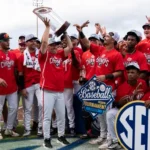
There is a different feeling surrounding University of Georgia baseball right now. Not just excitement. Not just optimism. Expectation.
For the first time in program history, the Bulldogs enter the NCAA Tournament as the No. 3 overall national seed, and honestly, it feels like this program has finally positioned itself as a legitimate national title contender again.
After years of inconsistency and postseason frustration, Georgia baseball suddenly looks built to make a serious run back to Omaha. The numbers speak for themselves.
Georgia enters the postseason at 46-12, earned a top eight national seed for the third straight season under head coach Wes Johnson, and will once again host a regional at Foley Field.
This is not some surprise Cinderella story. The Bulldogs have been one of the best teams in the country all season long. And if you are a Georgia fan, this year’s bracket feels especially intriguing.
Last season’s national champion, LSU Tigers did not even make the tournament field, guaranteeing there will be a new national champion crowned this summer.
Meanwhile, the SEC once again dominates the national landscape with seven regional hosts, including Georgia, Auburn, Texas, Florida, Alabama, Mississippi State, and Texas A&M.
That is what makes college baseball in the SEC so brutal. Simply surviving the regular season already feels like postseason preparation.
Still, Georgia’s path is far from easy. The Bulldogs will open regional play Friday night against Long Island University, a team many casual fans will immediately dismiss because of the name on the jersey. That would be a mistake.
Johnson himself pointed out that LIU has experience competing against major programs and will not be intimidated by coming to Athens.
The Sharks run aggressively, steal bases constantly, and attack offensively. In fact, this same LIU program beat Georgia 1 to 0 in Athens back in 2019.
Then there is Liberty, and honestly, the Flames may be one of the more dangerous No. 3 regional seeds anywhere in the tournament. They have power throughout the lineup and a legitimate Friday night ace capable of matching up with almost anyone in the country.
Boston College also arrives after a strong ACC season, meaning this regional is much deeper than some fans may initially realize.
But this is also where Georgia fans should feel confident about this team. The Bulldogs are not built around one star player or one hot streak. They have depth. They have power. They have experience.
And maybe most importantly, they have the kind of pitching staff capable of surviving tournament baseball.
There’s also something different about the confidence level surrounding the program right now. For years, Georgia baseball has carried the weight of history without consistently matching it on the field. This is a program with six College World Series appearances and a national championship in 1990, but too often the Bulldogs felt like a sleeping giant in the SEC baseball world. That no longer feels true.
Wes Johnson has clearly elevated the standard of the program. Hosting regionals has now become expected instead of celebrated. National seeding is no longer viewed as some once in a generation achievement. And for the first time in a long time, Georgia fans are not simply hoping to survive the first weekend of the tournament.
They are talking openly about Omaha. Of course, that is easier said than done. Winning a regional is difficult. Winning a super regional is even harder. And once teams arrive at the College World Series, anything can happen over a short stretch of games.
But this Georgia team absolutely looks capable of getting there.
And with Foley Field set to host postseason baseball once again, the atmosphere in Athens should be electric all weekend long.
For Georgia baseball fans, this is the kind of June that reminds you exactly why college baseball is so special.
Just A little Short
By: Michael Spiers
TheSouthernSportsEdition.com news services
It has been a magical season in Wes Johnson’s first year as the Georgia Bulldog’s skipper.
His Georgia squad has shown all of the attributes required to succeed in the modern era of big-time college baseball; grit, toughness and heart.
After managing to clear every previous obstacle and overcoming the adversity that inevitably arises, the Dawgs’ season came to an end.
The Athens Super Regional of the NCAA baseball tournament culminated in a decisive Game 3 between No. 7 UGA and the No. 10 North Carolina State Wolfpack, held at Foley Field with a College World Series berth on the line.
This series had seen both teams dominate at different times, leading to the final, winner-take-all clash.
In Game 1, NC State’s offense exploded with an 11-run second inning, which set the stage for an 18-1 blowout over the Bulldogs. Georgia responded strongly in Game 2, taking an early lead and cruising to an 11-2 victory, evening the series and building anticipation for the finale.
In the winner-take-all Game 3, the drama was palpable. Georgia struck first with a two-run homer by Tre Phelps in the second inning, but NC State quickly responded.
The Wolfpack took the lead for good in the fourth inning after scoring three runs, including on a critical wild pitch that allowed Matt Heavner to score. Alec Makarewicz added to the lead with an RBI single, and NC State maintained control until the end.
Georgia attempted a comeback, scoring another run in the sixth to narrow the gap to 5-3, but NC State’s Eli Serrano III extended the lead with a home run in the seventh.
Serrano also made a crucial defensive play, robbing Georgia of a potential rally by making a leaping catch at the center-field wall in the same inning. The Bulldogs struggled to keep pace; despite scoring in the ninth inning with Charlie Condon’s nation-leading 37th home run, they couldn’t close the gap.
NC State’s offensive firepower was showcased throughout, with standout performances from Serrano, who went 3-for-4, and Makarewicz, who contributed three RBIs.
NC State’s Derrick Smith was instrumental in closing out the game, earning his eighth save of the season by retiring Phelps twice during critical moments.
The 8-5 victory sent NC State to the College World Series for the fourth time in the program’s history and capped a strong finish to their season, marked by 18 wins in their last 23 games.
They joined ACC counterparts Florida State, Virginia, and North Carolina in Omaha, tying the record for most ACC teams in a single year in the College World Series.
Meanwhile, Georgia, which had hoped to secure their seventh trip to the College World Series, saw their season end with a 43-17 record.
Despite the loss, Georgia’s season under first-year head coach Wes Johnson showed promise. The Bulldogs’ ability to force a decisive third game in the Super Regional highlighted their resilience and potential, setting a positive outlook for the future of their baseball program.
Ultimately, NC State’s balanced attack and timely defensive plays proved too much for Georgia, securing the final spot in the College World Series and capping a thrilling Super Regional showdown.
The Wolfpack advanced to face Kentucky in their opening game of the series in Omaha, carrying forward their late-season momentum and solidifying their status as one of the top teams in collegiate baseball this year.
A Near Strike Out

 By: Colin Lacy
TheSouthernSportsEdition.com news services
In a series opening game in May at Founders Park in Columbia, Georgia Baseball opened a three-game series against the then Number 13 South Carolina Gamecocks.
The Dawgs chased the Gamecock’s starter Roman Kimball after scoring four in the top of the 1st inning, then the second inning saw Charlie Condon launch a Ty Good first pitch past the left field wall to go back-to-back with teammate Corey Collins. That blast was his 34th of the season to maintain the national homerun lead.
Condon not only led the nation in homers, but also led the country with an average over .450 and had driven in 72 runs at that point for the Diamond Dawgs. He’s having a historic year for Georgia, but it’s almost a career that never came to fruition.
Near the end of his career at The Walker School in Marietta (North Metro Atlanta area), Condon had no Division I offers to play baseball.
The two offers on the table were from D III Rhodes College in Memphis and University of the South in Sewanee, Tenn to play both baseball and also play quarterback for the football programs.
Condon did have a potential preferred walk-on opportunity for the Tennessee Volunteers, but a late pull from Vols Head Coach Tony Vitello took that opportunity off the table.
Scott Stricklin, former Georgia Head Coach from 2014 thru 2023, got a phone call from a friend telling him about Charlie, and was told that Condon may be a potential target.
Stricklin and staff got some video of Condon’s skills and thought he would be able to be a factor for the Dawgs down the road.
So how did everyone miss on someone that potentially could be the number one overall pick in the upcoming MLB Draft?
Well, it may be a full storm of factors. First off, Condon was a late bloomer. While the last few years in high school were impressive, he wasn’t on the top travel ball team, he wasn’t the measurable masterpiece.
All of that along with COVID-19 was affecting the sports world still while his recruiting process. High school schedules were affected, College coaches weren’t out on the road and able as many players as they normally would, so late bloomers, and players that were under the radar didn’t get a look.
If there needed to be another factor, the MLB Draft was shortened from 40 rounds to 20, so there weren’t many scholarships to go around.
Condon turned into the perfect fit for the Bulldogs before even taking an at-bat. Condon was exceptional student and was able to be accepted to the University of Georgia and didn’t need a scholarship to come to school.
As a pure walk-on, Condon didn’t see action as a freshman. Scott Stricklin told Condon that the plan was for him to redshirt and really hit the weight room in 2022 to grow into the player that Stricklin thought Condon could be.
While that is the plan, Stricklin saw that Condon was special and had told other college coaches that possibly the best hitter on his roster was a redshirt.
Condon took the redshirt in stride and gained 15-20 pounds of muscle, and seeing college pitching made it click at the plate.
If Condon wasn’t special enough, or as one scout called him “a unicorn,” he had to deal with another bit of adversity after 2023 when Stricklin (the coach that took a chance on him) was let go from UGA.
In the new age of college sports of NIL and transfer portal, Condon proved he’s a “unicorn” off the field too with an incredibly infrequent take on the portal opportunity.
“It was never a real possibility that I wanted to get in the portal and go anywhere else,” Condon told ESPN’s Mark Schlabach.
“Whether it was this coaching staff or not, the university was the only place that gave me a chance out of high school. It was the university that had given me all the time and resources and put so much into my development. I couldn’t turn my back on that.”
No matter if you’re a fan of the Dawgs, or just of college baseball, you can’t help but root for Charlie Condon, and marvel at the historic season.
As great as his on-the-field presence is, the off-the field factor helps Condon’s draft stock just as much.
Online
Radio/Podcasts