Ron Reagin
October In Region 1-7A




 By: Ron Reagin
TheSouthernSportsEdition.com news services
Region play has not started in Region 1-7A. That changes in October.
The five-team region — Valdosta, Lowndes, Colquitt County, Camden County and Richmond Hill — has spent September on non-region slates.
The records look good, but the standings do not mean as much yet. The next five weeks will decide the region title, the first-round home game, and most of the PSR seeds that follow.
The non-region schedules for the majority of Region 1-7A has been managed well by all teams. Colquitt has suffered a couple of early losses, as well as Camden. Luckily for them, Region 1 is an equalizer if they can win in one of the toughest regions in the state.
The October-November gauntlet
Region games come in a tight cluster:
Oct. 9 — Colquitt at Richmond Hill; Lowndes vs. Camden
Oct. 16 — Valdosta at Colquitt, Richmond Hill @Camden
Oct. 23 — Camden at Valdosta; Lowndes at Richmond Hill
Oct. 30 — Lowndes vs. Valdosta (Winnersville Classic); Colquitt at Camden
Nov. 6 — Lowndes at Colquitt; Richmond Hill at Valdosta
That is 10 region games in a five week span spilling over into the first week of November.
Every one of them counts twice: once in the region standings, and once in the PSR formula that will seed the 7A playoffs statewide.
What each team needs:
Valdosta has the best early PSR profile in the region and is projected as a high seed if it takes care of business.
The Wildcats still have to go to Moultrie, host Camden, go to Lowndes for the Winnersville Classic, and close with Richmond Hill. An unbeaten region run would lock up the title and a first-round home game.
Lowndes is 5-0 and has been dominant at home. The Vikings’ non-region wins have not carried much PSR weight. Region wins will.
Hosting Camden, going to Richmond Hill, hosting Valdosta, and finishing at Colquitt is a four-game stretch that will define Adam Carter’s fourth season.
Colquitt has a winning record after losses to Thomas County Central and Lee County.
Those two losses hurt the record and helped the schedule strength. The Packers still have a path to a high seed if they win their share in region play. The home date with Valdosta on Oct. 16 and the finale against Lowndes are the measuring sticks.
Camden needs region wins more than anyone. A decent start and a mid-teens PSR projection leave little margin.
Games at Lowndes, at Valdosta, and at home against Colquitt will decide whether the Wildcats are a playoff team with a decent seed or a team looking in from the outside.
Richmond Hill is off to a tremendous start and still the team the formula has treated the harshest. The early wins have not built much opponent winning percentage.
Hosting Colquitt, hosting Lowndes, and going to Valdosta in the finale is the chance to change that. Those games could flip the PSR picture fast if Richmond Hill can win continue winning in the Region.
Why October matters more this year
The region champion still gets a first-round home game. After that, PSR seeds the field 1 through 32.
A second-place team with a tougher résumé can be seeded higher than a champion from a weaker region. That is why these eight games are not just about first place. They are about who you beat and when you beat them.
Late-season upsets can wipe out a high PSR in a hurry. Region wins, in a tough region, can also climb a team several spots in a single Friday night.
The takeaway
September was about getting ready. October is about the region.
Valdosta and Lowndes enter as the favorites. Colquitt has the schedule profile to stay in the high-seed conversation. Camden and Richmond Hill have to prove it against the teams that will actually show up on the playoff résumé, and more importantly, show up in their PSR.
South Georgia fans are already looking forward to these matchups. This year they also decide the playoff seeds, and that makes October in Region 1 as important as it has been in a long time.
1-7A Rankings
By: Ron Reagin
TheSouthernSportsEdition.com news services
Region 1-7A has five teams this year — Valdosta, Lowndes, Colquitt County, Camden County and Richmond Hill — but the new GHSA Post-Season Ranking Formula is already separating them.
The formula is winning percentage (35%), opponents’ winning percentage (35%), and opponents’ opponents’ winning percentage (30%). Region champions still get a first-round home game. After that, the 1-32 seeds are driven by PSR, not region finish.
Maxwell’s model takes current results and plays out the rest of the season. For Region 1-7A, the projection (current PSR rank → predicted final seed, with Maxwell power rank in parentheses) looks like this:
Valdosta: 2 → 1 (8)
Lowndes: 7 → 9 (17)
Richmond Hill: 8 → 27 (23)
Camden County 16→ 17 (20)
Colquitt County: 18 → 5 (13)
That is the clearest snapshot of how the formula is working. Valdosta is projected to finish as the No. 1 seed in Class 7A.
Colquitt, sitting 2-2 and 17th in the live PSR, is projected to climb all the way to a No. 5 seed. Lowndes stays in the field as a No. 9. Camden holds around a mid-teens seed. Richmond Hill, unbeaten right now and ninth in the live PSR, is projected to slide to 27.
Who is benefiting
Valdosta is the early winner. The Wildcats are unbeaten and already carrying the region’s best opponents’ winning percentage. Maxwell has them finishing 10-0, winning the region, and coming out as the top seed in the class.
Colquitt County is the other big winner in the formula. The Packers lost to Thomas County Central and Lee County, two of the strongest teams in Georgia. Those losses hurt the record, but they help the schedule strength. That is why a 2-2 team is projected as a No. 5 seed when the season is over.
Camden is holding its ground. A 3-1 start and a decent Florida mix keep them in the playoff picture as a projected 17-seed.
Who is lacking the competition
Lowndes is projected to fall from a high current PSR spot to a No. 9 seed. Wins over Jenkins, Harris County, Lithonia and Blanche Ely look clean, but they do not move the OWP needle much.
Richmond Hill is the cautionary tale. Unbeaten, tied for eighth in the live PSR, and projected to finish 27th.
Wins over Effingham, Liberty County, Jenkins and Ware County have not built enough opponent winning percentage. Unless region play changes that, the formula will treat them as a bubble team, not a high seed.
Schools that play Non-GHSA opponents get no benefit from OWP or OOWP, and only get 0.9 credit in their own WP.
How the region is predicted to finish
Maxwell’s most likely predicted outcomes:
Valdosta 10-0, region champion, PSR No. 1
Colquitt around 7-3, PSR No. 5
Lowndes around 8-2, PSR No. 9
Camden in the mid-teens
Richmond Hill fighting to stay inside the 32
Region play has not started. When these five start playing each other — Colquitt at Richmond Hill, Valdosta at Colquitt, Camden at Valdosta, Lowndes at Valdosta, Lowndes at Colquitt — both the standings and the formula will move at the same time.
Late season upsets could derail a high PSR for post season. Conversely, region wins are going to be key to maintain or gain spots in the PSR for seeding in the playoffs.
The takeaway
PSRF is doing what it was built to do. It is rewarding who you beat, not just that you won.
Valdosta is ahead because it is winning against teams that win. Colquitt is still in the high-seed conversation because it scheduled TCC and Lee County. Lowndes and Richmond Hill have the records. They still need the remaining games, especially region games, to raise the quality attached to those wins.
Bottom line, stats and projections are entertaining to speculate about, but wins in the region are going to be the final determining factor for PSR in 2026.
In a five-team region, every Friday of region matchups matters twice: once in the standings, and once in the formula that will seed the playoffs. October is going to be entertaining in Region 1-7A.
Valdosta Wildcats Strong Start
By: Ron Reagin
TheSouthernSportsEdition.com news services
Opening the season on the road is never easy, especially with a young defense and a lightning delay that pushed kickoff all the way to 9:20 p.m. Valdosta handled both challenges Friday night and came away with a solid 52-14 win at Jones County.
The Wildcats treated the game like a business trip. They went on the road, took care of business, and left with a victory despite the late start and the usual early-season social media noise.
The offense looked ready from the start. With most of its key pieces returning, Valdosta rolled up 426 yards of total offense — 251 through the air and 175 on the ground. Marquis Fennell and Deron Foster once again formed one of the most dangerous backfield combinations in the state.
Fennell scored four touchdowns just about every way a running back can. He rushed for the game’s first points, caught touchdown passes from two different quarterbacks, and returned a punt 55 yards for another score. He finished with eight catches for 143 yards and two receiving touchdowns, plus nine carries for 48 yards and a rushing score.
Special teams for the Wildcats was solid as well. Along with Fennell’s punt return touchdown, sophomore kicker Alans Garcia handled the kickoffs and made a 36-yard field goal with plenty of distance to spare. New punter Freddy Poole had two punts and averaged 30 yards per punt, with veteran Troy commit long snapper William Mosley handling all the snaps flawlessly.
Oregon State commit Deron Foster did the lion’s share on the ground, carrying 18 times for 107 yards and a touchdown. Senior center Austin Spray and the experienced offensive line helped create running lanes and gave the quarterbacks time to work.
Speaking of the quarterbacks, Tripp Perry delivered the best game of his career. He completed 9 of 12 passes for 158 yards and two touchdowns while showing the leadership and command he has displayed throughout the offseason.
When sophomore Lamar Thomas got his opportunity, he answered with a sharp 5-of-8 performance for 84 yards and two touchdowns of his own.
Sophomore Quincy Hunt added a hard-running 30 yards on five carries, and senior wideout Jamarian Mingo hauled in five catches for 87 yards, scoring from both quarterbacks.
Before the game, head coach Shelton Felton was asked what he wanted to see from his young defense. His answer was clear: “I want to see a physical, fast and detailed defense. They could make mistakes but make them full speed… new season, want them to have fun and run to the football.”
Outside of a couple of missed fits on run defense that led to long runs, the defense answered the call. Jones County finished with just 14 points and 245 total yards.
After the game, Coach Felton praised the unit for making adjustments at halftime. When asked how he sees them growing, he said, “One play at a time, one week at a time and one game at a time… gotta stay with us. Growing pains. A lot of guys this is their first time playing big-time football.”
It was not a perfect night, but it was a professional one. The Wildcats did what they were supposed to do on the road in Week 1.
Next Friday night they return to the friendly confines of Bazemore-Hyder Stadium for the home opener against Howard.
After a businesslike start on the road, the Cats will look to keep the momentum going in front of the home crowd over this 5 game home stand.
Colquitt County Packers 2026 Preview
By: Ron Reagin
TheSouthernSportsEdition.com news services
The Colquitt County Packers enter the 2026 season coming off a solid 9-3 campaign that included a 4-1 region mark and a second-round playoff appearance.
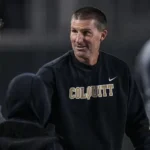
Under head coach Sean Calhoun, who is entering his fifth season at the helm, the Packers continue to rank among South Georgia’s most consistent programs and one of the toughest outs in the state’s largest classification.
2025 Season Recap: Colquitt finished 9-3 overall and tied for one of the top spots in Region 1-AAAAAA.
The Packers handled most of their schedule with physical play on both sides of the ball and showed they could compete with top competition.
Their three losses came against strong opponents, all of which made deep playoff runs.
Running back Jae Lamar, a Georgia commit, led the way with 1,015 rushing yards and 17 touchdowns in just 10 games.
Quarterback Cohen Lawson threw for over 2,000 yards and 19 touchdowns in his second year as the starter, while wide receiver Antwan Lockett provided a big-play threat with 40 catches for 811 yards and 10 scores.
Key Returners and Leadership The biggest losses are Lamar and Lawson (who has transferred to Lee County). Both will be hard to replace.
However, Lockett is back to stretch the field, and the Packers have depth at the skill positions along with returning offensive linemen who should help maintain continuity up front.
Dual threat QB Khi Mitchell transferred in from Mt. Zion and should contribute early and often.
On defense, several experienced linebackers and secondary players return to keep the physical identity Calhoun has built.
Colquitt usually excels in special teams as well, producing strong field goal kickers, returners and a physical front with blocked punts and field goals every year.
Emerging contributors who saw significant snaps in 2025 will be asked to step into larger roles, including the competition at quarterback.
2026 Schedule Highlights: The Packers open with one of the toughest non-region games in the state, a road trip to defending Class 5A state champion Thomas County Central on August 21.
Home games against Monroe, Cook County, and Lee County follow, along with Florida tests against Lincoln and Rickards.
Region play includes trips to Richmond Hill and Camden County, a home date with Valdosta on October 16, and the season finale at home against Lowndes on November 6.
This is a challenging slate that features multiple quality opponents. Under the new PSRF playoff seeding formula, the strength of schedule should help Colquitt if they take care of business against the tougher teams on their schedule.
Outlook: Colquitt County has the experience, coaching stability, and talent to contend again in Region 1-AAAAAA.
Replacing the production of Lamar and Lawson will be a major focus, but the returning skill players, key transfers and depth give the Packers a chance to remain competitive on offense.
The defense should continue to play with the physical style that has defined the program under Calhoun.
South Georgia fans can look forward to the traditional matchups with Valdosta, Lowndes, and Camden. These games will tell the tale for the Packers’ postseason, similar to the other teams in this stacked region.
The Packers enter 2026 looking to improve on last year’s 9-3 mark and make another deep postseason run.
Mack Tharpe Stadium will be ready for another exciting fall. The Pack is loaded with opportunity.
Lowndes County Vikings 2026 Preview

By: Ron Reagin
TheSouthernSportsEdition.com news services
The Lowndes Vikings enter the 2026 season with high expectations after back-to-back 10-2 campaigns.
Under head coach Adam Carter, the program continues to compete in South Georgia with physical play, strong culture and fan base that usually deliver consistent postseason appearances.
This will be Carter’s fourth season at the helm, and the continuity he has built is showing.
2025 Season Recap Lowndes finished 10-2 overall and 4-1 in Region 1-AAAAAA, earning a home playoff game in the first round.
They fell in the second round to an eventual Final Four team, North Gwinnett. The Vikings dominated their non-region schedule early, outscoring opponents by an average of 43-8 in the first five games.
In region play, they rolled through Colquitt County, Camden County, Tift County, and Richmond Hill, scoring over 30 points in each contest while allowing just 13.25 points per game.
Their lone region loss came in the Winnersville Classic to rival Valdosta.
Key Returners and Leadership: The offense returns one of the state’s top dual-threat quarterbacks in Jayce Johnson. The Texas A&M commit brings elite arm talent, mobility, and valuable experience.
Several skill players and key offensive linemen are back, giving Lowndes continuity up front and in space.
On defense, experienced playmakers return to anchor a typically physical front seven that gave up less than 14 points on average over 12 games last season.
However, look for emerging contributors from 2025 and some new names, who gained valuable reps and are poised for bigger roles. Coach Carter and his staff have emphasized depth and competition throughout the offseason.
2026 Schedule Highlights: Lowndes will test itself early and often at home. The non-region portion includes Jenkins, Harris County, Lithonia, Blanche Ely (FL), Long County, and Winter Haven (FL).
Region play brings the annual battles with Camden County, Richmond Hill, Valdosta (Oct. 30 at home), and the season finale at Colquitt County (Nov. 6).
With the new PSRF playoff seeding formula in place, this schedule gives Lowndes multiple opportunities to boost their ranking through quality wins. The Florida games and tough region slate should prepare them well for a deep postseason run.
Outlook: The Vikings have the talent, experience, and coaching to contend for another region title and make noise in the state playoffs.
Coach Carter’s emphasis on fundamentals, physicality, and player development has the program trending upward since he took over.
South Georgia fans know the Winnersville Classic against Valdosta (Nov. 30) and the late-season games against Colquitt and Camden will be tough games and shape their post-season.
Lowndes enters 2026 hungry to take big step towards another title.
Valdosta Wildcats’ Dynamic Duo
By: Ron Reagin
TheSouthernSportsEdition.com news services
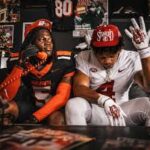
Local restaurant and hangout, Big Nick’s was recently packed as friends, family, teammates, and coaches filled every seat and it was standing room only.
Valdosta High running backs Deron Foster and Marquis Fennell announced their college decisions in front of Valdosta’s faithful fans.
Foster, the every-down back, will head west to Oregon State. Fennell, the explosive playmaker, utility back, will take his talents to Stanford.
Before they head west, they will try to top last year’s performance for the Wildcats. The duo accounted for 64% of all touchdowns last season and 57% of total yards as juniors with both averaging over 100 yards per game in what was a tremendous offense top to bottom.
Deron Foster chose the Beavers over offers from Stanford, Liberty, and Georgia State. The decision came down to the opportunity to play for associate head coach and running backs coach Lee Marks, who has a strong track record developing backs, and new head coach JaMarcus Shephard’s vision.
Foster rushed for 1,329 yards and 15 touchdowns last season, adding 148 receiving yards and two more scores. He posted nine 100-yard rushing games and sees himself stepping in early in Corvallis.
Marquis Fennell had a long list of suitors, including Colorado, Florida State, and Georgia Tech, but chose Stanford for the combination of football opportunity and elite academics. His mother, Leslie, played a big role in emphasizing the long-term value of the education.
Fennell had a monster junior season with 2,505 all-purpose yards, including 1,480 rushing yards and 23 touchdowns on the ground, plus 764 receiving yards and 10 scores through the air.
He expects to be a versatile running back who can impact games from the backfield or out wide to present multiple problems for opposing defense.
Both backs rushed for over 1,000 yards. The last time the Wildcats had 2 rushers over 1,000 yards, was back in 1988 with Isaac Cesar and James Roberts.
Head coach Shelton Felton praised both as great players and even better young men and leaders.
“You’ve got Live at 5 (Foster), you’ve got Category 4 (Fennell),” Felton said. “They are really great kids on and off the field… I’m blessed to have those two as part of my program.”
Both players expressed relief at getting their commitments done early, though Foster admitted he’s not quite ready to move on from the Friday night lights. “There’s nothing like high school ball,” he said.
With unfinished business after falling just short of a state title, both are motivated for a bigger senior season in 2026.
“We all know we have unfinished business,” Fennell said.
This commitment night caps a special chapter for Valdosta’s backfield while setting the stage for what should be another strong year for the running back duo and the Wildcats.
Valdosta Wildcats 2026 Preview
By: Ron Reagin
TheSouthernSportsEdition.com news services
Few things matter more in the new Post-Season Ranking Formula (PSRF) era than building the right schedule.
In the Valdosta Wildcats’ case, wins also carry more meaning as they are racing to be the first high school program to reach 1,000 wins.
Valdosta’s 2026 slate looks like a smart, strategic effort designed for this new system to maximize wins both in the regular season and postseason.
Here is the Wildcats’ confirmed 2026 schedule:
Aug. 7: Worth County (Scrimmage)
Aug. 21: @ Jones County
Aug. 28: vs. Howard
Sept. 4: vs. Bradwell Institute
Sept. 11: vs. KIPP Atlanta Collegiate (Homecoming)
Sept. 25: vs. Stockbridge
Oct. 2: vs. Booker High (Sarasota, FL)
Oct. 16: @ Colquitt County
Oct. 23: vs. Camden County
Oct. 30: @ Lowndes (Winnersville Classic)
Nov. 6: vs. Richmond Hill (Senior Night)
The Wildcats will play six home games, three road games, and four tough Region 1-AAAAAAA contests.
Non-Region Breakdown: Valdosta’s non-region schedule looks well-balanced.
The road trip opener to Jones County and home games against Stockbridge and Booker High (Sarasota, FL) provide quality competition that should boost both OWP and OOWP.
Booker, a consistent playoff team in Florida, could prove to be a strong addition.
The home games against Howard, Bradwell Institute, and KIPP Atlanta Collegiate are winnable matchups that should help build the win column without being too soft.
But as we all know too well, you can never overlook an opponent that has nothing to lose. Those types of teams historically pull out all the stops to beat Valdosta.
The Region 1 Gauntlet: Region 1-AAAAAAA remains one of Georgia’s strongest regions year after year.
The late-season stretch: @ Colquitt County, vs. Camden County, @ Lowndes, and vs. Richmond Hill will be critical.
In a small five-team region, every result carries heavy weight under PSRF. Avoiding a late-season loss will be critical in maintaining a strong playoff seed.
From the unbiased broadcast booth, a 9-1 record with three region wins feels like the most realistic strong outcome.
That should position Valdosta comfortably inside the top 20 statewide with a favorable seed. However, most Valdosta fans will not be happy with anything but a championship.
The expectation to win, especially after a region championship and semifinal run last season, is even higher this year.
Strengths: Six home games help accumulate wins for the 35% winning percentage component.
Quality non-region opponents (especially Booker, Stockbridge, and Jones County) combined with a tough region give Valdosta a legitimate strength-of-schedule advantage without sacrificing winnable games.
Risks: As we’ve alluded to with the new PSRF, late-season swings are very real. The final four games are all region contests. A tough stretch in October and early November could drop the Wildcats several spots in the rankings even with a winning record. This risk is one that all Region 1 teams will be trying to avoid.
Overall, Valdosta’s 2026 schedule appears well-constructed for the PSRF era. It balances winnable home games with enough quality competition to reward a strong season.
Valdosta fans should be excited, as this slate gives the Wildcats a legitimate chance at a high seed and deep playoff run.
Don’t Throw Your Clubs

By: Ron Reagin
TheSouthernSportsEdition.com news services
At the 2026 U.S. Open at Shinnecock Hills, Joaquin Niemann threw his club in frustration on the sixth hole during the first round. It wasn’t just any toss. The USGA deemed it “serious misconduct” under the new majors’ Code of Conduct and Rule 1.2b, handing him a two-stroke penalty that turned a triple-bogey 9 into an 11.
Niemann owned the mistake afterward and responded with a strong second round, made the cut and finished tied for 7th at +1, only 5 shots off the lead. But the real story wasn’t one player’s frustration. It was the governing bodies finally enforcing standards.
This wasn’t isolated. Rory McIlroy destroyed a tee marker at Oakmont last year after a poor drive. Sergio Garcia melted down at the 2026 Masters, slamming his driver into a cooler off the tee box and breaking the club. He received a code-of-conduct warning, reportedly the first of its kind at Augusta.
The message from the USGA and the majors is clear: the days of unchecked outbursts are over, from players and fans. The new 2026 conduct policies are being applied in real time, with real consequences.
And just this week at Shinnecock, some fans had to be removed for immature or disruptive comments aimed at players. Good for the USGA.
Professional golf deserves better than turning into a sideshow, and the US Open winner proved the right approach works. Wyndham Clark, who faced his own accountability moment after the 2025 Oakmont locker incident, closed out a hard-fought victory to win the 2026 U.S. Open. Redemption looks good on him.
The Golden Era Standard: The legends of golf’s golden years, Jack Nicklaus, Arnold Palmer, and those who competed alongside them, played with fire but always respected the game, the course, the host club, and their competitors.
They let their clubs and scores do the talking. Warnings and penalties like we see today were extremely rare.
Golf Is Booming — But at What Cost?: Golf is riding high right now. Ratings are strong, equipment sales are up, viewership is solid, and new players are flooding the game.
“Grow the game” has been the mantra for years. But some of the antics we’re seeing from top players, and the influence of viral YouTube golf content, risk growing the game in the wrong direction.
Social media has made every club toss and every curse word instantly visible. There’s also been a noticeable uptick in reports and viral videos of on-course altercations, fights, slow-play disputes, and general disrespect at public and private courses nationwide.
YouTube Golf, while entertaining and bringing in younger fans, sometimes glorifies the “look at me” flash over the quiet dignity the game was built on.
Supporting Enforcement: I’ll be the first to admit my own guilt. I’ve broken plenty of clubs and dropped more than my share of profane language on the course. But working on the mental side of the game has been one of the best things I’ve done. It’s taken strokes off my score and made rounds more enjoyable for me and my buddies.
The USGA, PGA Tour, and majors shouldn’t have to play referee, but they are, and they’re doing it transparently. This mirrors what we’ve seen in baseball with taunting enforcement. Every healthy sport has a code of conduct. The best ones actually enforce it to protect the integrity of the game.
For a while, with LIV Golf in the picture, players seemed to hold the upper hand.
But LIV is struggling, and the PGA Tour remains the clear standard. Enforcing these rules now, while golf is riding high in popularity, is the right move.
It teaches the next generation the right way and reminds everyone that this game is a privilege, not a platform for personal tantrums.
Brandel Chamblee, Paul McGinley, and Rich Lerner hit on these themes during U.S. Open coverage, the need for composure and protecting the game’s image.
Some voices are even calling for “shrinking the game” in response to shifting attitudes and incidents. Those concerns are valid when antics undermine the traditions that built golf.
The USGA is right to draw the line. Accountability isn’t punishment, it’s preservation in its purest form. Golf at its best is about respect: for the course, the rules, your opponents, and yourself.
The Baseball Celebration Epidemic
By: Ron Reagin
TheSouthernSportsEdition.com news services
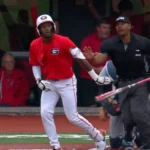
In the heat of the Athens Regional final, University of Georgia third baseman Tre Phelps delivered a massive two-run home run that flipped the script against Liberty in a must-win game.
It was definitely a huge momentum swing. But as Phelps rounded the bases, what should have been a moment of pure athletic accomplishment turned into controversy.
Phelps gestured toward the Liberty dugout on the first-base side and, after rounding first, waved again toward the first baseman and other players as he rounded the bases.
Umpire Javerro January saw it as taunting and unsportsmanlike conduct directed at an opponent. The crew promptly ejected the junior standout under NCAA Baseball Rule 2.26.f.
Head coach Wes Johnson, fiercely defending his player, was tossed as well. Georgia won the game 6-1 and advanced, but Phelps sat out Game 1 of the Super Regional.
The Call, the Debate, and the Rulebook: Social media exploded. Some called it a soft ejection, typical of over-sensitive umpires trying to kill emotion in today’s game.
Others praised the enforcement, arguing that bat flips, chest-thumping, and directed gestures cross into disrespect that has no place in baseball.
Coach Johnson later explained that Phelps was waving to family in the stands, but the umps interpreted the actions as taunting the opposition.
Most found that explanation laughable from Johnson. However, he had to do something, and trying to justify taunting is a tough spot for him. All of this could have been avoided if he had prepared his team for success.
The NCAA has drawn a clear line here. Rule 2.26 and related unsportsmanlike conduct provisions (including 5-17 in the rulebook) prohibit actions designed to intimidate, distract, or show poor sportsmanship toward opponents or umpires.
A player (non-pitcher) ejected gets an automatic one-game suspension on top of the ejection. The goal? Keep the game moving cleanly without escalating into benches-clearing brawls or turning every big play into a personal showdown.
Not an Isolated Incident: Ejections Across the Regionals: This wasn’t the only high-profile ejection during the 2026 NCAA Regionals. Tensions boiled over in multiple brackets, with six players and coaches tossed across three different regionals (Athens, Hattiesburg, and Lincoln).
In the Hattiesburg Regional elimination game, Virginia pitcher John Paone was ejected for verbal taunting against Southern Miss.
Teammate Kyle Johnson was also ejected during that same chaotic contest, tied to emotions on a home run trot (possibly involving profanity or similar unsportsmanlike language). Virginia still pulled out a wild 15-11 victory in 10 innings to eliminate the Golden Eagles.
In the Lincoln Regional, Arizona State’s Landon Hairston, the Big 12 Player of the Year, was ejected for unsportsmanlike conduct after flipping his bat dramatically following a strikeout. These incidents underscore how quickly emotions can spill over in postseason play.
Preserving the Game’s Integrity: This isn’t about killing joy. Home run trots, high-fives, and dugout celebrations are part of the excitement that makes college baseball special.
But there’s a difference between celebrating your success and directing mockery and verbal jabs at the other team.
Baseball has long prided itself on a certain decorum that separates it from sports where trash-talk and in-your-face antics have become somewhat normalized. We can hope that other sports take notice and make changes accordingly for fans, players, coaches, and officials.
Critics argue the rule is inconsistently applied or overly punitive, especially with the automatic suspension (and harsher penalties for pitchers). Supporters counter that without a significant penalty, we risk a slippery slope where every big moment becomes an immature taunting contest.
Umpires have discretion but they’re expected to maintain order, especially in highly competitive moments.
Georgia moved on without Phelps in Game 1, proving depth and resilience. But the incident, along with the others, sparked broader, tougher conversations: How much emotion is too much? Where’s the line between emotion and disrespect?
My Take as a Baseball Fan: Across the SEC and all of baseball, we love loud and competitive games. We cheer the big swings and the comebacks.
But we also respect the game’s traditions, the post-game handshake line, and the idea that you let your bat do the talking.
All these players are talented athletes who will have plenty more moments to shine and celebrate accordingly. These incidents served as a reminder that even in victory or defeat, how you carry yourself matters. We can all learn from that.
The NCAA isn’t trying to turn college baseball into a library. They’re trying to prevent it from becoming a sideshow.
By upholding the rules firmly across multiple regionals, the NCAA is sending a message that the game’s integrity comes first, no matter how big the moment, how heated the at-bat, or how passionate the player.
Here’s hoping these high-profile players and events help coaches, players, and officials make better decisions in tense moments. Baseball needs its stars playing, not sitting. Baseball and other sports as a whole benefit when the focus stays on competition, not confrontation.
The GHSA Transfer Rule
By: Ron Reagin
TheSouthernSportsEdition.com news services
We have all seen how GHSA transfer and eligibility rules can change the course of a season with a single decision.
One case in particular still gets talked about around South Georgia, the Jake Garcia situation that gave birth to what many now call the “Jake Garcia Rule.”
The Jake Garcia Case (2020): Highly recruited quarterback Jake Garcia transferred from California to Valdosta High School prior to the 2020 season. He was initially ruled eligible and even played in the season opener. After an ESPN interview raised questions about the family’s move, the GHSA reversed its decision. Garcia was declared ineligible because they determined the family had not made a true “bona fide move.” Valdosta was forced to forfeit a win.
To add insult to injury, Garcia then transferred to Grayson, where he was quickly ruled eligible and played a major role in their state title run that year.
The case highlighted how the GHSA interprets its own rules and led to stricter enforcement moving forward. The lack of clear transparency from the GHSA also fueled speculation and public scrutiny about perceived north/south differences in how rules are applied.
In what many viewed as a “saving face” move, the GHSA strengthened its by-law (By-Law 1.64), which now clearly states: A student who is not eligible at the former school cannot regain eligibility that same year by transferring to a new school. This became known by some as the “Jake Garcia Rule.”
How We Got Here: For decades, the cornerstone of GHSA transfer rules has been the bona fide move requirement; the entire family unit must actually move into the new school’s attendance zone for immediate eligibility. Without it, a transferring student is labeled a “migrant student” and must sit out one full calendar year at the varsity level.
The Garcia case accelerated a trend toward much stricter scrutiny, especially on high-profile and out-of-state transfers.
This led to major rule changes for the 2025–2026 school year:
Automatic one-year ineligibility for second transfers after 9th grade.
Much stricter documentation requirements for proving a bona fide move.
These changes were also driven by big numbers. GHSA Executive Director Tim Scott reported that roughly 59,000 of the state’s 460,000 student-athletes, or 1 in 8 were transfers during the 2024-25 school year.
My Take from the Booth: The GHSA has a very tough, and legitimate job protecting high school sports from recruiting and undue influence. Most of us don’t want programs turning into free-agent destinations.
However, the stricter rules and the heavy burden placed on families to prove a move was not for athletic reasons and have created real frustration in many cases.
All while seemingly having little effect on some high-profile programs with a history of multiple transfers every semester.
With the new PSRF system making every win matter more, these eligibility and transfer decisions now carry even heavier weight. One ruling can shift an entire season as proven with the Jake Garcia situation and others.
The system isn’t perfect, no system ever will be. But greater transparency and more consistent application of the rules would go a long way toward rebuilding trust between the GHSA, schools, coaches and the families of student athletes in this new era of NIL and extremely competitive college recruiting in Georgia.
Online

Radio/Podcasts