Georgia Bulldogs
Georgia Players Commitments To Georgia Schools



 By: Joseph Stuckey
TheSouthernSportsEdition.com news services
As we are less than 100 days away from Early National Signing Day on December 2nd, I thought it would be a good time to examine the recruiting rankings of the 5 FBS teams in the State of Georgia.
To start with, the Georgia Bulldogs sit at number 14 in the country with two 5-stars and eight 4-stars.
Their class is highlighted by the #1 running back in the country, Kemon Spell, and the #1 tight end, Jaxon Dollar.
They also have a local verbal commitment from Abram Eisenhower, who is a consensus 3-star offensive lineman from Lowndes County.
Next are the Georgia Tech Yellow Jackets, who posted an impressive 9-4 record last season under head coach Brent Key. They currently have the number 26 overall recruiting class, which is headlined by nine 4-star recruits.
They do have local standout offensive lineman Jordan Dillon from Effingham County verbally committed to them; he is a 3-star. Also, 3-star wide receiver Antwan Lockett from Colquitt County is verbally committed to the Yellow Jackets.
Next, I will dive into the three Group of 6 Schools in the state. It is always interesting to see which of these 3 finishes on top each year. I say this because they are all in some of the highest recruited areas in the country.
Georgia Southern is in the 912 area code, which has produced a top-3 overall recruit for the past 2 recruiting cycles. Both Kennesaw State and Georgia State are in the Metro Atlanta area, which produces a top-25 overall recruit basically every year.
First is the Georgia Southern Eagles, who have the highest average recruit rating of the three. They do have a couple of local wide receivers verbally committed to them: 3-star MJ Knight (Calvary Day) and 3-star Billy Crider (Bulloch Academy).
They also have verbal commitments from 3-star tight end Elan Jones (Ware County) and 3-star running back Josiah Gibbons (Brunswick).
Next is fellow Sun Belt school Georgia State, which has the highest-rated overall class of the three schools on both On3 and 247Sports.
Head Coach Dell McGee was able to reel in a verbal commitment from 4-star athlete Justin Murphy, who plays at nearby North Clayton High School.
They also do have a couple of local verbal commitments: 3-star wide receiver Jamarian Mingo (Valdosta) and 3-star running back Donterrius Mincey (Toombs County).
Last but not least is the defending Conference USA Champion, the Kennesaw State Owls.
Right now the Owls are basically tied with Georgia Southern in both overall recruiting class ranking and average recruit rating.
They do have a local verbal commitment from 3-star Braylon Cone (Bulloch Academy), who is the highest-rated defensive lineman in the 912 area code for the 2027 cycle.
There is not much of a surprise with where these teams currently sit in the rankings. If you look at last year’s recruiting cycle rankings, it is very similar to this year’s rankings.
UGA is normally near the top, and Georgia Tech is trying to crack the top 25.
For the G6 schools, they usually finish close together in the rankings, so it will be interesting to see which of the 3 ends up on top this recruiting cycle.
Prediction on SEC Teams To Make College Football Playoff
 By: Capers Childs
TheSouthernSportsEdition.com news services
The fall season is college football fans’ favorite time of the year.
Many could argue that college football is more exciting than professional with all the high-stakes and unpredictability.
The Southeastern Conference (SEC) represents a different kind of college football, rooted deeply in the south, with the teams who have the most passionate fans, loads of NFL talent, and the most elite competition in the country.
The College Football Playoff is the ultimate goal for every major college football program. However, because there are a limited number of spots available, teams must perform at a high level throughout the regular season while competing against some of the toughest opponents in the country.
And because the SEC is considered the toughest conference in college football, several of its teams earn playoff spots.
The four SEC teams that I think are the most likely to make it in the college football playoffs in 2026 are the University of Georgia, Alabama, Texas, and Texas A&M.
First is the University of Georgia. This has been a dominant program since Kirby Smart took over as head coach in 2015.
He holds an overall record of 117-21. UGA’s success is also built on elite in-state recruiting, and their massive financial investment. Not only this but their fan support is unreal.
Georgia’s ability to recruit top high school athletes year after year has allowed the Bulldogs to remain one of the best teams in the nation. Even after losing players to the NFL draft, they continue to bring talent in. This is what makes Georgia a safe bet to reach the CFP.
Next, the University of Alabama football has pretty much always been known to be successful. Nick Saban was the primary reason for the modern success of the program. During his time at Alabama, he won 6 national championships, secured 9 SEC titles, and developed a record number of players for the National Football League (NFL) Draft.
Although Alabama is adjusting to the game after Nick Saban’s departure, this isn’t changing the way they compete. The Crimson Tide continue to recruit at an elite level and their experience and talent make them a strong contender every season.
The University of Texas has claimed four consensus titles along with multiple other historical claims. They open the season with a difficult stretch of non-conference games against Texas State, Ohio State, and UTSA. The pressure is going to be on for Steve Sarkisian to improve on last season’s success and lead Texas to another CFP appearance. They’ve definitely got the roster to do so this season.
Texas has also recruited exceptionally well over the past couple of years, and they have one of the deepest rosters in college football. If the Longhorns can navigate their difficult schedule this season, I believe that they have the talent to compete for both an SEC championship and a playoff spot.
Texas A&M is another team that has potential to make the College Football Playoff. Texas A&M has recruited some of the nation’s top talent in recent years and has the depth needed to compete in the SEC. If the Aggies can play consistent football throughout the season and win a majority of their SEC matchups, I think they have the talent to compete with any team in the conference.
The talent that they have on their roster make them one of my top four playoff picks.
However, in the era of the transfer portal and NIL (Name, Image, and Likeness), keeping a talented roster has become one of the biggest challenges in college football.
Team rosters are changing year after year, but Georgia, Alabama, Texas, and Texas A&M have been stable in that department which gives these four schools an advantage heading into the 2026 season.
Now the question is whether Louisiana State University will earn a spot in the CFP or not. LSU could be the biggest dark horse in the SEC this season.
With Lane Kiffin leaving the University of Mississippi for LSU, they could make a promising run. Kiffin has proven that he can compete with the best teams in the conference, and his arrival is huge for this Tigers’ program. I believe LSU has the potential to challenge the SEC’s top teams and compete for a playoff spot in 2026.
Overall, I think Georgia, Alabama, Texas, and Texas A&M have the best chance of making the 2026 College Football Playoff. However, with Lane Kiffin and the LSU Tigers, they could be a surprise.
The Baseball Celebration Epidemic
 By: Ron Reagin
TheSouthernSportsEdition.com news services
In the heat of the Athens Regional final, University of Georgia third baseman Tre Phelps delivered a massive two-run home run that flipped the script against Liberty in a must-win game.
It was definitely a huge momentum swing. But as Phelps rounded the bases, what should have been a moment of pure athletic accomplishment turned into controversy.
Phelps gestured toward the Liberty dugout on the first-base side and, after rounding first, waved again toward the first baseman and other players as he rounded the bases.
Umpire Javerro January saw it as taunting and unsportsmanlike conduct directed at an opponent. The crew promptly ejected the junior standout under NCAA Baseball Rule 2.26.f.
Head coach Wes Johnson, fiercely defending his player, was tossed as well. Georgia won the game 6-1 and advanced, but Phelps sat out Game 1 of the Super Regional.
The Call, the Debate, and the Rulebook: Social media exploded. Some called it a soft ejection, typical of over-sensitive umpires trying to kill emotion in today’s game.
Others praised the enforcement, arguing that bat flips, chest-thumping, and directed gestures cross into disrespect that has no place in baseball.
Coach Johnson later explained that Phelps was waving to family in the stands, but the umps interpreted the actions as taunting the opposition.
Most found that explanation laughable from Johnson. However, he had to do something, and trying to justify taunting is a tough spot for him. All of this could have been avoided if he had prepared his team for success.
The NCAA has drawn a clear line here. Rule 2.26 and related unsportsmanlike conduct provisions (including 5-17 in the rulebook) prohibit actions designed to intimidate, distract, or show poor sportsmanship toward opponents or umpires.
A player (non-pitcher) ejected gets an automatic one-game suspension on top of the ejection. The goal? Keep the game moving cleanly without escalating into benches-clearing brawls or turning every big play into a personal showdown.
Not an Isolated Incident: Ejections Across the Regionals: This wasn’t the only high-profile ejection during the 2026 NCAA Regionals. Tensions boiled over in multiple brackets, with six players and coaches tossed across three different regionals (Athens, Hattiesburg, and Lincoln).
In the Hattiesburg Regional elimination game, Virginia pitcher John Paone was ejected for verbal taunting against Southern Miss.
Teammate Kyle Johnson was also ejected during that same chaotic contest, tied to emotions on a home run trot (possibly involving profanity or similar unsportsmanlike language). Virginia still pulled out a wild 15-11 victory in 10 innings to eliminate the Golden Eagles.
In the Lincoln Regional, Arizona State’s Landon Hairston, the Big 12 Player of the Year, was ejected for unsportsmanlike conduct after flipping his bat dramatically following a strikeout. These incidents underscore how quickly emotions can spill over in postseason play.
Preserving the Game’s Integrity: This isn’t about killing joy. Home run trots, high-fives, and dugout celebrations are part of the excitement that makes college baseball special.
But there’s a difference between celebrating your success and directing mockery and verbal jabs at the other team.
Baseball has long prided itself on a certain decorum that separates it from sports where trash-talk and in-your-face antics have become somewhat normalized. We can hope that other sports take notice and make changes accordingly for fans, players, coaches, and officials.
Critics argue the rule is inconsistently applied or overly punitive, especially with the automatic suspension (and harsher penalties for pitchers). Supporters counter that without a significant penalty, we risk a slippery slope where every big moment becomes an immature taunting contest.
Umpires have discretion but they’re expected to maintain order, especially in highly competitive moments.
Georgia moved on without Phelps in Game 1, proving depth and resilience. But the incident, along with the others, sparked broader, tougher conversations: How much emotion is too much? Where’s the line between emotion and disrespect?
My Take as a Baseball Fan: Across the SEC and all of baseball, we love loud and competitive games. We cheer the big swings and the comebacks.
But we also respect the game’s traditions, the post-game handshake line, and the idea that you let your bat do the talking.
All these players are talented athletes who will have plenty more moments to shine and celebrate accordingly. These incidents served as a reminder that even in victory or defeat, how you carry yourself matters. We can all learn from that.
The NCAA isn’t trying to turn college baseball into a library. They’re trying to prevent it from becoming a sideshow.
By upholding the rules firmly across multiple regionals, the NCAA is sending a message that the game’s integrity comes first, no matter how big the moment, how heated the at-bat, or how passionate the player.
Here’s hoping these high-profile players and events help coaches, players, and officials make better decisions in tense moments. Baseball needs its stars playing, not sitting. Baseball and other sports as a whole benefit when the focus stays on competition, not confrontation.
Georgia Diamond Dawgs National Title Contenders
 By: Michael Spiers
TheSouthernSportsEdition.com news services
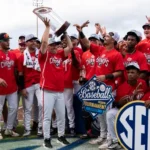
There is a different feeling surrounding University of Georgia baseball right now. Not just excitement. Not just optimism. Expectation.
For the first time in program history, the Bulldogs enter the NCAA Tournament as the No. 3 overall national seed, and honestly, it feels like this program has finally positioned itself as a legitimate national title contender again.
After years of inconsistency and postseason frustration, Georgia baseball suddenly looks built to make a serious run back to Omaha. The numbers speak for themselves.
Georgia enters the postseason at 46-12, earned a top eight national seed for the third straight season under head coach Wes Johnson, and will once again host a regional at Foley Field.
This is not some surprise Cinderella story. The Bulldogs have been one of the best teams in the country all season long. And if you are a Georgia fan, this year’s bracket feels especially intriguing.
Last season’s national champion, LSU Tigers did not even make the tournament field, guaranteeing there will be a new national champion crowned this summer.
Meanwhile, the SEC once again dominates the national landscape with seven regional hosts, including Georgia, Auburn, Texas, Florida, Alabama, Mississippi State, and Texas A&M.
That is what makes college baseball in the SEC so brutal. Simply surviving the regular season already feels like postseason preparation.
Still, Georgia’s path is far from easy. The Bulldogs will open regional play Friday night against Long Island University, a team many casual fans will immediately dismiss because of the name on the jersey. That would be a mistake.
Johnson himself pointed out that LIU has experience competing against major programs and will not be intimidated by coming to Athens.
The Sharks run aggressively, steal bases constantly, and attack offensively. In fact, this same LIU program beat Georgia 1 to 0 in Athens back in 2019.
Then there is Liberty, and honestly, the Flames may be one of the more dangerous No. 3 regional seeds anywhere in the tournament. They have power throughout the lineup and a legitimate Friday night ace capable of matching up with almost anyone in the country.
Boston College also arrives after a strong ACC season, meaning this regional is much deeper than some fans may initially realize.
But this is also where Georgia fans should feel confident about this team. The Bulldogs are not built around one star player or one hot streak. They have depth. They have power. They have experience.
And maybe most importantly, they have the kind of pitching staff capable of surviving tournament baseball.
There’s also something different about the confidence level surrounding the program right now. For years, Georgia baseball has carried the weight of history without consistently matching it on the field. This is a program with six College World Series appearances and a national championship in 1990, but too often the Bulldogs felt like a sleeping giant in the SEC baseball world. That no longer feels true.
Wes Johnson has clearly elevated the standard of the program. Hosting regionals has now become expected instead of celebrated. National seeding is no longer viewed as some once in a generation achievement. And for the first time in a long time, Georgia fans are not simply hoping to survive the first weekend of the tournament.
They are talking openly about Omaha. Of course, that is easier said than done. Winning a regional is difficult. Winning a super regional is even harder. And once teams arrive at the College World Series, anything can happen over a short stretch of games.
But this Georgia team absolutely looks capable of getting there.
And with Foley Field set to host postseason baseball once again, the atmosphere in Athens should be electric all weekend long.
For Georgia baseball fans, this is the kind of June that reminds you exactly why college baseball is so special.
2027 College Football Breakout Players
 By: Kenneth Harrison
TheSouthernSportsEdition.com news services
I want to take a look at some of the top prospects around the South that should be drafted high in the 2027 NFL Draft.
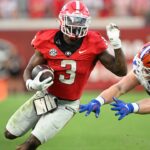
RB Nate Frazier, Georgia: The junior was a four-star recruit and attended national powerhouse Mater Dei Catholic High School in Santa Ana, Ca. He was on the SEC All-Freshman Team in 2024.
Last season he played in 14 games and he started 10 of them. He rushed for 861 yards with 6 touchdowns and averaged 5.4 yards per carry. He also had 13 receptions for 74 yards and a TD.
Frazier re-aggravated an ankle injury in the G-Day Spring Game but it’s reported as a minor injury. As a feature back in 2026 he should have a big year.
OT Jordan Seaton, LSU: The 6’5, 307 pound Seaton spent his last two seasons with Colorado. He was a five-star recruit coming out of IMG Academy (Florida). He was Second-team All-Big 12 in 2025. His season ended due to injury after nine starts.
He’s great at pass blocking. He’s given up 5 sacks in 940 career pass blocking snaps. He’s a very good athlete that needs to improve his run blocking.
S Keon Sabb, Alabama: He played at Michigan his first two years before transferring to Alabama. The redshirt senior is 6’1, 208 pounds. He started all 15 games in 2025 and had 54 tackles, 2.5 TFL, 1 sack, 3 pass breakups and 1 interception.
WR T.J. Moore, Clemson: He’s 6’3, 205 lbs. so he’s a big, physical receiver. He was the only Clemson receiver that started all 13 games in 2025. He had 52 catches for a team-high 837 receiving yards and 4 scores. If he gets more consistent quarterback play, he should have a breakout year in 2026.
S KJ Bolden, Georgia: Bolden attended Buford (GA) High School, which is an elite program in Georgia. He started all 14 games last season and made 76 tackles, 32 solo, 2.5 TFL, 5 PBU, 2 interceptions, 1 fumble recovery and a blocked punt. He made the Coaches All-SEC Second Team.
He’s a great player that can do everything.
LB/Edge Suntarine Perkins: He’s a bit undersized at 6’1, 220 pounds. In 2024 he had 10.5 sacks, 2 FR and an interception. Last season he had 81 tackles, 41 solo, 4.5 sacks, 3 forced fumbles, 2 FR and 1 pick.
He has good coverage for a linebacker. I think he’d be good at the next level for a defensive coordinator that will primarily use him at linebacker.
WR Ryan Williams, Alabama: He was great as a freshman. He’s most known for the game against #2 Georgia when he had 6 catches, 177 yards and a score. In 2024 he had 48 receptions, 865 yards and 8 touchdowns. He also had 2 rushing touchdowns. He was a Freshman All-American and First-team All-SEC.
Last season he regressed. He had 49 catches, 689 yards and 4 TD’s. I’m expecting him to bounce back this season.
CB Zabien Brown, Alabama: He’s 6’0, 194 pounds, so he’s a bigger corner. He recorded two pick-sixes that were 99 and 50 yards. He also had 39 tackles, 2.5 TFL, 1 FF and a team-high 6 PBU.
He’s a press-man corner that has good speed and length.
Jason Bishop Show March 19 2026


QB Comparision

 By: Colin Lacy
TheSouthernSportsEdition.com news services
The matchup between the Florida Gators and the Georgia Bulldogs has been full of outstanding games, Hall of Fame players and oddities all the same, but virtually every year, the game has seen a matchup of great quarterbacks.
Names like Rick Casares in the early days to Steve Spurrier, Buck Belue, Aaron Murray stood out in this Jacksonville based event.
This year’s rendition of the rivalry will see Georgia’s Gunner Stockton square off with DJ Lagway for the Gators. Both are relatively familiar within their respective fanbases, but let’s dive into the two signal callers.
Florida’s DJ Lagway will be going into his 15th career start and carries a 9-5 record as a starter. 2025 has been a slow start with the only FBS win of the year coming against Mississippi State.
Much of the “slow start” was because of missing much of the spring and fall camp with injuries.
Lagway was a highly heralded recruit coming out of Willis High School in Texas. His high school career was capped off with being named the National Gatorade Player of the Year and finished with 8,392 passing yards and 100 touchdowns (58 coming in his senior year).
Last season, he began the season as QB2 but was thrown into the fire after Graham Mertz went down with injury early in the season. Lagway would finish with 1,900 passing yards with 12 TDs and 9 picks thrown.
The freshman Gator racked in the FWAA and ESPN Freshman All American honors.
There were high hopes entering the season, but the 2025 campaign has been an up-and-down affair.
The lows came in the matchup with the Bayou Bengals when he threw 5 interceptions against LSU on September 13th.
However, since then, in the last four games, Lagway has only thrown 3 picks since. The previous three games before the bye week were arguably the most consistent of Lagway’s career.
The Sophomore slinger threw for 280 yards in the win against Mississippi State while connecting on 20 of 34 passes and neared the 300-yard mark against the 9 Texas Longhorns when DJ went 21-28 through the air with 298 yards and a pair of touchdowns.
Lagway has unreal talent and may be coming into his own finally in his Florida career.
On the flip side Georgia has been breaking in a first year starting quarterback, but a familiar name for Bulldog fans. Gunner Stockton took over the full time QB1 role as a redshirt-junior after serving as the backup to Carson Beck the last two seasons in Athens after redshirting in 2022.
Stockton comes from the athletic family and a “coach’s kid.” Gunner’s dad, Rob, was a Georgia Southern Hall of Fame safety from 1992-1995 and had a huge impact on the development of Gunner (to the point that Gunner wears “14” because that was what his dad wore in the Blue and White with the Eagles.
Stockton’s mom was also a collegiate athlete playing for Erskine women’s basketball in the 90’s in Due West, SC. Stockton (similar to Lagway) was thrust into the fire last season, but on a much larger scale.
Stockton had to come in to finish the first half and play the entirety of the 2nd half of the SEC Championship game against Texas last season when Carson Beck wind down with an injury.
The hard-nosed Stockton set a career high passing in his first true road game of his career when he connected for 304 yards against the Tennessee Volunteers in week 3 of the year.
So far, Stockton is completing 70 percent of his passes and has already eclipsed 1,500 yards through the air to go along with averaging 5.7 yards per carry on the ground this year.
While both are still relatively new in the starting role of QB1, both QBs have shown glimpses at least of greatness.
Stockton has been more consistent throughout the season, but Lagway could quiet the naysayers that want to bring up the 5-interception game with a big showing in Jacksonville.
Georgia Florida Game Hall Of Fame Class

 By: Robert Craft
TheSouthernSportsEdition.com news services
The Florida-Georgia rivalry is one of college football’s most enduring traditions, and each year the Florida-Georgia Hall of Fame honors former players, coaches, and contributors.
Established in 1995 by the City of Jacksonville’s Office of Sports and Entertainment (later associated with Jacksonville’s sports and tourism arms), the Florida-Georgia Hall of Fame celebrates those who left indelible marks on the Florida–Georgia rivalry.
Each year, two representatives from the University of Florida and two from the University of Georgia are selected and formally inducted at a luncheon held on the Friday before the annual Florida-Georgia football game in Jacksonville — a weekend now embraced by SEC fans as part of the “Florida-Georgia Weekend.”
Jacksonville plays host to fan events and the buildup to what is often called “the world’s largest outdoor cocktail party” in college football lore. Here are 2025’s honorees:
Brandon James: James might be the most electric return specialist in Southeastern Conference history. Competing for Florida from 2006 to 2009, he appeared in 50 games, leaving a statistical legacy: four SEC records and eleven Florida records, including career kickoff return yards (2,718), punt return yards (1,371), most total kick returns (229), and total return yardage (4,089).
He is among the select few Gators to have returned both a punt and a kickoff for a touchdown, finishing with five return scores in total.
His accolades include 2008 SEC Special Teams Player of the Year, FWAA All-America honors, and multiple All-SEC designations.
Beyond special teams, he chipped in offensively (as a receiver and rusher), contributing more than 700 yards and additional scores.
During his era, Florida claimed two SEC championships and a 2008 BCS national title — and James was a key weapon in shifting momentum and field position.
Todd Johnson: A stalwart in Florida’s secondary from 1999 through 2002, Todd Johnson started 35 games and played in 47.
He was twice named First-Team All-SEC (2000, 2001) and Second-Team in 2002.
Over his career, Johnson amassed 284 tackles, executed 40 “big plays” (including nine interceptions, eight fumble recoveries, and three blocked kicks), and led the team in total plays two years in a row.
His 2000 season was a highlight: 102 tackles and 5 interceptions in a single year.
Off the field, he earned SEC Academic Honor Roll recognition.
After college, he was selected in the 4th round of the 2003 NFL Draft by the Chicago Bears and went on to play in the NFL with the Bears, Rams, and Bills, totaling 80 games and accumulating 196 tackles, two forced fumbles, two fumble recoveries, and a sack.
Freddie Gilbert: Gilbert was a rock on Georgia’s defensive front from 1980 to 1983.
Notably, he posted an undefeated 4–0 record against Florida during his career, anchoring some of Georgia’s most memorable rivalry victories — including a 44–0 shutout in 1982 and a tight 10–9 win in 1983. In 1981, he logged eight tackles (three for loss) against Florida, prompting then-coach Vince Dooley to laud his “outstanding” effort.
Over four seasons, Gilbert racked up 233 tackles and 26 sacks, ranking sixth all-time at Georgia, and set the school’s single-game sack record with five against Temple in 1983.
He earned two First-Team All-SEC nods and was a 1983 All-American. After college he played professionally in the USFL and later in the NFL, including appearances in Super Bowls XXI and XXII with the Denver Broncos.
Sony Michel: Michel was a prolific running back for Georgia from 2014 to 2017, and his performances in rivalry games and postseason matchups cemented his place in Bulldog lore.
In his final Florida–Georgia game, he rushed for 137 yards and scored two long touchdowns in a dominant 42–7 win.
During his collegiate tenure, Michel amassed 3,638 rushing yards, 33 touchdowns, and added more than 600 receiving yards, becoming the third-all-time leading rusher at Georgia.
He was a two-time permanent team captain, and he led Georgia to the 2017 SEC Championship and a berth in the College Football Playoff.
Michel’s final college season included a standout performance in the Rose Bowl with 181 yards and three touchdowns, propelling Georgia to the national title game.
In the NFL, Michel was selected in the first round by the New England Patriots and went on to win two Super Bowls — famously scoring the only touchdown in Super Bowl LIII — before later joining and winning another title with the Los Angeles Rams.
The 2025 inductee class continues the Hall’s mission to spotlight those whose impact rippled beyond individual games.
Their achievements in Florida–Georgia matchups, on broader stages, and in post-collegiate careers embody the rivalry’s blend of excellence, drama, and enduring loyalty.
The Jacksonville luncheon remains more than an award ceremony — it’s a gathering of the rivalry’s past and present, connecting generations of fans, players, and media in celebration of one of college football’s greatest traditions.
As October 31 approaches and fans flock to Jacksonville, the 2025 Hall of Fame class will be immortalized among the legends of the Florida-Georgia rivalry — their stories woven into the fabric of one of the sport’s most storied matchups.
Jason Bishop Show October 30 2025
The War For The Oar

By: Michael Spiers
TheSouthernSportsEdition.com news services
Few games in college football have the same feel as Georgia–Florida.
Every fall, the Bulldogs and Gators meet in Jacksonville for a border war that splits families, fills the stands with half red and black and half orange and blue, and reminds the rest of the country how much fun a real rivalry can be.
Depending on which record book you believe, the two first met in either 1904 or 1915, but since 1926 they’ve battled nearly every year, taking only one break during World War II.
The matchup has lived in Jacksonville since 1933, which is considered neutral ground right on the border, and the party that surrounds it is legendary.
For years, fans called it The World’s Largest Outdoor Cocktail Party, and while the schools have dropped that name officially, the energy hasn’t gone anywhere.
This rivalry has always swung in streaks. Georgia owned the early years, Florida took control in the ’50s and early ’60s, then Vince Dooley’s Bulldogs flipped the script through the ’80s.
The ’90s were all Gators thanks to Steve Spurrier, and Urban Meyer kept it rolling into the 2000s. But lately, it’s been Kirby Smart’s world. Georgia has won seven of the last eight, and they don’t look ready to give it up.
Still, there’s more to this rivalry than touchdowns and bragging rights.
Since 2009, coincidentally around the time the Largest Outdoor Cocktail Party moniker was abandoned, the Okefenokee Oar has added a unique twist to the Georgia–Florida story.
The Oar is exactly what it sounds like. It is a 12-foot wooden oar carved from a 1,000-year-old tree pulled from the Okefenokee Swamp, that massive wetland straddling the Georgia–Florida border.
The swamp’s ownership was once disputed between the two states, which makes it the perfect symbol for this tug-of-war rivalry.
Nobody’s really sure why an oar was chosen. The story goes that an anonymous Florida donor came up with the idea in 2009, and student leaders from both schools ran with it.
One side of the Oar features Georgia’s Bulldog and state crest; the other side shows Florida’s Gator and seal. Down the handle, every score since 2009 is carved in, with enough space to keep track for another 150 years.
Florida won the first two “Wars for the Oar,” but Georgia brought it home in 2011 after a 24–20 win.
Since then, it’s traded hands a few times, usually staying with the winner for three-year stretches.
When the Bulldogs have it, you can find the Oar proudly displayed in the Tate Student Center in Athens, Bulldog side facing out. When the Gators win, the Gator side gets the spotlight in Gainesville.
The original idea for the Oar didn’t come from the athletic departments, but instead came from the students. The University of Georgia and University of Florida student governments teamed up to make it official with a joint resolution in 2011.
Ever since, the winning school’s students have been in charge of hauling the massive thing to Jacksonville for the next game.
When Georgia wins, the Redcoat Band usually gets the honor of bringing it back home on the bus.
The Oar started as a quirky idea, but it’s grown into a genuine part of the rivalry. ESPN’s College GameDay has featured it, fans use the hashtag #WarForTheOar, and it’s become one more layer of pride in a matchup that already oozes history and heart.
This year’s game kicks off November 1, and the stakes are as high as ever. Bragging rights, playoff hopes, and a little piece of carved swamp history are all on the line.
When Georgia and Florida meet in Jacksonville, it’s never just a football game. It’s the annual border battle for the Okefenokee Oar, and there’s nothing quite like it in college football.
Online
Radio/Podcasts