Southern Sports Edition
What Brendan Sorsby Means For The SEC
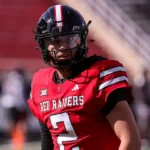



 By: Michael Spiers
TheSouthernSportsEdition.com news services
From the perspective of an SEC football fan, the Brendan Sorsby gambling saga feels like one of those moments where college sports has to stop pretending the old rulebook still fits the new world.
This was not a minor eligibility issue. This was not a paperwork mistake. This was not a player taking a meal he should not have taken or signing an autograph before NIL existed.
This involved a starting quarterback, major gambling violations, bets connected to his own team, a seven-figure NIL deal, a court injunction, a conference legal fight, political pressure and, eventually, a path toward the NFL Supplemental Draft.
That is a lot for one offseason story. It is also a warning.
As an SEC fan, I understand better than most that college football is big business. We stopped pretending otherwise a long time ago.
Players are getting paid, rosters are rebuilt through the transfer portal, boosters operate in broad daylight, and quarterbacks can become million-dollar investments before taking a snap for a school. That is the reality now.
But even in this new era, there has to be a line. Betting on college sports, and especially betting on games involving your own team, has to remain one of those lines that cannot be blurred.
The reason is simple. The entire sport depends on trust.
Fans have to believe the game is real. Teammates have to believe everyone in the locker room is fully invested in winning. Coaches have to believe decisions on the field are clean. Opponents have to believe they are competing on equal terms.
Once gambling enters the locker room, even if there is no proof of point shaving or intentional game manipulation, the questions become impossible to ignore.
That is why the backlash to Sorsby being temporarily cleared to play was so strong. It was not just about Texas Tech. It was about every school wondering what happens next if a court can override NCAA discipline in a gambling case.
It was about conferences wondering whether they still have authority to protect competitive integrity. It was about players at other schools who lost eligibility for similar violations watching a star quarterback fight his way back because he had greater value.
That is where this story becomes bigger than Sorsby. College sports is already struggling with consistency.
NIL enforcement has been uneven. Transfer rules seem to change by the year.
Conference realignment has made tradition feel negotiable. Now gambling threatens to become another battleground where discipline depends less on the rule and more on the player, the school, the lawyers and the political pressure around the case.
That cannot be the future.
There should still be room for compassion. If Sorsby was dealing with a gambling addiction, that should be taken seriously.
These athletes are young, suddenly wealthy, constantly online and surrounded by betting advertisements. It is not enough to hand them a rule sheet and assume the problem is solved.
But compassion and eligibility are not the same thing. A player can deserve help and still lose the privilege of playing college football.
That may sound harsh, but I think the alternative is worse. If betting on your own team becomes something that can be negotiated down, explained away or litigated into a two-game suspension, then college football is asking fans to trust a system that does not appear to trust its own rules.
For the SEC, this should be a wake-up call. The league is the biggest stage in college football, and that means it has the most to lose if public confidence starts slipping. Every school should be reviewing its gambling education, compliance systems, NIL contracts and transfer vetting process right now.
The Sorsby saga may be over at Texas Tech, but the larger issue is not going anywhere.
Gambling is now wrapped around sports culture, and college athletics has to decide whether it is going to manage that reality with strength or stumble into the next scandal.
For us fans, the lesson is uncomfortable but clear. The games are bigger than ever. The money is bigger than ever. The temptation is bigger than ever. Now the rules have to be stronger than ever, too.
Georgia’s Top High School Football Players
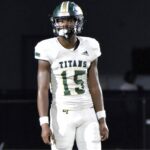
 By: Kenneth Harrison
TheSouthernSportsEdition.com news services
The Georgia high school football season will start in August. We are going to take a look at some of the most talented recruits in the state. NIL has made a huge difference in recruiting because most of the elite players are not committed to Georgia.
Edge DJ Jacobs, Blessed Trinity Catholic (Roswell, GA): Jacobs is listed at 6’5 and 235 pounds. He’s a five-star recruit and the top-rated player in the nation. He’s currently committed to Ohio State.
He finished last season with 102 tackles (24 TFL), 16 sacks and 2 FF in 11 games. Jacobs participated in both the Under Armour All-America Game (1 TFL) and the Polynesian Bowl (1 sack, 1 TFL) as an underclassman.
The Titans were 7-5 in 2025 and they lost in the second round of the AAAA playoffs. We will see if they can become state championship contenders this season.
Edge KJ Green, Stephenson (Stone Mountain, GA): Green is 6’4, 230 lbs. and a five-star recruit. He’s the second ranked player in Georgia and sixth nationally. He’s an LSU commit.
He had a monster junior year, with 129 tackles (40 TFL), 18 sacks, 4 FF and 1 FR. Also caught 1 pass for 10 yards and 1 TD on offense.
Green was the Region 5-AAA Defensive Player of the Year. Ha also participated in the Polynesian Bowl (1 tackle) as an underclassman.
The Jaguars were 11-2 in 2025 and only lost one regular season game by one point.
S Kamarui Dorsey, Hampton (Hampton, GA): Dorsey is committed to Texas A&M. The 6’3, 200 lbs. safety is a four-star recruit.
In 2025 he had 61 tackles, 2 TFL and 4 interceptions. As a sophomore in 2024 he had 58 tackles, 4 TFL and 3 interceptions.
He helped lead the Hornets to an 8-3 record last season.
WR Jaden Upshaw, Lee County (Leesburg, GA): We have our first offensive player on the list. Upshaw is the fourth ranked recruit in the state and a four-star player. He’s also committed to play for Texas A&M.
He finished his junior season with 47 catches for 902 yards (19.2 YPC) and 8 TD in 10 games after missing a few contests due to injury. Upshaw also played in the Navy All-American Bowl (3 catches for 19 yards on 5 targets) as an underclassman. He’s 6’1, 200 pounds so he has good size for a receiver.
The Trojans were 8-4 last year. In 2024 they made it to the AAAAA state championship game.
OT Kennedee Jackson, Lithonia: Jackson is the fifth ranked recruit in Georgia and he’s committed to UGA. He’s 6’6, 297 pounds so he has perfect size for an offensive tackle.
He also plays on the defensive line full-time and he plays basketball. He’s a very good athlete and he’s good when pulling and climbing.
The Bulldogs were 10-3 in 2025 and they got to the third-round of the AAAA playoffs.
ATH AJ Tillman Jr., Lithonia: He’s a four-star player like his teammate that we talked about previously. Tillman has committed to Louisville. He plays running back and defensive back. I believe he wants to play on offense at the next level.
As a junior, Tillman ran for 461 yards on 61 carries, averaging 7.6 yards a pop. He also managed to reach the end zone five times.
At DB, Tillman had 22 tackles, 6 passes defended, and a fumble recovery. He combined for over 1,500 rushing yards and 17 TD’s the last two seasons.
He has taken an official visit to Virginia Tech after committing to Louisville, so we will see if he changes his mind.
2026 US Open Preview

 By: Brian Albertson
TheSouthernSportsEdition.com news service
Father’s Day Weekend is approaching and that means it’s U.S. Open Week!
Shinnecock Hills Golf Club in Long Island, N.Y., will host the 2026 U.S Open, beginning on Thursday, June 18.
It marks the sixth time the links course will host the major, with Brooks Koepka (2018) prevailing the last time the U.S. Open was held at Shinnecock.
Koepka is one of a dozen past champions in the U.S. Open 2026 field, joining the likes of Wyndham Clark, Dustin Johnson, Bryson DeChambeau and Jon Rahm.
In five previous U.S. Opens at Shinnecock Hills dating back to 1896, only three golfers have finished with scores under par.
Raymond Floyd finished 1 under when he became the oldest U.S. Open champion in 1986. Corey Pavin shot even par when he won his first major in 1995, and Retief Goosen (4 under) and Phil Mickelson (2 under) were the only golfers under par in 2004.
In the last U.S. Open at Shinnecock Hills, Brooks Koepka became the first back-to-back winner since Curtis Strange in 1988-89 with a winning score of 1 over.
As you can see, Shinnecock Hills does not favor a particular style player. The course has had long, and short hitters come out on top. As with any U.S. Open, there will be a premium on accuracy both off the tee and approach shots.
The key factor at Shinnecock typically comes down to making putts. In 2004, Retief Goosen had eleven, one putt greens in his final round on his way to victory.
Some usual suspects make up the betting favorites this week. World number one Scottie Scheffler tops the list followed by recent Grand Slam and Masters Champion Rory Mcllroy.
Below are the current top ten betting favorites.
Odds via FanDuel (subject to change)
Scottie Scheffler +550
Rory McIlroy +900
Jon Rahm +1400
Xander Schauffele +1600
Cameron Young +2000
Tommy Fleetwood +2000
Bryson DeChambeau +2000
Ludvig Aberg +2000
Matt Fitzpatrick +2200
Brooks Koepka +3000
We are fortunate to have a wealth of amazing golfers living in our area and many are in the field this week.
Some local players from the Sea Island and St. Simons, Georgia, area competing in the 2026 U.S. Open include Harris English, Keith Mitchell, Andrew Novak, J.T. Poston, Davis Thompson and Brian Harman. They represent part of the local “Sea Island Mafia” golf community.
Other Georgians in the field this week are Chris Kirk, Mason Charles, Russell Henley, Jake Peacock, and Sepp Straka.
Mason Charles is the current U.S. Amateur Champion from Thomasville, GA. He just finished high school and will be a Georgia Bulldog beginning this fall.
It is nice to have so many players from our area competing at the highest level in our U.S. Open. I hope everyone enjoys the tournament and Happy Father’s Day Sunday to all the Dads!
Why Miami Hurricanes Should Be Favorites To National Championship
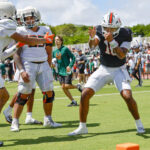
 By: Thomas Tedder
TheSouthernSportsEdition.com news services
Few programs in college football generate excitement quite like the Miami Hurricanes.
After advancing to the College Football Playoff National Championship Game during the 2025 season, Miami enters 2026 with one goal in mind—finishing the job.
Head coach Mario Cristobal has transformed the Hurricanes into one of the nation’s premier programs, and the roster heading into the upcoming season may be one of the most talented he has assembled since returning to Coral Gables.
The biggest storyline of the offseason is undoubtedly the arrival of quarterback Darian Mensah. The former Duke standout transferred to Miami after leading the ACC in passing yards and touchdowns during the 2025 season.
Mensah threw for 3,973 yards and 34 touchdowns while earning All-ACC honors, making him one of the most coveted players in the transfer portal. Cristobal and his staff believe Mensah has the talent, leadership, and experience necessary to keep Miami among the nation’s elite offenses.
Mensah did not come alone. One of Miami’s most significant additions is wide receiver Cooper Barkate, who developed tremendous chemistry with Mensah during their time together at Duke.
Barkate recorded 72 receptions for 1,106 yards and 7 touchdowns last season and is expected to immediately become one of the Hurricanes’ top receiving threats.
The reunion between Mensah and Barkate gives Miami a ready-made connection that could accelerate the offense’s development during the early portion of the season.
While the newcomers have captured headlines, Miami’s success may ultimately depend on the return of sophomore sensation Malachi Toney.
The explosive receiver earned ACC Rookie of the Year and ACC Offensive Rookie of the Year honors after a remarkable freshman campaign.
Toney emerged as one of the most dangerous playmakers in college football, setting freshman receiving records while showcasing game-changing speed and versatility. Entering 2026, he is expected to be one of the ACC’s premier offensive stars.
The Hurricanes also return one of the conference’s most physical rushing attacks. Running back Mark Fletcher Jr. emerged as a major contributor during Miami’s playoff run and provides balance to an offense that should be among the nation’s best.
With a talented offensive line anchored by highly regarded young players and experienced veterans, Miami has the ability to dominate games both through the air and on the ground. However, maintaining offensive-line depth remains a concern that the coaching staff continues to address.
The Hurricanes now have former Brunswick High School offensive line standout Jamal Meriweather, who transferred in from the University of Georgia.
Defensively, Miami faces the challenge of replacing several key contributors who moved on to professional football. Yet Cristobal has consistently recruited at an elite level, and the Hurricanes possess the depth necessary to remain one of the ACC’s top defensive units.
The combination of talented returning players and impact transfer additions should allow Miami to continue playing the aggressive, physical style that has become the program’s identity.
Perhaps the most encouraging sign for Hurricanes fans is the culture that has been established throughout the program. Cristobal has elevated recruiting, strengthened player development, and restored national expectations. For the first time in many years, Miami is no longer hoping to compete with college football’s elite—it expects to be among them.
The outlook for 2026 is clear. Miami enters the season as a legitimate ACC Championship contender and a strong candidate for another College Football Playoff appearance.
If Mensah quickly settles into the offense, Barkate provides another explosive weapon, and Toney continues his rise toward stardom, the Hurricanes will have one of the most dangerous offenses in America.
Combined with a talented defense and strong coaching staff, the pieces are in place for Miami to make another run at the national championship.
For Hurricanes fans, the message is simple: The U is back, and 2026 could be the season that finally brings another national title to Coral Gables.
Jason Bishop Show June 11 2026

Mercer Mega Camp
 By: Joseph Stuckey
TheSouthernSportsEdition.com news services
The unofficial kickoff to football prospect camping season can be signified by 3 simple words: Mercer Mega Camps.
For football prospects across the southeastern United States, these camps give them an opportunity to show their skills in front of dozens of college coaches from across the country.
For the most part, the college football recruiting cycle consists of 3 parts before the start of the college football season, which is around Labor Day.
Once the new year rolls around, Junior Days will start happening, allowing rising seniors to visit college campuses.
Then, as we get closer to June, college coaches will be on the road visiting high schools and watching spring practice.
Then, basically, once June hits, college prospect camps will mix with official visits, allowing prospects to visit campuses across the country.
These prospect camps and official visits will run until the dead period hits around the 20th of June.
These camps usually take place on college campuses and are coached by various college coaching staff. Performing well at these camps and making an impression on coaches can really jumpstart a kid’s recruiting process and set them up for future success.
As the calendar flips to June, usually during the first few days of the month, Mercer Football will host their total exposure mega camps in Macon, Georgia.
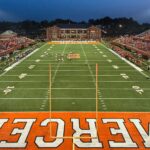
The camps are hosted at Five-Star Stadium on the campus of Mercer University. There are numerous sessions each day with position groups broken up.
Normally, quarterbacks throw to wide receivers who are defended by defensive backs. Offensive and Defensive linemen compete against each other. And finally, running backs and linebackers compete together.
For under-recruited kids or underclassmen looking for exposure, this is a great opportunity to get on a college’s radar. These camps attract student-athletes from all over the Southeast, but the majority of the kids come from the state of Georgia.
Macon is basically the central point in Georgia and a short drive for most prospects. Given Georgia’s status as a recruiting hotbed, it’s no surprise that so many college coaches flock to the state during this time to attend these camps.
The energy at Five-Star Stadium during these camps is electric and provides a true opportunity for high-school athletes to be evaluated by college coaches across all levels. Coaches from power-4 schools all the way down to Division 3 schools are in attendance.
The camp is run by the Mercer Football staff, but the big draw for prospects is the dozens of other college coaches who will be in attendance.
This year, there were numerous power-4 teams advertised to be there, including: Oregon, Texas, Minnesota, Kentucky, North Carolina, and LSU. There were also many Group of 6 schools in attendance, including: Arkansas State, Georgia Southern, Toledo, Eastern Michigan, and Appalachian State. There were also several service academies in attendance, including Army-West Point, the Naval Academy, and the Air Force Academy.
With so many schools in attendance, each athlete can be truly evaluated by coaches based on their skill level and experience. These conversations with coaches at the camps are critical and can lead to scholarship offers and campus invites.
So, with these camps basically kicking off the football prospect recruiting season, at least for a few days in June, Macon becomes the epicenter of the college football universe.
What Colton Nussmeier Will Bring To Georgia Bulldogs
 By: Colin Lacy
TheSouthernSportsEdition.com news services
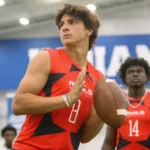
Nussmeier. It’s a name that has been around the SEC for over a decade in multiple different roles and now the third Nussmeier will be entering the SEC in 2027. Colton Nussmeier committed to play for Kirby Smart and the Georgia Bulldogs.
Colton carries on the Nussmeier legacy after his older brother Garrett Nussmeier played quarterback for the LSU Fighting Tigers.
The older Nussmeier brother finished his 5-year LSU career with over 7,500 yards and 52 career scores. Garrett Nussmeier was the 7th round selection of the Kansas City Chiefs in the 2026 NFL Draft and is now learning as the backup to Patrick Mahomes.
The Nussmeier brothers learned under their father Doug Nussmeier, who is currently the New Orleans Saints Offensive Coordinator and a veteran assistant in the NFL and College Football. He also worked with Kirby Smart under Nick Saban at Alabama from 2012-2013.
Colton has blazed his own trail as a standout quarterback as he enters his senior season of high school. Nussmeier is a four-star quarterback and ESPN’s No. 4 pocket passer for the 2027 class. The 6-3, 190 Texas native chose the Bulldogs over Arkansas and UCLA that had made up his “Final Three Teams.”
The rising senior will suit up for a new team for his final season in the high school ranks as earlier this year he transferred from Flower Mound Marcus Hs to the Dallas-Fort Worth powerhouse Denton Ryan Hs after injuries limited his junior season with Flower Mound Marcus.
As a first-year freshman starter in 2024, Nussmeier threw for over 1,900 yards, 16 touchdowns, with only 3 interceptions. Last season, Colton was hampered by a knee injury that limited his junior season to just eight games.
The commitment from the 4-star quarterback prospect closes the Bulldog’s search for a QB in the 2027 class that was a longer than normal search but marks the 4th top-300 pledge in the class.
Georgia has already landed commitments from the top running back in the class with Kemon Spell. The Dawgs also have one of the top tight ends Jaxon Dollar (#82 in the ESPN Top-300) and offensive tackle Kelsey Adams (#109 in the ESPN Top-300).
While the older Nussmeier (Garrett), took a lot of flack at times at LSU, there was consistency with him as a solid leader for the Tigers in his career (no surprise with his dad’s tutelage).
I know at times the “family heritage” playing a factor can get overblown, but this is one that feels that it has some legs.
The impact that Garrett had on the Tigers program on and off the field shows what this family is about, and while it can’t fully predict what Colton will be, it gives a great glimpse of where the upbringing started.
Pair that with the coaching from Kirby Smart and Mike Bobo in Athens, and even as someone that’s not a Georgia Fan, I’m excited to what Colton Nussmeier can turn into for the Bulldogs in a few years.
Georgia will have returner Gunner Stockton leading the offense in 2026.
Stockton has a 24-5 record as a starter for the Dawgs last few seasons. Next season (when Colton Nussmeier will be a Freshman in Athens), it’s expected to be Ryan Puglisi’s offense after serving as the backup to Stockton in 2025-2026.
The line of Georgia Quarterbacks has been a long and illustrious history and looks like the line continues with the newest Dawgs slinger committing recently.
Who Are The 2026 Diamond Dawgs?

By: Michael Spiers
TheSouthernSportsEdition.com news services
For Georgia baseball fans, the wait is finally over. For the first time since 2008, the Bulldogs are headed back to Omaha and the College World Series.
After nearly two decades of watching other programs celebrate on college baseball’s biggest stage, Georgia has earned its place among the final eight teams standing. Now comes the exciting part. The Dawgs must finish the job.
Just getting to Omaha is an accomplishment. The College World Series is one of the most difficult events in sports to reach, requiring teams to survive the grind of the regular season, the SEC schedule, conference tournaments, regionals, and super regionals. Georgia has done all of that and enters Omaha as the highest remaining national seed.
What makes this run even more special is how complete it has been. These Bulldogs didn’t sneak into the field or catch lightning in a bottle at the right time.
They won the SEC regular season championship. They captured the SEC Tournament title for the first time in program history. They rolled through both the regional and super regional rounds with five consecutive postseason victories.
This team has earned every bit of the national attention it’s receiving.
For longtime Georgia fans, reaching Omaha brings back memories of the program’s proud history. The Bulldogs won the national championship in 1990 and made several College World Series appearances during the 2000s. But since the heartbreaking runner-up finish in 2008, Omaha has felt frustratingly distant.
That is why this trip feels different. There is a sense that Georgia isn’t simply happy to be invited. Head coach Wes Johnson and his players have consistently carried themselves with confidence and purpose throughout the season.
The message has been clear. This is not a celebration trip. This is a championship pursuit.
The Bulldogs certainly have the offensive firepower to make that dream a reality. Georgia enters the College World Series leading the nation with 174 home runs.
Every inning feels dangerous for opposing pitchers because there are threats throughout the lineup. One swing can change a game, and Georgia has produced those swings all season long.
Led by veteran stars and an experienced lineup, the Bulldogs have demonstrated an ability to score in bunches and deliver in pressure situations. Their offense has become one of the most feared units in college baseball.
Of course, Omaha is never easy. Georgia opens against a talented Texas team that has its own championship aspirations.
The Longhorns are making their 39th College World Series appearance and have played some of their best baseball during the postseason.
A victory over Texas would immediately position Georgia as a serious favorite to reach the championship series.
The road beyond that won’t get any easier. Alabama, Oklahoma, North Carolina, Ole Miss, West Virginia, and Troy all arrive in Omaha believing they can win the national title. Nobody gets this far by accident.
Still, there is plenty of reason for Bulldog fans to believe. This team has already accomplished things that few Georgia squads ever have. The Bulldogs have shown resilience, confidence, and the ability to rise to every challenge placed before them. They have excelled under pressure and embraced the expectations that come with being one of the nation’s best teams.
Most importantly, they have given Georgia fans something priceless. Hope.
Hope that the championship drought that stretches back to 1990 is nearing its end.
Hope that the celebration that slipped away in 2008 can finally be completed in 2026.
Hope that when the final out of the College World Series is recorded, it will be Georgia players dogpiling on the field.
Omaha is where champions are made. The Bulldogs have waited 18 years for another chance. Now they have it. And Bulldog Nation cannot wait to see what happens next.
Who Will Atlanta Hawks Take In NBA Draft?
By: Kenneth Harrison
TheSouthernSportsEdition.com news services
The 2026 NBA Draft starts on June 23rd. Let’s take a look at teams from the Southeast and see who they should select in the first round.
#3 Memphis Grizzlies (25-57): This is a great position to be in. As long as a team is inside the top 5 they have the chance to get a franchise player and future super star.
I think the best-case scenario here would be Cameron Boozer (Duke). The 6’8 forward is the son of former NBA player Carlos Boozer. Boozer was the National college player of the year, ACC Player of the Year, ACC Rookie of the Year and a consensus first-team All-American. He averaged 22.5 points per game and 10.2 rebounds per game last season.
Point guard Ja Morant is still on the roster but he might be traded. This would be a great pick regardless if he stays with the team. They have another first round pick.
#8 Atlanta Hawks (46-36): The Hawks traded four-time NBA All-Star point guard Trae Young in January. The reason I pointed that out to say they need a point guard.
I think the best fir would be Mikel Brown Jr. (Louisville). The 6’5 guard was on the ACC All-Rookie team and third-team All-ACC in 2026. He averaged 18.2 ppg and 4.7 apg. He scored 45 points against NC State, breaking Cooper Flagg’s ACC freshman single game scoring record.
Atlanta’s offense runs through NBA All-Star power forward Jalen Johnson so Brown will have a playmaker to rely on. They have another pick later in the first round.
#13 Miami Heat (43-39): Elite prospects are off the board at this point. Miami should be open to drafting the best available player here, regardless of position. Tyler Herro and Andrew Wiggins are entering the final year of their contracts.
I think they really need frontcourt depth beyond Bam Adebayo and Kel’el Ware. Power forward Hannes Steinbach (Washington) would be a good fit. He’s 6’11 and he was the NCAA rebounding leader last season. He was also third-team All-Big Ten.
Steinbach averaged 18.5 ppg and 11.8 rpg while shooting over 57% from the field.
#14 Charlotte Hornets (44-38): Their biggest need is interior scoring. They have a good core they can build around. Charlotte led the league in made threes last season (16.4 per game). They made 37.8% of them, which ranked third overall.
I believe 6’9 forward Morez Johnson Jr. (Michigan) would be a good pick. He won a national championship with the Wolverines last year. He was also on the Big Ten All-Defensive Team and Second-team All-Big Ten. He averaged 13.1 ppg and 7.3 rpg. They also have the 18th pick.
#16 Memphis: 6’3 guard Christian Anderson Jr. (Texas Tech) might be the player taken. The sophomore from Atlanta averaged 18.5 ppg, 7.4 apg and rpg. He was the Big 12 Most Improved Player, First-team All-Big 12 and a Third-team All-American.
#18 Charlotte: Center Tarris Reed Jr. (UConn) is 6’11 and pounds. He was First-team All-Big East in 2026. He averaged 14.7 ppg, 9 rpg and he made 60.7% of his shots.
#23 Atlanta: Small forward Karim Lopez (New Zealand Breakers) is a 6’8 wing that played professionally in New Zealand. He averaged 11.9 ppg and 6.1 rpg while playing 25.8 minutes per game.
The GHSA Transfer Rule
 By: Ron Reagin
TheSouthernSportsEdition.com news services
We have all seen how GHSA transfer and eligibility rules can change the course of a season with a single decision.
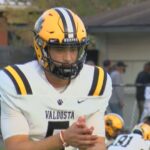
One case in particular still gets talked about around South Georgia, the Jake Garcia situation that gave birth to what many now call the “Jake Garcia Rule.”
The Jake Garcia Case (2020): Highly recruited quarterback Jake Garcia transferred from California to Valdosta High School prior to the 2020 season. He was initially ruled eligible and even played in the season opener. After an ESPN interview raised questions about the family’s move, the GHSA reversed its decision. Garcia was declared ineligible because they determined the family had not made a true “bona fide move.” Valdosta was forced to forfeit a win.
To add insult to injury, Garcia then transferred to Grayson, where he was quickly ruled eligible and played a major role in their state title run that year.
The case highlighted how the GHSA interprets its own rules and led to stricter enforcement moving forward. The lack of clear transparency from the GHSA also fueled speculation and public scrutiny about perceived north/south differences in how rules are applied.
In what many viewed as a “saving face” move, the GHSA strengthened its by-law (By-Law 1.64), which now clearly states: A student who is not eligible at the former school cannot regain eligibility that same year by transferring to a new school. This became known by some as the “Jake Garcia Rule.”
How We Got Here: For decades, the cornerstone of GHSA transfer rules has been the bona fide move requirement; the entire family unit must actually move into the new school’s attendance zone for immediate eligibility. Without it, a transferring student is labeled a “migrant student” and must sit out one full calendar year at the varsity level.
The Garcia case accelerated a trend toward much stricter scrutiny, especially on high-profile and out-of-state transfers.
This led to major rule changes for the 2025–2026 school year:
Automatic one-year ineligibility for second transfers after 9th grade.
Much stricter documentation requirements for proving a bona fide move.
These changes were also driven by big numbers. GHSA Executive Director Tim Scott reported that roughly 59,000 of the state’s 460,000 student-athletes, or 1 in 8 were transfers during the 2024-25 school year.
My Take from the Booth: The GHSA has a very tough, and legitimate job protecting high school sports from recruiting and undue influence. Most of us don’t want programs turning into free-agent destinations.
However, the stricter rules and the heavy burden placed on families to prove a move was not for athletic reasons and have created real frustration in many cases.
All while seemingly having little effect on some high-profile programs with a history of multiple transfers every semester.
With the new PSRF system making every win matter more, these eligibility and transfer decisions now carry even heavier weight. One ruling can shift an entire season as proven with the Jake Garcia situation and others.
The system isn’t perfect, no system ever will be. But greater transparency and more consistent application of the rules would go a long way toward rebuilding trust between the GHSA, schools, coaches and the families of student athletes in this new era of NIL and extremely competitive college recruiting in Georgia.
Online

Radio/Podcasts