Southern Sports Edition
Richmond Hill Wildcats 2026 Preview




 By: Joseph Stuckey
TheSouthernSportsEdition.com news services
The Richmond Hill Wildcats football team is looking to take a big step in 2026, building off of their success in 2025.
The Wildcats play in the newly added 7-A class, which is GHSA’s highest classification. Their region is one of the most competitive in the state and consists of: Camden County, Colquitt County, Lowndes, and Valdosta.
Last year they made the state playoffs as the 4 seed coming out of Region 1 in 6-A (was GHSA’s highest classification at the time). The Wildcats would take an early exit after drawing national power Buford High School in the first round on the road.
This year, they look to play well during the regular season and use the GHSA’s new power-ranking formula for playoff seeding to their advantage.
To do this, they will rely heavily on senior quarterback Gunner Mobley. Last season, he got region honorable mention, and during the season he threw for over 1400 passing yards and was responsible for 13 touchdowns. He was also named a top-5 quarterback in the greater Savannah area.
The schedule sets up pretty well for the Wildcats. By being in GHSA’s highest classification, most of their games outside of region play will be against lower-classification teams and should favor the Wildcats.
They will take on a nearby opponent in the Effingham County Rebels. In this game, On3 gives the Wildcats an 86% chance to win this game. Effingham County is a solid opponent that hosted a first-round playoff game last year in GHSA’s second-highest classification (5-A).
They will also take on another nearby opponent with Liberty County; according to On3, this game should be all Wildcats as they are given a 99% chance to win this game.
The Wildcats will also take on Jenkins out of Savannah, who has become one of the toughest opponents for any team can face in the 912 area code. Another one of South Georgia’s perennial powerhouses is also on the schedule for Richmond Hill.
The Wildcats will take on the Gators of Ware County in what is sure to be one of the top games of the year in South Georgia.
The Wildcats will also compete in a border-battle game as they take on Wando High School, which is located near Charleston, South Carolina. This is the only out-of-state game on the schedule for the Wildcats in 2026.
Richmond Hill will also take on West Georgia powerhouse East Coweta in what is sure to be one of the top games of the week in the state. On3 has this game at basically a coin flip, with it being listed as 41-59 favoring East Coweta.
Finally, to end the season, the Wildcats will take on the South Georgia Gauntlet; their region play will consist of games against Colquitt County, Camden County, Lowndes, and Valdosta in that order to end the season.
The bonus here is that each of those teams has the potential to be a playoff team, which should boost Richmond Hill’s power ranking under the new GHSA formula.
I see Richmond Hill as a team that, based on its strength of schedule, is able to compete for a top 16 seed and could potentially host a home playoff game in the first round of the GHSA state playoffs.
Frederica Academy Knights 2026 Preview
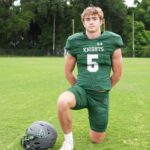
 By: Jeff Doke
TheSouthernSportsEdition.com news services
When the 2025 Frederica Knights season ended in the state playoff semifinal round, the outlook for the future was bright regardless of the most recent game.
Unfortunately, the offseason between 2025 and 2026 was not kind. Several departures have taken the Knights from state title contenders to where some are questioning whether they will even make the playoffs.
Those people have obviously never dealt with Coach Brandon Derrick.
Known for “doing more with less” on the gridiron, Coach Derrick has got his work cut out for him as he enters his fourteenth season at the helm. Instead of the nine returning starters from the 20256 campaign they were expecting, Frederica will instead see five starters return. The four lost starters are significant, most notably starting QB/FS Stanton Beverly.
“(Stanton)’s gonna go to Valwood. So, yeah, so I lost a two year starter, all state quarterback and free safety.”
These will be uncharted waters for the coach, who has never had to face a former player on the field of play. Adding insult to injury, reports out of Hahaira are that Beverly will be the starting QB for the team when the Knights come calling on September 3rd.
At the end of the day, this means that two-year backup Braxton Sykes moves into the QB1 role a year ahead of schedule.
Entering his Junior year, Sykes was competent in the QB role when called into action in 2025, but was showing significant strides as a Wide Receiver in the meantime.
This summer, his primary focus has been travel baseball, but has been all-in on the QB role while at practice.
“We will be more pass oriented than we have been in the past,” says Coach Derrick. “with Stanton we could run the option. Braxton, he’s more pass oriented. He’ll have to run some and do a lot of RPO stuff, but I think he’s a solid player. He does a good job, he’s got a pretty good understanding of what we’re doing. It’s gonna be the decision making. The more he practices, the more he plays, the faster his decisions will be made, he’ll make better decisions.”
Those decisions will have to be made without two offensive weapons that his predecessor had; TE JC Wessel and WR Jayden Gibson who have left the team for different reasons.
Gibson has moved to the Atlanta area and will not be available for what should have been his senior season with Frederica.
Wessel, on the other hand, made a decision for what his family considers a better option for his future – transferring to Bolles Academy in Jacksonville, Florida.
“(JC and his dad) think he’ll be coached up better by one of the tight end coaches down there that they’ve brought in.” Several Bolles players are being recruited by D1 NCAA programs.
In addition to these losses on offense, DE Eric Alford also is no longer with the Frederica Academy Knights.
While roster depth is always an issue with Frederica (they will start 2026 with 27 players), this year’s squad will still be heavy on the upperclassmen.
OLB Eli Middleton and DE Clay Sproule will lead the class of eight seniors that will include stars RB Jordyn Rollins and CB/WR Jaylen Baldwin. Newcomer to the Senior class will be Sal Vinci who will be taking over placekicking duties from the recently graduated Mary Ford Fitzjurls.
In addition to the upperclassmen, look for freshmen WR/DB Henry Dorminy and DE/OL Hayes Brock to make immediate contributions.
Coach Derrick knows it won’t be easy, but honestly it never is in the GIAA.
“We’re going to put the best product we can on the field. We’re planning a really tough schedule. Hopefully our seniors, like I tell them every year, grab the steering wheel and drive the bus. I drive the bus, it’s bumpy. You drive the bus, it’s a lot better.”
The 2026 Frederica Knights season kicks off August 14th at home against Bethesda Academy.
New Camden County Wildcats Baseball Coach

 By: Michael Spiers
TheSouthernSportsEdition.com news services
When Camden County High School began searching for its next head baseball coach, it wasn’t simply looking for someone to fill a vacancy.
The Wildcats were looking for a leader capable of building on the program’s proud tradition while taking it to new heights. It appears they found exactly that in Joey Ray.
Officially introduced as Camden County’s new head baseball coach earlier this month, Ray arrives in Kingsland with one of the most impressive resumes of any coach currently leading a high school baseball program in Georgia.
His career has been defined by winning, player development, and competing at the highest levels of the game, making him an exciting addition to the Wildcat athletic department.
Ray takes over a Camden County program that has consistently produced talented players and enjoyed its share of success over the years.
Following the tenure of former head coach LaDonis Bryant, Ray inherits a team that hopes to become a regular contender for region championships and deep state playoff runs.
If history is any indication, Wildcats fans have plenty of reasons to be optimistic.
Before arriving at Camden County, Ray spent six successful seasons at Flowery Branch High School, where he transformed the Falcons into one of North Georgia’s most consistent programs. During his tenure, Flowery Branch compiled 116 victories, reached the state playoffs five times, and posted four 20-win seasons.
The Falcons also advanced to the state semifinals in 2018 and followed that with an impressive 24-9 campaign in 2021.
Success, however, has followed Ray throughout his coaching career. Before his time at Flowery Branch, he established Milton High School as one of Georgia’s premier baseball programs.
Under his leadership, the Eagles captured five region championships and reached the state championship series in consecutive seasons. The pinnacle came in 2013 when Milton claimed the Georgia Class 6A State Championship, a milestone that cemented Ray’s reputation as one of the state’s elite baseball coaches.
What makes Ray’s resume even more impressive is that his impact extends well beyond Georgia high school baseball.
Since 2013, he has been actively involved with USA Baseball, helping identify and develop some of the nation’s top young talent. He served as an assistant coach for the USA Baseball 12-and-under National Team in 2016 and was later selected as an assistant coach for Team Navy in Major League Baseball’s Prospect Development Pipeline League.
The PDP League serves as one of the country’s premier showcases for high school players with professional baseball aspirations, giving Ray valuable experience working with many of the nation’s top prospects.
Those experiences should prove invaluable for Camden County players hoping to continue their baseball careers beyond high school.
Ray’s coaching accomplishments have also earned the respect of his peers across the state. He has been named Region Coach of the Year five times and has received two Georgia Dugout Awards, recognition reserved for coaches who consistently demonstrate excellence both on and off the field.
But perhaps the greatest strength Ray brings to Camden County is his reputation for building complete programs rather than simply winning games.
Successful high school baseball isn’t built solely on talent. It requires discipline, player development, strong relationships, and a culture that emphasizes accountability every day—not just on game day.
Those qualities have become hallmarks of Ray’s coaching career and are exactly what Camden County hopes will help elevate the Wildcats to another level.
The expectations surrounding Wildcat baseball have always been high. Camden County has long been known for producing outstanding athletes and competing with many of Georgia’s top programs. With Joey Ray now leading the dugout, there is renewed excitement about what the future holds.
Winning championships is never easy in Georgia’s highly competitive baseball landscape, but Camden County has made a statement with this hire. By bringing in one of the state’s most accomplished and respected baseball coaches, the Wildcats have positioned themselves to compete at the highest level for years to come.
A new era has officially begun at Camden County High School, and if Joey Ray’s track record is any indication, Wildcat baseball fans have every reason to believe the best may still be ahead.
Southeast Bulloch Yellow Jackets 2026 Preview
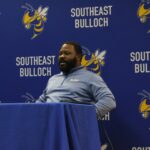
 By: Colin Lacy
TheSouthernSportsEdition.com news services
There’s plenty of “new” in Brooklet heading into the 2025 season.
A new head coach, new coordinators, heck even a new principal. The comforting thing for Southeast Bulloch is the fact that while the roles are new, it’s familiar faces filling those roles.
After a 5-5 finish for Southeast Bulloch in 2025, former Head Coach Jared Zito submitted his resignation and SEB named then Defensive Coordinator Jason Anthony as interim head coach throughout the 2026 season.
After the elevation to Head Coach, Anthony announced the promotion of two current SEB Coaches to the coordinator roles.
Brandon Peterson, who has spent the past two decades on the SEB Football staff and is honorarily inducted into the SEB Athletics Hall of Fame this fall, will take over as the offensive coordinator.
Replacing Coach Anthony as Defensive Coordinator will be Anthony Hammett who has been on staff for the past four years working with the secondary.
With Jayden Murphy and Colby Smith finishing their time as a Yellow Jacket, there are roles to be filled. Those roles will look different with the change in leadership and style.
The past 3 years have seen SEB run a version of the split-back veer. Now the Jackets will transition back into the shotgun and see the Jackets spread the ball around.
While there is some production that has to be replaced, there are many weapons already on this roster that have been waiting in the wings.
The most glaring is the new signal caller Ja’kalian “JK” Small. The rising sophomore saw very few snaps last season but is a budding talent waiting to burst on the scene.
Small is anything but standing at 6’3”, the new QB1 has a dynamic arm and playmaking ability. To me, Small could be one of the most impactful players in this area in his first season in the role.
There are also many threats for SEB for Small to connect with. Obviously, Aaden Peterson has been on the college camp circuit this offseason with multiple offers already heading into his senior year.
AP can affect the game in a couple different ways on the offensive side but mostly will be seen as a receiver and defensive back for the Jackets.
Eli Reed is another receiver that makes an impact this year for SEB with the size and physicality he brings.
On the defensive side, it’s a unit that could be incredibly impactful. The secondary seems to be solidly intact with AP, Eli Reed, and a number of returners, but the group that is expected to be the force is the linebacking corps.
Led by Brant Horst who had over 200 tackles in his career and almost career TFLs will anchor the group in the middle of the SEB Defense along with returners like Bailey Hutchins, and Kaiden Gaskins.
At the end of the day, SEB faces a steep mountain with the schedule in front of them.
A non-region slate that includes games against Statesboro, East Laurens, Burke County and Westside (Augusta) combined with the new region slate poses an elevated challenge for SEB, but it’s one that this Jackets team feels up to the task.
Despite much of the change being filled by familiar names, the feeling around this SEB team has shifted in a positive way.
A big credit of that goes to the new Head Coach Jason Anthony who has talked all offseason about the sole focus of this program is the players.
That mindset is what has made ‘Ant’ one of the most respected coaches by his team that you’ll come across.
SEB has hit the weightroom hard, and I’m fired up to see what the Yellow Jackets look like in less than a month when it gets shown on Fred Shaver Field.
Jason Bishop Show July 16 2026

Lowndes County Vikings 2026 Preview

 By: Ron Reagin
TheSouthernSportsEdition.com news services
The Lowndes Vikings enter the 2026 season with high expectations after back-to-back 10-2 campaigns.
Under head coach Adam Carter, the program continues to compete in South Georgia with physical play, strong culture and fan base that usually deliver consistent postseason appearances.
This will be Carter’s fourth season at the helm, and the continuity he has built is showing.
2025 Season Recap Lowndes finished 10-2 overall and 4-1 in Region 1-AAAAAA, earning a home playoff game in the first round.
They fell in the second round to an eventual Final Four team, North Gwinnett. The Vikings dominated their non-region schedule early, outscoring opponents by an average of 43-8 in the first five games.
In region play, they rolled through Colquitt County, Camden County, Tift County, and Richmond Hill, scoring over 30 points in each contest while allowing just 13.25 points per game.
Their lone region loss came in the Winnersville Classic to rival Valdosta.
Key Returners and Leadership: The offense returns one of the state’s top dual-threat quarterbacks in Jayce Johnson. The Texas A&M commit brings elite arm talent, mobility, and valuable experience.
Several skill players and key offensive linemen are back, giving Lowndes continuity up front and in space.
On defense, experienced playmakers return to anchor a typically physical front seven that gave up less than 14 points on average over 12 games last season.
However, look for emerging contributors from 2025 and some new names, who gained valuable reps and are poised for bigger roles. Coach Carter and his staff have emphasized depth and competition throughout the offseason.
2026 Schedule Highlights: Lowndes will test itself early and often at home. The non-region portion includes Jenkins, Harris County, Lithonia, Blanche Ely (FL), Long County, and Winter Haven (FL).
Region play brings the annual battles with Camden County, Richmond Hill, Valdosta (Oct. 30 at home), and the season finale at Colquitt County (Nov. 6).
With the new PSRF playoff seeding formula in place, this schedule gives Lowndes multiple opportunities to boost their ranking through quality wins. The Florida games and tough region slate should prepare them well for a deep postseason run.
Outlook: The Vikings have the talent, experience, and coaching to contend for another region title and make noise in the state playoffs.
Coach Carter’s emphasis on fundamentals, physicality, and player development has the program trending upward since he took over.
South Georgia fans know the Winnersville Classic against Valdosta (Nov. 30) and the late-season games against Colquitt and Camden will be tough games and shape their post-season.
Lowndes enters 2026 hungry to take big step towards another title.
Glynn Academy Red Terrors 2026 Preview
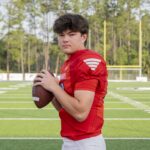
 By: Garrison Ryfun
TheSouthernSportsEdition.com news services
Glynn Academy enters the 2026 season looking to make the playoffs for the 18th year in a row and the 13th time under current head coach Rocky Hidalgo.
Last season, Glynn finished 6-5 overall and 5-3 in Region 1-5A, finishing 4th before falling in the 1st round of the 5A playoffs to Jackson County.
This year, the Red Terrors move up to Class 6A as the GHSA returns to a 7-classification system for the first time since 2023.
Despite the change, Glynn will see many familiar opponents, with Brunswick, Bradwell Institute, Effingham County, South Effingham, Lakeside-Evans and Greenbrier remaining on the region schedule. Grovetown joins the region, while Statesboro and Evans stay in 5A.
With the GHSA’s new Post Season Ranking system, it may not be as easy to sneak in the playoffs as a four seed in the region.
The new Post Season Ranking Formula weighs a team’s winning percentage at 35%, its opponents’ winning percentage at 35% and its opponents’ opponents’ winning percentage at 30%. Region champions will still receive favorable treatment, but the remaining playoff spots will depend more heavily on overall record and strength of schedule.
On the field, the biggest storyline will be the second season of the flexbone offense.
The flexbone was introduced at Glynn Academy last year and immediately produced points. The Terrors averaged 29.6 points per game, the 8th-best points per game in school history and the 2nd-highest during Hidalgo’s tenure.
Returning to command that offense is rising junior quarterback Max Noonan, who missed much of spring practice while helping Glynn Academy’s baseball team make a deep playoff run. Noonan led the Terrors in rushing yards and touchdowns last season while quickly picking up the new offense.
Replacing the two-headed attack of Da’sean Howard and DJ Creighton at fullback will be one of the questions on offense for the Terrors. The Terrors have several potential options at the position, including Caiden Robinson, standout linebacker Cooper Reiss and backup quarterback Ayden Wilson, who could all see carries in the backfield.
The Terrors will have only three games to settle on their new-look backfield before region play begins, and even with the new seeding formula region play is still very important for the playoffs.
Glynn’s Schedule:
8/20/2026 – vs Calvary Day
8/28/2026 – @ Camden County
9/4/2026 – vs Savannah Christian
9/11/2026 – BYE WEEK
9/18/2026 – vs Bradwell Institute (Region)
9/25/2026 – @ Lakeside-Evans (Region)
10/2/2026 – vs Effingham County (Region)
10/9/2026 – BYE WEEK
10/16/2026 – @ Brunswick High (Region)
10/23/2026 – @ Greenbrier (Region)
10/30/2026 – @ South Effingham (Region)
11/6/2026 – vs Grovetown (Region)
After making three trips to the Augusta area for region games last season, the Terrors will thankfully make the journey only twice this year to face Lakeside-Evans and Greenbrier.
The path to the region championship has typically run through some combination of Brunswick, Effingham County, and Glynn Academy in recent years.
That is unlikely to change despite coaching changes and excellent talent that graduated for all 3 schools last year.
Brunswick still boasts an explosive backfield with Josiah Gibbons and Nigel Gardner at running back, while Effingham should continue an impressive passing game with standout wide receiver Trayvis Hunter returning on the outside.
The outlook for the Terrors’ 2026 season is very optimistic. With another year in the flexbone offense and several key contributors returning on both sides of the ball, Glynn should once again compete near the top of the region and put itself in position to extend its playoff streak to 18 consecutive seasons.
Charlton County Indians 2026 Preview
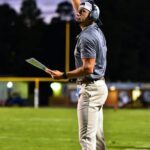
By: Michael Spiers
TheSouthernSportsEdition.com news services
Football has always meant something in Folkston.
For generations, Charlton County has built one of South Georgia’s proudest football traditions, a program defined by toughness, discipline and a belief that every season brings another opportunity to compete for championships.
Those expectations don’t disappear simply because the calendar changes or a new coach arrives. Instead, they grow.
The 2026 season marks the beginning of a new era for the Indians as Brandon Byram takes over a program that reached the second round of the Class A Division II state playoffs a year ago.
Charlton finished 6-6 overall in 2025, battling through a demanding schedule before seeing its postseason run come to an end against Screven County. Now, the focus shifts from what was accomplished last season to what lies ahead.
And what lies ahead won’t be easy.
The Indians open the season with three consecutive road games, beginning August 21 with perhaps their toughest non-region challenge.
Charlton travels across the state line to face West Nassau, a Florida powerhouse that finished 12-2 last season and reached the postseason after placing third in its district. It will be an immediate measuring stick for a team looking to establish its identity under a new coaching staff.
The road doesn’t get much easier a week later when the Indians visit McIntosh County Academy. While the Buccaneers finished just 5-6 a year ago, they reached the state playoffs and will present another early challenge before Charlton heads to Berrien on September 4.
The Rebels struggled to a 4-8 record last season, making that contest one the Indians will hope to use to build momentum before returning home.
Fans in Folkston won’t have to wait long for a marquee matchup.
Charlton’s home opener comes September 11 against Frederica Academy, a defending region champion that finished 8-4 and advanced to the second round of the playoffs.
One week later, the schedule becomes even more demanding when Early County visits. The Bobcats posted a 10-4 record in 2025, won their region and advanced all the way to the state semifinals before their impressive season came to an end.
Region play begins October 2 when Lanier County visits Folkston. Although the Bulldogs finished just 2-9 last season, region games often have a way of ignoring the previous year’s records, making every Friday night significant.
Charlton then travels to Atkinson County on October 9 to face a team that finished 9-1 a year ago, one of the biggest challenges on the region schedule.
After an open week to regroup, the Indians return home October 23 to host Mitchell County, a playoff team that lost a heartbreaking overtime game in the opening round last season.
The regular season concludes with two road games that could ultimately define Charlton’s postseason hopes.
First comes the annual showdown with Clinch County, one of the state’s perennial Class A powers. The Panthers finished 13-1 last season, captured the Region 2 championship and advanced to the state semifinals. Every year this rivalry delivers a physical, hard-fought contest, and 2026 should be no different.
The finale sends the Indians to Irwin County on November 6. While those Indians struggled to a 1-9 record in 2025, road region games are rarely easy, particularly when playoff berths and postseason seeding may still be hanging in the balance.
There are certainly questions surrounding Charlton County entering a season with a new head coach. There always are.
But the Tribe from Folkston has never been short on confidence. Confidence that hard work will win games. Confidence that tradition matters. Confidence that when the lights come on Friday night, Charlton County will be ready to compete.
The road through the 2026 schedule is demanding, but that has never discouraged football in Folkston.
If the Indians embrace the challenges ahead and continue building on last year’s playoff success, another memorable chapter in Charlton County football history could soon be written.
Gainesville Red Elephants 2026 Preview

 By: Kenneth Harrison
TheSouthernSportsEdition.com news services
Gainesville made national news last season when they had 35 players suspended for an on-field brawl in November.
This occurred in the 5A second round win against Brunswick, 42-0. They filed and won an injunction in court to overturn the player suspensions.
The Red Elephants advanced to the 5A state championship, where they lost to Thomas County Central 62-21. The GHSA stripped Gainesville of the 5A runner-up finish after determining they used an ineligible player during the state semifinals.
Gainesville has moved up to 6A this season.
Head coach Josh Niblett left to become the tight ends coach at Colorado in January. He coached the Red Elephants for four years and had a 45-9 record with two state championship game appearances.
This caused Grayson head coach Santavious Bryant to leave and take over in Gainesville.
“We are thrilled to welcome coach Bryant back to Gainesville,” Gainesville High School Athletic Director Adam Lindsey said in a statement. “During his previous time here, he made an immediate impact on our student-athletes and our culture. Watching his growth and the incredible success he achieved at Grayson only solidified our belief that he is the right person to lead this program.”
During Bryant’s three seasons at Grayson, the Rams were 37-5. They also made the state quarterfinals three times, the state semifinals twice and won the state championship in 2024.
Gainesville has won one GHSA state title and that was in 2012 when they had Deshaun Watson.
They have several talented players on the team. Senior LB Jeremiah Proctor (6’4, 210 lbs.) is a four-star recruit and he’s committed to Pitt. He spent most of last season at safety playing up top in Cover 2.
Senior RB Nigel Newkirk (5’11, 200 lbs.) is a three-star player and an Alabama commit. He finished his junior season (14 games) with 1,496 yards and 19 TDs on 184 rushes (8.1 ypc) and added 12 receptions for 128 yards and 1 TD. He also runs track.
QB Kharim Hughley (5’11, 205 lbs.) is also a three-star recruit and he’s committed to Clemson. Last year he completed 172 of 286 passes (60.1%) for 2,596 yards with 34 TD and 10 INT. Also carried the ball 61 times for 394 yards and 9 TD.
OT Tyler Ford (6’6, 307 lbs.) is committed to Miami. IOL Bryson Hurt (6’4, 300 lbs.) is committed to NC State.
Here is the 2026 schedule:
8/22 @ Buford
9/5 @ East St. Louis (Illinois)
9/11 vs. McEachern
9/18 vs. OCA (South Carolina)
9/25 vs. Alpharetta
10/2 @ Roswell
10/9 @ Johns Creek
10/16 vs. Riverwood
10/23 vs. Milton
10/30 @ Lanier
Week 1 against Buford will be tough. They’re the top team in 7A. They were undefeated last season and won the state and national championship but they have lost over twenty players from that team. This is a nationally televised game.
East St. Louis typically plays a tough national schedule against teams like Bishop Gorman (Nevada), IMG Academy (Florida) and American Heritage (Florida). I expect this to be a tough game.
McEachern is another 7A team that should be ranked in the top 10. They were 10-1 last season.
Region 7-AAAAAA play begins week 4 against Alpharetta. The only non-region game the rest of the season is against Riverwood.
Roswell was 12-2 last season and beat Gainesville, 37-35. I think they’ll be the toughest competition in the region. Milton is also a very good team.
I expect Gainesville to compete for the 6A state championship in 2026.
Valwood Valiants 2026 Preview
By: Joseph Stuckey
TheSouthernSportsEdition.com news services
The Valwood Valiants are looking to take charge during the 2026 football campaign.
Valwood is located in one of South Georgia’s football hotbeds in Valdosta.
The Valdosta area is also home to GHSA football powerhouses Valdosta High School and Lowndes County High School, and they are right down the road from Thomas County Central High School.
Valwood will compete in the GIAA 2A classification that will send 8 teams to the state playoffs based on MaxPreps power rankings.
For Region play, they will play in A/AA District 3, which consists of Brookwood School (Thomasville), Sherwood Christian Academy (Albany), Southwest Georgia Academy (Damascus), and Southland Academy (Americus).
In 2024, Valwood competed in the GIAA AAA classification and made it to the State Championship at Georgia Southern University’s Paulson Stadium, where they fell to Deerfield-Windsor 19-15.
Last season, they went 6-4 and lost in the Elite Eight to Frederica Academy. John Milledge Academy would eventually win the AAA state title.
So for this season, with Valwood moving down to the AA classification and having success at the AAA classification, one could expect Valwood to make a strong run in the state playoffs.
Some of the AA teams that are contenders and that they could meet come playoff time include The Brentwood School (Sandersville), which won the AA state title last season, and Pinewood Christian Academy (Bellville), which is also coming down from the AAA classification alongside Valwood.
Now let’s take a look at their very unique 2026 schedule.
To start the season, the Valiants will take on nearby Atkinson County, which will be one of the rare matchups between a GHSA and GIAA school this season.
In years past, there were plenty of these matchups, but with the GHSA’s new power ranking system being implemented across all classifications, it has caused that number to drop drastically.
From my understanding, GHSA teams receive no added benefits of playing a non-GHSA team in terms of power rankings.
But for GIAA schools, it does affect their MaxPreps power rankings; the thought is GHSA teams play tougher opponents and normally benefit GIAA teams’ power rankings, even with a loss.
Even with that said, On3 gives Valwood a 74% chance of winning this game against Atkinson County.
As the season continues, they will play Deerfield-Windsor, which, as I mentioned above, beat Valwood in the 2024 state championship. Deerfield-Windsor is an AAA school, and On3 basically has the game at a coin toss, with a 53/47 split.
Valwood will also take on Cottonwood High School, which is just over the state line near Dothan, Alabama. This is also one of the rare matchups between a GIAA school and an out-of-state school.
The Valiants will also take on George Walton Academy, which made a deep run in the AAAA state playoffs last season.
Frederica Academy is also on the schedule for a revenge game against Valwood, as Frederica was the team that knocked them out of the playoffs last season. Valwood is slated to win this game based on On3’s prediction.
Then they will have 2 higher-classification opponents in Tiftarea Academy (AAA) and Calvary Christian Academy (AAAA) before opening district play against the other 4 teams in their district to finish the regular season.
I predict the Valiants could only have a few losses this season and could end up being really close to the 10-win mark and compete for the #1 seed in the AA playoff bracket.
Online

Radio/Podcasts