College Football
Mercer Mega Camp



 By: Joseph Stuckey
TheSouthernSportsEdition.com news services
The unofficial kickoff to football prospect camping season can be signified by 3 simple words: Mercer Mega Camps.
For football prospects across the southeastern United States, these camps give them an opportunity to show their skills in front of dozens of college coaches from across the country.
For the most part, the college football recruiting cycle consists of 3 parts before the start of the college football season, which is around Labor Day.
Once the new year rolls around, Junior Days will start happening, allowing rising seniors to visit college campuses.
Then, as we get closer to June, college coaches will be on the road visiting high schools and watching spring practice.
Then, basically, once June hits, college prospect camps will mix with official visits, allowing prospects to visit campuses across the country.
These prospect camps and official visits will run until the dead period hits around the 20th of June.
These camps usually take place on college campuses and are coached by various college coaching staff. Performing well at these camps and making an impression on coaches can really jumpstart a kid’s recruiting process and set them up for future success.
As the calendar flips to June, usually during the first few days of the month, Mercer Football will host their total exposure mega camps in Macon, Georgia.
The camps are hosted at Five-Star Stadium on the campus of Mercer University. There are numerous sessions each day with position groups broken up.
Normally, quarterbacks throw to wide receivers who are defended by defensive backs. Offensive and Defensive linemen compete against each other. And finally, running backs and linebackers compete together.
For under-recruited kids or underclassmen looking for exposure, this is a great opportunity to get on a college’s radar. These camps attract student-athletes from all over the Southeast, but the majority of the kids come from the state of Georgia.
Macon is basically the central point in Georgia and a short drive for most prospects. Given Georgia’s status as a recruiting hotbed, it’s no surprise that so many college coaches flock to the state during this time to attend these camps.
The energy at Five-Star Stadium during these camps is electric and provides a true opportunity for high-school athletes to be evaluated by college coaches across all levels. Coaches from power-4 schools all the way down to Division 3 schools are in attendance.
The camp is run by the Mercer Football staff, but the big draw for prospects is the dozens of other college coaches who will be in attendance.
This year, there were numerous power-4 teams advertised to be there, including: Oregon, Texas, Minnesota, Kentucky, North Carolina, and LSU. There were also many Group of 6 schools in attendance, including: Arkansas State, Georgia Southern, Toledo, Eastern Michigan, and Appalachian State. There were also several service academies in attendance, including Army-West Point, the Naval Academy, and the Air Force Academy.
With so many schools in attendance, each athlete can be truly evaluated by coaches based on their skill level and experience. These conversations with coaches at the camps are critical and can lead to scholarship offers and campus invites.
So, with these camps basically kicking off the football prospect recruiting season, at least for a few days in June, Macon becomes the epicenter of the college football universe.
What Colton Nussmeier Will Bring To Georgia Bulldogs
 By: Colin Lacy
TheSouthernSportsEdition.com news services
Nussmeier. It’s a name that has been around the SEC for over a decade in multiple different roles and now the third Nussmeier will be entering the SEC in 2027. Colton Nussmeier committed to play for Kirby Smart and the Georgia Bulldogs.
Colton carries on the Nussmeier legacy after his older brother Garrett Nussmeier played quarterback for the LSU Fighting Tigers.
The older Nussmeier brother finished his 5-year LSU career with over 7,500 yards and 52 career scores. Garrett Nussmeier was the 7th round selection of the Kansas City Chiefs in the 2026 NFL Draft and is now learning as the backup to Patrick Mahomes.
The Nussmeier brothers learned under their father Doug Nussmeier, who is currently the New Orleans Saints Offensive Coordinator and a veteran assistant in the NFL and College Football. He also worked with Kirby Smart under Nick Saban at Alabama from 2012-2013.
Colton has blazed his own trail as a standout quarterback as he enters his senior season of high school. Nussmeier is a four-star quarterback and ESPN’s No. 4 pocket passer for the 2027 class. The 6-3, 190 Texas native chose the Bulldogs over Arkansas and UCLA that had made up his “Final Three Teams.”
The rising senior will suit up for a new team for his final season in the high school ranks as earlier this year he transferred from Flower Mound Marcus Hs to the Dallas-Fort Worth powerhouse Denton Ryan Hs after injuries limited his junior season with Flower Mound Marcus.
As a first-year freshman starter in 2024, Nussmeier threw for over 1,900 yards, 16 touchdowns, with only 3 interceptions. Last season, Colton was hampered by a knee injury that limited his junior season to just eight games.
The commitment from the 4-star quarterback prospect closes the Bulldog’s search for a QB in the 2027 class that was a longer than normal search but marks the 4th top-300 pledge in the class.
Georgia has already landed commitments from the top running back in the class with Kemon Spell. The Dawgs also have one of the top tight ends Jaxon Dollar (#82 in the ESPN Top-300) and offensive tackle Kelsey Adams (#109 in the ESPN Top-300).
While the older Nussmeier (Garrett), took a lot of flack at times at LSU, there was consistency with him as a solid leader for the Tigers in his career (no surprise with his dad’s tutelage).
I know at times the “family heritage” playing a factor can get overblown, but this is one that feels that it has some legs.
The impact that Garrett had on the Tigers program on and off the field shows what this family is about, and while it can’t fully predict what Colton will be, it gives a great glimpse of where the upbringing started.
Pair that with the coaching from Kirby Smart and Mike Bobo in Athens, and even as someone that’s not a Georgia Fan, I’m excited to what Colton Nussmeier can turn into for the Bulldogs in a few years.
Georgia will have returner Gunner Stockton leading the offense in 2026.
Stockton has a 24-5 record as a starter for the Dawgs last few seasons. Next season (when Colton Nussmeier will be a Freshman in Athens), it’s expected to be Ryan Puglisi’s offense after serving as the backup to Stockton in 2025-2026.
The line of Georgia Quarterbacks has been a long and illustrious history and looks like the line continues with the newest Dawgs slinger committing recently.
Why Georgia Bulldogs Can Never Let Kirby Smart Leave For NFL
 By: Capers Childs
TheSouthernSportsEdition.com news services
For decades, University of Georgia fans waited for someone who could finally bring the Bulldogs back to the apex of college football. Then, Kirby Smart arrived.
What Smart has built in Athens is more than just a winning football program. He has changed the standard of Georgia football in its entirety.
Before Smart, University of Georgia was a consistently-successful program, but the Bulldogs struggled to break through and become a national championship winning program.
Under previous head coach, Mark Richt (2001-15), Georgia posted a 145-51 record (.740) and remained nationally relevant, but could never reach the top of the college football landscape.
Smart took over as Georgia’s head coach in 2015 and has since built one of the most dominant stretches in college football history.
He currently has an impressive record of 117-21 with a .848 winning percentage. His accomplishments include back-to-back College Football National Championships in 2021 and 2022, a 2017 CFP title game appearance, SEC Championships in 2017, 2022 and 2024, six SEC Eastern Division titles, and eight New Year’s Six bowl appearances. In just his second season, he had the Bulldogs playing for the national championship for the first time in three decades.
What makes Smart so valuable to Georgia goes beyond his records. He took the job at his alma mater and a place he and his family love. His passion for the program has helped create a standard that Georgia fans had been waiting decades to see.
That impact is also reflected in the atmosphere surrounding the program. Georgia football has become one of the most iconic environments in all of college sports. The Dawg Walk, tailgates, and the packed Sanford Stadium is what defines a Saturday in Athens and under Kirby Smart, Georgia is expected to maintain greatness every season.
Smart’s dominance is also shown in recruiting. Before this year, the Bulldogs hadn’t signed fewer than three five-star recruits since 2017, and they have consistently been top 10 in the 247Sports Composite rankings.
That talent has translated directly to the next level. Under Smart, Georgia has produced 21 first-round NFL Draft picks – the same number as his total losses as head coach.
In that span, he has also had 84 players selected in the NFL Draft, including a modern-era record 15 players taken in the 2022 NFL Draft, the most from a single school in the seven-round draft format. Smart has turned Georgia football into one of the strongest NFL pipelines in college football.
Smart’s commitment to the program is also reflected in the investment Georgia has made in him. He is currently on a $130-million dollar contract through the year 2033. He’s making roughly $13 million dollars a year. In fact, only five NFL coaches are making more than Smart is at UGA. So, why would he leave the SEC?
Speculation about Smart eventually leaving for the NFL continues to surface. However, he already has a background coaching in the NFL. In 2006, he was the safeties coach for the Miami Dolphins for just one season under Nick Saban.
During his lone year in the league, the Dolphins finished with an overall record of 6-10-0. After a subpar year, he returned to college football, where his career has reached a whole new level of success
The reality is that Georgia Football is built around Kirby Smart. Every part of the program. If he were to leave for the NFL, Georgia would be losing the foundation of what the Bulldogs have spent decades trying to build.
For Georgia, the question is what the program would look like without Kirby Smart – and for a team built entirely around his standard, that answer is exactly why Georgia cannot afford to let him go.
2027 College Football Breakout Players
 By: Kenneth Harrison
TheSouthernSportsEdition.com news services
I want to take a look at some of the top prospects around the South that should be drafted high in the 2027 NFL Draft.
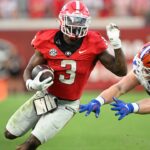
RB Nate Frazier, Georgia: The junior was a four-star recruit and attended national powerhouse Mater Dei Catholic High School in Santa Ana, Ca. He was on the SEC All-Freshman Team in 2024.
Last season he played in 14 games and he started 10 of them. He rushed for 861 yards with 6 touchdowns and averaged 5.4 yards per carry. He also had 13 receptions for 74 yards and a TD.
Frazier re-aggravated an ankle injury in the G-Day Spring Game but it’s reported as a minor injury. As a feature back in 2026 he should have a big year.
OT Jordan Seaton, LSU: The 6’5, 307 pound Seaton spent his last two seasons with Colorado. He was a five-star recruit coming out of IMG Academy (Florida). He was Second-team All-Big 12 in 2025. His season ended due to injury after nine starts.
He’s great at pass blocking. He’s given up 5 sacks in 940 career pass blocking snaps. He’s a very good athlete that needs to improve his run blocking.
S Keon Sabb, Alabama: He played at Michigan his first two years before transferring to Alabama. The redshirt senior is 6’1, 208 pounds. He started all 15 games in 2025 and had 54 tackles, 2.5 TFL, 1 sack, 3 pass breakups and 1 interception.
WR T.J. Moore, Clemson: He’s 6’3, 205 lbs. so he’s a big, physical receiver. He was the only Clemson receiver that started all 13 games in 2025. He had 52 catches for a team-high 837 receiving yards and 4 scores. If he gets more consistent quarterback play, he should have a breakout year in 2026.
S KJ Bolden, Georgia: Bolden attended Buford (GA) High School, which is an elite program in Georgia. He started all 14 games last season and made 76 tackles, 32 solo, 2.5 TFL, 5 PBU, 2 interceptions, 1 fumble recovery and a blocked punt. He made the Coaches All-SEC Second Team.
He’s a great player that can do everything.
LB/Edge Suntarine Perkins: He’s a bit undersized at 6’1, 220 pounds. In 2024 he had 10.5 sacks, 2 FR and an interception. Last season he had 81 tackles, 41 solo, 4.5 sacks, 3 forced fumbles, 2 FR and 1 pick.
He has good coverage for a linebacker. I think he’d be good at the next level for a defensive coordinator that will primarily use him at linebacker.
WR Ryan Williams, Alabama: He was great as a freshman. He’s most known for the game against #2 Georgia when he had 6 catches, 177 yards and a score. In 2024 he had 48 receptions, 865 yards and 8 touchdowns. He also had 2 rushing touchdowns. He was a Freshman All-American and First-team All-SEC.
Last season he regressed. He had 49 catches, 689 yards and 4 TD’s. I’m expecting him to bounce back this season.
CB Zabien Brown, Alabama: He’s 6’0, 194 pounds, so he’s a bigger corner. He recorded two pick-sixes that were 99 and 50 yards. He also had 39 tackles, 2.5 TFL, 1 FF and a team-high 6 PBU.
He’s a press-man corner that has good speed and length.
Out Of A Legend’s Shadow?
 By: Robert Craft
TheSouthernSportsEdition.com news services
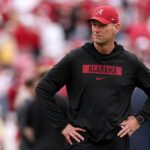
Kalen DeBoer may have a long way to go to step out of Nick Saban’s shadow, but he is now guaranteed to surpass Saban in one area: Salary.
Alabama gave DeBoer a seven-year contract extension that will pay the coach $12.5 million this year.
That’s more than the $11.1 million Saban earned during his final season in 2023 — when he was the highest-paid coach in college football.
DeBoer’s first two seasons have led to some angst in the Alabama fan base and talk of a hot seat.
Athletic director Greg Byrne’s contract extension seeks to quiet that talk: DeBoer’s previous contract called for Alabama to owe him 90 percent of the remaining value of the contract if it fired him without cause.
Assuming that remains the case for this contract, Bryne is doubling down on his belief that DeBoer is the right man for the job.
DeBoer, 51, was hired to replace the retired Saban and earned $10.8 million in his first season, with his contract calling for raises of $125,000 per year through 2031.
Alabama’s first two seasons under DeBoer have been modestly successful: 9-4 his first season, missing the College Football Playoff; 11-4 his second season, making the CFP quarterfinals, where the Crimson Tide lost to eventual champion Indiana.
Saban coached Alabama to six national championships, most recently during the 2020 season, and in his final season had the Crimson Tide in the CFP semifinals, the final year of the four-team playoff.
When he retired, Byrne went outside the Saban coaching tree and the Alabama family to hire DeBoer, who had just coached Washington to the national championship game.
DeBoer’s new contract takes him through the end of the 2032 season, ending on Jan. 31, 2033.
“We are pleased to extend Coach DeBoer and are proud to have him leading the Crimson Tide football program,” Byrne said in a statement. “He is an excellent coach and has done a commendable job developing our student-athletes.”
Alabama hauled in the nation’s No. 2-ranked high school recruiting class for the 2026 cycle, continuing in the Saban tradition.
But the Crimson Tide also lost key pieces in the transfer portal, and the portal class did not rank among the top 25 in rankings.
DeBoer said in late January that he expected his team to be relatively young again, perhaps setting the expectations a bit lower once more.
Now he has a new contract that would seem to give him more leeway, though Alabama, like any SEC school, isn’t exactly hurting for money.
“This University has become a special place to us, and I look forward to working to ensure that Alabama football remains at the forefront of college football,” DeBoer said in a statement. “This program has a long history of success and an unmatched tradition that I was eager to be a part of two years ago, and I cannot wait to keep coaching our guys and bring more championships to Alabama.”
Alabama also announced a contract extension for men’s basketball coach Nate Oats, also through the end of the 2031-32 season.
Oats’ previous deal was set to expire after the 2029-30 season and pay him $6.02 million this year. His salary was increased to $6.275 million this year, with gradual increases to $7.25 million by the end of the deal.
Oats, 51, has led Alabama to five Sweet 16 appearances since being hired in 2019, including a Final Four two years ago.
Natty Or Bust?
 By: Joe Delaney
TheSouthernSportsEdition.com news services
Well, spring is here and one of the most beautiful places in the state is Athens. With a temperature in the 70’s and the azaleas busting out everywhere, Athens is hard to beat.
Throw in a couple tickets I had to see the Tennis Dawgs take out South Carolina on a Friday night and the Baseball Dawgs do the same the next day to those Florida Gators and well, it’s just special.
At that same time, we got glimpses of the 2026 Football Dawgs as they were hard into spring practice.
The general consensus was that the football Dawgs could be very special this year. VERY special.
The next week was the spring game and after seeing it, I can see why. These Dawgs are tight. They have leadership, athleticism, depth, and a hunger to go back to the top.
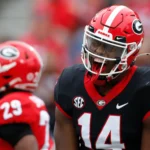
From Kirby on down, these guys want all the marbles in 2026. The great Georgia guru Rusty Mansell put it out there. Georgia has “a roster built to play for a national championship”.
Are they as loaded as the back-to-back National Champions of a couple years back? Maybe not, but they might be just as good. Let’s take a look.
It starts with the top. Georgia has Kirby. The Dawgs also have one of the best overall staffs in the country. Throw in an administration and athletic director that are all on the same page and few programs in the country can match the Red and Black.
On the field it all starts with the QB, and Georgia has a good one in Gunner Stockton. While he might not be as flashy as some, he has that something that his teammates love; grit, determination, and a will to win.
With his experience running this offense, he is one of the top returning signal callers in the country. Behind him are 4 others with Ryan Puglisi currently number 2. Watch out for upcoming Ryan Montgomery who is pushing up the depth chart. The key to these guys is keeping Gunner healthy.
The backs will be very good, led by Nate Frazier. Throw in Chauncey Bowens, the electric Dwight Phillips and a couple of highly touted youngsters and Georgia will run the ball. And look out for Dante Dowdell, a transfer with speed, size and experience. His 20 something yard run while hurdling a defender was one of the spring game highlights.
Next are the wide receivers and tight ends. The wideouts will be bolstered by transfer Isiah Canion, and have talent all over with returners Landon Humphreys, C J Wiley, Talyn Taylor and newcomer Kaiden Prothro a 6’ 6” 230 lb 5-star freshman who starred in the spring game.
This group should be solid especially when paired with the best tight end group in the country. Between Lawson Luckie, Elyiss Williams, Ethan Barbour, and Jaden Reddell, the only problem will be how to get them all on the field.
Reddell showed out in the spring game and there are 2 or 3 others behind these guys. Like I said, this is the best TE group in the country. Look for the Dawgs to run some 3 or 4 TE sets with 1 running back.
None of the above means a thing if the O-line can’t do its thing but Georgia should be deep and very good on the line.
Drew Bobo will anchor the O-line at center. Add in returning starters Dontrell Glover, Juan Gaston, Earnest Green and it will be solid. Oh, and don’t forget newcomers Zykie Helton, and Jah Jackson, all 6’10” 350 lbs of him. This offense will have a hundred different ways to score and should be lethal.
Defensively the Dawgs will be loaded with returning starters all over the place. The D-Line will be big, deep, and athletic with plenty of experience.
Josh Horton, Xzavier Mcleod, Joseph Jonah-Ajonye, Nnamdi Ogboko all return and are back along with Elijah Griffin who has All-American written all over him. There is depth there also.
What the TE’s bring to the offense the LB’s are to the Georgia defense.
Raylen Wilson, Justin Williams, Chris Cole, and Gabe Harris make this group elite and remember the Name Chase Linton. Look for him this fall. There is also depth behind these guys with Nick Abrams, Zayden Walker and others..
The DB’s should be solid with returners Ellis Robinson IV, K J Bolden, Demello Jones, Rasean Dinkins, Kyron Jones, and transfers Braylon Conley, Khalil, and Gentry Williams.
The kicking is in good hands with Peyton Woodring although the punting cannot match the loss of thunderfoot Brett Thorson.
The special teams should be very good with a host of players vying for playing time to get on the field and impress.
All and all this is a loaded football team. Big, fast, physical with depth all over.
To me the keys to a run at the Natty are things that need to be improved on from a 12-2 team in 2025.
First is rush the passer, Georgia was lacking in this last year and the injury to transfer Amaris Williams during the spring didn’t help. That’s priority number one.
Next is, keep Gunner healthy. While there is quality behind him, Gunner is the man.
And last is get a little luck. This team can beat any team in the country if they are on. But they are not the 21 or 22 outfits. They’ll need a little luck here and there. If those three keys come to fruition, I like our chances.
Spring Buzz
By: Kenneth Harrison
TheSouthernSportsEdition.com news services
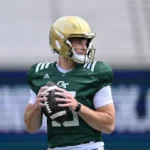
Georgia Tech played their spring game over the weekend. Team Swarm won, 34-10 over Team Wreck ‘Em in the Yellow Jackets’ annual White & Gold Game.
The game consisted of four quarters – the first half with 12-minute quarters and standard clock operations, the second half with 15-minute quarters and a running clock.
Tech went 9-4 last season and finished ranked No. 24. They were ranked as high as No. 7 during the season and they were 6-2 in the ACC.
The 2026 roster features five returning all-ACC performers from last year’s team (PK Aidan Birr, OL Malachi Carney, LB Kyle Efford, RB Malachi Hosley and OL Ethan Mackenny) and 19 highly touted incoming transfers, headlined by RB Justice Haynes and QB Alberto Mendoza.
“Alberto is the guy,” coach Brent Key said when asked about the Yellow Jackets’ quarterbacks’ room after Saturday’s spring game.
Mendoza was named offensive captain for the spring game, completing 12 of 16 passes for 148 yards and one touchdown. The redshirt sophomore is the younger brother of Heisman Trophy winner, Fernando Mendoza.
Mendoza announced his decision to transfer less than 24 hours after winning a national title at Indiana, where he was the backup for his older brother, who is expected to be the No. 1 pick in this week’s NFL draft.
“Obviously, he still has to compete and still has to win the job, but he’s done nothing to disappoint me and think that’s not going to be the case,” Key told Georgia Tech’s radio network during the spring game.
Haynes transferred in from Michigan. Last season he rushed for 857 yards, 10 touchdowns and he averaged 7.1 yards per carry. The senior running back ran nine times for 48 yards in Saturday’s intrasquad scrimmage.
Sophomore running back J.P. Powell had a game-high 68 yards on just three carries, including a 56-yard touchdown run.
Senior running back Malachi Hosley averaged 6.2 yards per carry (4 carries for 26 yards) including an 18-yard touchdown. Last season Hosley rushed for 697 yards, 7 touchdowns and he averaged 7.1 ypc. He also had 14 receptions for 119 yards.
It looks like the Yellow Jackets will have a deep running back room, if these guys don’t transfer before the season.
Redshirt freshman tight end Kevin Roche Jr. had game highs with six receptions for 70 yards. His longest catch was 35 yards and he was always open and making plays for Team Swarm. He looks like he could have a big role going into the fall.
Redshirt freshman quarterback Grady Adamson and redshirt junior running back Chad Alexander were responsible for Team Swarm’s remaining three touchdowns, as the connected on an 11-yard scoring pass and each had 3-yard TD runs. Adamson completed 8 of 11 passes for 104 yards.
Sophomore wide receivers Debron Gatling and Jordan Allen had 47 and 42 receiving yards, respectively (Gatling’s included an 18-yard TD catch from Mendoza).
Defensively, transfer defensive ends Jordan Walker (Rutgers) and Noah Carter (Alabama) had two sacks apiece for Team Swarm, while redshirt senior defensive back Savion Riley led Team Wreck ‘Em with a game-high seven tackles.
Miami Defensive End Given Preferential Treatment In Car Crash Death?
By: Robert Craft
TheSouthernSportsEdition.com news services
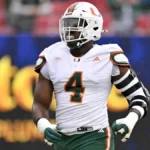
University of Miami defensive lineman Rueben Bain Jr. was the driver during a traffic collision in the early hours of March 17, 2024, that resulted in one of the passengers, 22-year-old Destiny Betts, being severely injured, according to court documents.
Destiny Betts, who was one of four passengers, was not wearing a seatbelt, according to the crash report, and died from her injuries nearly three months later, on June 13, 2024.
Bain was issued a citation for careless driving, with police saying that he “operated his vehicle in a careless or negligent manner.” No field sobriety test was conducted.
The citation would eventually be dismissed, with the reason listed as “defective citation,” and Bain was never charged in connection with the crash.
According to a diagram in the crash report, first obtained Interstate-95 has five regular lanes and an additional express lane. The report states that Bain, (driver) was traveling northbound in the outside center lane when the left front of his vehicle collided with the right rear of another car.
The collision resulted in Bain’s vehicle going through two lanes on the right and hitting the east concrete wall before going across the entire six-lane highway. It hit the west concrete wall, where the vehicle eventually came to a stop.
In October 2024, the driver of the collided car sued Bain on a count of motor vehicle negligence, alleging that the wreck caused him physical injury along with mental anguish.
Another driver voluntarily dismissed his case with prejudice in June. Court records also show a mediation session was scheduled for March, including counsel representing Bain, Betts’ estate and an auto insurance company.
In a separate incident, Bain was issued another citation on Oct. 14, 2025, which indicated he was involved in another crash. The second citation was also dismissed due to a “defective citation.”
As with most prior legal situations, NFL teams will conduct their own investigations into the incident and make their own decisions based on all available information — including anything from law enforcement and whether or not Bain was up front about his incident during team interviews .
Bain is considered one of the top prospects in this year’s NFL Draft. Bain checks in at No. 9 overall and the third-best edge rusher, behind Ohio State’s Arvell Reese and Texas Tech’s David Bailey.
Despite his top-tier talent, questions have swirled around Bain leading up to the draft because of his arm length, which checks in at under 31 inches.
I’m curious on how the University of Miami has kept his driving history out of the media. With no field sobriety, test and lack of media, is this another prime example of an elite athlete getting away with crime?
Shiny Armor?
By: Robert Craft
TheSouthernSportsEdition.com news services
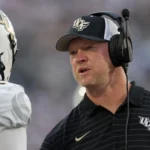
UCF Spring Football is underway, and the Knights have another opportunity to learn more about their reshaped roster under head coach Scott Frost as he enters his second first season in Orlando.
While expectations of another 2017-style undefeated run are unrealistic, optimism around this team is growing fast. UCF returns with a strong amount of production from last season while also adding key transfers, providing a much stronger foundation than it had a year ago.
Although the season remains months away, spring football offers the first real look at what this team could become in 2026. From position battles to scheme fits and leadership development, there is plenty to learn before kickoff arrives.
Here are the three offensive biggest questions UCF needs to answer during spring football.
How quickly can Alonza Barnett III take command of the offense? There is no question Alonzo Barnett III is the headline addition of UCF’s offseason.
Adding a projected starting quarterback who just led JMU on a run to the College Football Playoff immediately raises both the standard and the expectations for UCF entering the 2026 season.
Head coach Scott Frost and the staff believe in Barnett beyond physical tools. They view him as a proven winner, someone with the leadership, poise, and playmaking ability to elevate the players around him.
The biggest question, though, is how quickly that success can translate. Barnett spent the past four seasons at James Madison developing within one system and growing comfortable in that environment.
Now, he is being asked to step into a new offense, build chemistry with a new locker room and replicate that same production in essentially one offseason. No pressure, right?
One of the biggest focuses this spring is Frost and quarterbacks coach McKenzie Milton. They must work to build timing, chemistry and overall cohesiveness around football’s most important position on the field.
Can AJ Blazek fix UCF’s offensive line issues? The Knight’s offensive line enters spring as one of the biggest areas to monitor after difficulty and inconsistency in 2025.
The Knights endured the tragic loss of offensive line coach Shawn Clack early in the year, and even with Danny Hope stepping in to help stabilize the group, the unit never fully found its rhythm.
At times, the line showed flashes individually. Collectively they struggled, which led to costly mistakes, like penalties at the worst possible moments. Whether it was a holding call or a false start, it frequently felt like UCF’s momentum was being derailed during key second-half drives or comeback opportunities.
Now, UCF turns to new offensive line coach AJ Blazek to reshape the group.
Blazek wasted no time putting his stamp on the room, helping bring in four transfer portal additions to compete for major roles up front. While the tackle spots appear relatively stable entering spring, the biggest questions lie on the interior, where center and guard battles could play a major role in determining the offense’s ceiling.
Few position groups will be impacted more by UCF’s offensive line play than the running backs.
Who will emerge as UCF’s lead running back? The Knights brought in two experienced transfer backs in Duke Watson and Laden Chambers, both of whom are expected to compete for major roles in the offense. Each brings a different skill set, but both have the experience to help carry the load in Scott Frost’s system.
The biggest question is who will separate themselves as the true three-down back.
That battle becomes even more intriguing with Taevion Swint returning to the mix after missing last season with a meniscus injury. The former four-star recruit has worked his way back and gives UCF another talented option in the room if he is fully healthy.
Spring camp should provide the first real look at how the workload could be divided and whether one back is ready to take control of the position group.
Spring practices officially begin for the Knights on March 31st, giving UCF their first real chance to start answering these 3 questions on the field.
Spring Is In The Air
 By: Michael Spiers
TheSouthernSportsEdition.com news services
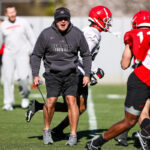
Spring football is underway in Athens, and the Georgia Bulldogs football are already starting to get a clearer picture of what the roster might look like heading into the 2026 season.
The Bulldogs are approaching the midpoint of spring practice, and in a recent press conference head coach Kirby Smart said he’s been pleased with the work his team has put in so far.
Practices have been competitive, with plenty of young players getting valuable reps as Georgia continues to build depth across the roster.
Of course, it wouldn’t be spring practice without a few bumps and bruises. Quarterback Gunner Stockton has been wearing a sleeve on his knee after dealing with a minor injury during offseason workouts. Smart said Stockton was limited a little early in spring practice but has been out there competing and continuing to improve.
Several other Bulldogs have also been limited.
Wide receiver Isiah Canion, a transfer expected to help lead the receiving corps, has been dealing with a sprained ankle. Defensive back, and former Camden County Wildcat Ja’Marley Riddle is still working back from a significant injury and hasn’t been able to participate much physically yet.
On top of that, a handful of players have been held out of spring practice entirely while recovering from injuries, including Drew Bobo, Gabe Harris, Zayden Walker, Jordan Hall, Kyron Jones and Carter Luckie.
Even with those setbacks, Smart says the team has shown good energy during the first several practices.
One of the biggest storylines this spring is along the offensive line. Georgia made a change during the offseason, promoting Phil Rauscher to offensive line coach after he spent last year with the program as an analyst.
Rauscher brings a long NFL background to the position, and players say he’s already introduced some new ideas, especially when it comes to understanding how the offensive line fits into the bigger picture of the offense.
There’s also plenty of competition up front. Georgia lost a couple of experienced linemen and is rotating multiple players at tackle, guard and center this spring.
Smart said the coaching staff is using spring practice to evaluate as many players as possible while building depth at one of the most important positions on the field.
Another player drawing attention early in spring practice is defensive lineman Elijah Griffin.
Smart said Griffin has shown flashes of being disruptive with his quickness and strength.
The freshman still has plenty of development ahead of him, but the coaching staff believes he has the tools to become a major contributor on the defensive front.
The quarterback room has also been busy this spring. Behind Stockton, several younger quarterbacks are getting a lot of extra work in practice and during seven on seven drills. Smart said repetition is key for developing quarterbacks, and Georgia has been intentional about making sure those players get as many reps as possible.
Meanwhile, the running back group is focusing on the next step in its development.
Smart said players like Nate Frazier and Chauncey Bowens are working on things like pass protection, catching the ball out of the backfield and creating yards after contact.
All of that work will eventually lead to one of the most anticipated events of the spring in Athens.
Georgia’s annual spring game, known as G-Day, is set for April 18 at Sanford Stadium.
The scrimmage begins at 1 p.m. and will give fans their first look at the 2026 Bulldogs in a game type setting.
With several practices still ahead, Smart says the focus right now is simple. He wants his team to keep competing, keep improving and keep building toward the fall.
Online

Radio/Podcasts