College Football
New Gator Era




 By: Joseph Stuckey
TheSouthernSportsEdition.com news services
The Swamp in Gainesville is buzzing as the Billy Napier era ends and the Jon Sumerall era has begun.
Coach Sumerall comes to the Gators from Tulane, where he was head coach for 2 years; prior to that, he was head coach at Troy for 2 years. He has a record of 43-12 and led Tulane to a CFP berth last season.
The Gators have also been hot on the recruiting trail this summer, and according to 24/7Sports, they are number 11 in the country and number 6 in the SEC; their class is currently headlined by 5-star O-Lineman Maxwell Hiller.
But the focus is starting to turn to their 2026 campaign as the Gators look to turn this recharged energy into wins on the field.
To start, the Gators are moving forward Lagway-less; their quarterback of the future is now a Baylor Bear. So, at the quarterback position, the Gators will look to either Tramell Jones Jr., who was a 3-star recruit for the Gators in the 2025 class, or Aaron Philo, who many Georgia Tech fans thought would replace Haynes King in Atlanta.
The new Offensive Coordinator for the Gators also came from Georgia Tech, as Buster Faulkner will be calling plays, and if I had to bet who was going to start game number 1 against Florida Atlantic, it would be Philo.
It’s also worth noting from a local perspective that former Portal Panther and Redshirt Sophomore Amir Jackson has a lot of signs pointing his way towards being an impact player this season at Tight End.
According to ESPN, the Gators have the 7th toughest strength of schedule in the country; as a side note, 14 of the top 15 are all SEC teams.
To start off the season, the Gators will host Zach Kittley’s Florida Atlantic Owls and their high-octane offense. He is currently the youngest coach at the FBS level at age 34. I am putting the Gators on upset watch for this game.
Next, they will host FCS opponent Campbell University Camels before a trip to The Plains of Auburn for their first SEC matchup of the season.
Then they will get deep into SEC play as they will host Ole Miss, who is fresh off a trip to the CFP. This will be followed by a trip to take on Eli Drinkwitz’s Missouri Tigers squad in Columbia, Missouri.
Then Shane Beamer’s squad will come to town in what will probably be a must-win game for both squads.
This will be followed by a trip to Austin, Texas to take on the Longhorns.
Next is what is slated to be a “neutral site” game against the Georgia Bulldogs at The Benz in Atlanta.
Following that game, the Sooners of Oklahoma will visit The Swamp, also fresh off a CFP appearance.
The Gators will then travel to Lexington, Kentucky for what will most likely be another must-win game for both squads. Then, for the final home game of the season, they will host the Vanderbilt Commodores.
Then, for rivalry weekend, they will travel up the road to Tallahassee to take on the Seminoles.
With a first-year head coach, there is always a big unknown, and anything can happen.
The Gators return a lot of talent and have good coaches in place, so I set the ceiling at 9 wins and the floor at 6-6, which would put the Gators headed to a bowl game in the first season under Coach Sumerall.
The Kiffin Effect
 By: Michael Spiers
TheSouthernSportsEdition.com news services
If you are looking for the team that could shake up college football in 2026, look no further than the Bayou Bengals of LSU.
The Tigers did not just hire a new football coach this offseason. They made one of the biggest moves in college football by bringing Lane Kiffin to Baton Rouge.
At LSU, the expectation is never just to have a winning season. The expectation is to compete for SEC championships and national championships.
Based on what Kiffin has already accomplished this offseason, I believe the Tigers are built to do exactly that.
Kiffin has won everywhere he has coached. He turned Florida Atlantic into a winner, made Ole Miss a legitimate College Football Playoff contender, and now takes over one of the most talent rich programs in America.
This is the first time in his career that he has inherited a roster and resources capable of competing for a national title from day one.
The biggest reason for the excitement is the transfer portal. LSU landed what many believe is the top transfer class in the country, and almost every addition fills a major need.
After finishing 7-6 last season, the Tigers needed a complete makeover on offense, and Kiffin delivered.
Quarterback Sam Leavitt could be the key to everything. If he stays healthy after recovering from a foot injury, he is an ideal fit for Kiffin’s offense.
He also has plenty of weapons around him. Receivers Jayce Brown, Tre Brown, Jackson Harris, Winston Watkins, and Eugene Wilson III give LSU one of the deepest and fastest receiving groups in college football.
Just as important is the rebuilt offensive line. Colorado transfer Jordan Seaton may prove to be the most valuable addition on the roster.
LSU struggled to protect it’s quarterback and establish a running game last season.
Seaton and several experienced transfers should completely change that. If the Tigers can simply become a respectable rushing team, Kiffin’s offense has the potential to become one of the best in the nation.
The defense should be every bit as impressive.
One of Kiffin’s smartest decisions was keeping defensive coordinator Blake Baker in Baton Rouge. Baker already had LSU playing solid defense despite the offense often putting the unit in difficult situations.
Now he has even more talent to work with. The addition of edge rusher Princewill Umanmielen strengthens the defensive front, while linebacker.
Whit Weeks returns as the emotional leader of the defense. When Weeks was sidelined by injury last year, LSU simply was not the same football team. His return gives the Tigers one of the best linebackers in the SEC leading an already talented group.
Even with all the excitement, the schedule will certainly test LSU. Clemson, Alabama, Texas, Texas A&M, Tennessee, and Ole Miss are all capable of making life difficult. But championship teams do not shy away from challenging schedules.
Several of LSU’s biggest conference games will be played in Death Valley, where few opponents enjoy success.
There may be a few growing pains early with so many new faces learning a new system, but I do not expect them to last very long. Kiffin has consistently built explosive offenses throughout his coaching career, and now he has the roster to match his creativity.
Everything appears to be in place. LSU has upgraded the quarterback position, rebuilt the offensive line, added explosive playmakers, strengthened the defense, and hired one of the brightest offensive minds in college football.
I believe the Tigers will not only return to the College Football Playoff this season, but they will be right in the middle of the SEC championship race from start to finish.
If they stay healthy, do not be surprised if LSU is playing for the national championship when the season comes to an end.
Rocky Top
 By: Colin Lacy
TheSouthernSportsEdition.com news services
In the words of the late great Voice of the Vols John Ward, “You can sense the intensity as they await the arrival of the Tennessee Team here in Neyland Stadium.” There’s a very similar feeling to those archived words around the Orange and White as we inch closer to a September 5th kickoff.
Sixth year Head Coach Josh Heupel has several questions to answer, but there’s also much to be excited about.
The most pressing question around the Vols entering the ’26 campaign is at quarterback. After the departure of the one-year stopgap of Joey Aguilar, Tennessee will be deciding between a pair of young guns to take the snaps.
True freshman Faizon Brandon was a top five overall prospect nationally out of high school where he completed 72 percent of his career passes and racked up over 6,300 yards passing.
The competitor is redshirt freshman George McIntyre. The 6-6, 208 local Tennessee native made two appearances in his redshirt season last year with just nine pass attempts after being a consensus four-star prospect out of high school.
Josh Heupel has said that he would like to name a starter earlier in camp, but “the job won’t be won or lost on day one.
One of the big stories coming out of Knoxville in the pre-season is the NCAA handing down a two-game suspension to middle linebacker Arion Carter.
Carter had declared for the NFL Draft after the 2025 season, and while going through the draft process discovered he needed a medical procedure. Taking that into account, Carter removed his name from the NFL Draft just before the deadline to do so and come back to Tennessee for his senior year.
During the Draft process, Carter had a flight paid for by an NFL club (with the grand total under $500 which he paid back) which violated the NCAA rules (yes, those still exist).
While the September 5th opener against Furman doesn’t necessarily have anything change because of the absence of Carter, it could loom large for week 2 when Tennessee heads to Bobby Dodd Stadium to take on Georgia Tech in Atlanta.
Around whoever takes the snaps for the “Power T” are tons of weapons. DeSean Bishop rushed for over 1,000 yards a year ago to become the third straight Tennessee starting running back to eclipse the 1K threshold.
Braylon Stanley, Mike Matthews, Radarious Jackson lead the receiver room along with a litany of young talent waiting in the wings.
On the offensive side the biggest improvement needs to be on the offensive line. A much re-tooled unit looks to take a huge step forward with the addition of Sam Pendleton coming in from Notre Dame, Wendell Moe transferring from Arizona, and Ory Williams from LSU.
The Tennessee defense is one of the more intriguing I think in the SEC. The talent is there, but the intriguing aspect is the leader of the defense with Defensive Coordinator Jim Knowles being named DC in the offseason by Josh Heupel.
Knowles has been heralded as one of the top defensive minds in college football, especially after winning the 2024 National Championship with the Ohio State Buckeyes.
The schedule is do-able for this Tennessee squad. The Vols don’t play Georgia this season and get Alabama, LSU, Texas and Auburn all at the friendly confines of Neyland Stadium, so while the SEC Media selected Tennessee to finish 8th in the league, there’s a path for the Vols to make some noise and there’s a quiet buzz around Knoxville.
So, to finish the quote from the Legendary Voice of the Vols John Ward, “wherever you listen throughout the world, ITS FOOTBALL TIME IN TENNESSEE!”
Georgia Tech Yellow Jackets 2026 Preview
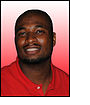 By: Kenneth Harrison
TheSouthernSportsEdition.com news services
The college football season is almost here. We’re going to take a look at Georgia Tech and see how the season will go.
I’ll get a big coaching move out of the way first. Five-time NFL All-Pro WR DeAndre Hopkins has joined the coaching staff as assistant wide receivers coach.
“DeAndre is one of the greatest receivers of all-time, but his value to our program goes far beyond the that,” Key said. “He has an exceptional knowledge of what we’re doing on offense due his long relationship with (offensive coordinator) George Godsey and strong familiarity with the ACC, but most importantly, he’s a leader of men that I’m very excited for our players to be around, on and off the field.”
The Yellow Jackets went 9-4 last season, starting 8-0. They were ranked as high as #7 before they finished the season 1-4. They ended the season ranked #22.
They lost a lot of starters from that team like Haynes King, Jamal Haynes, Malik Rutherford, Keylan Rutledge, Omar Daniels, Clayton Powell-Lee, Ahmari Harvey and Rodney Shelley.
King was one of the best quarterbacks to play for Tech. His backup, Aaron Philo hit the transfer portal to follow offensive coordinator Buster Faulkner to Florida. He’s being replaced by Indiana transfer Alberto Mendoza.
Mendoza was the backup to his brother, Heisman Trophy winner and top pick in the 2026 NFL Draft, Fernando Mendoza. He played sparingly last season, so we really don’t know much about him. He was a part of a national championship program so he does know what it takes to win.
They have lost almost all of the receivers from 2025. Eric Rivers, Malik Rutherford, Dean Patterson, Isiah Canion, Bailey Stockton and Zion Taylor are all gone. Jordan Allen is the only returning receiver from last season’s team to have caught a pass.
The Yellow Jackets brought in Elon transfer Isiah Fuhrmann and Cal transfer Jaiven Plummer from the portal but Georgia Tech is going to need internal improvement from guys like Debron Gatling, Evan Haynes, Rahkeem Smith, Dalen Penson and the four true freshmen.
Fuhrmann caught 46 passes for 907 yards and 9 touchdowns as a sophomore in 2025. That was at the FCS level, so we will see if he can do the same in the FBS.
Starting safeties Omar Daniels and Clayton Powell-Lee played the majority of snaps last season but they have graduated. Tae Harris, who played more than 200 snaps last season and Fenix Felton, who played more than 80 snaps over the course of the last two games are back. Colorado transfer Savion Riley played in four games last season before missing the rest of the season due to injuries.
Here is the schedule:
9/3 vs Colorado
9/12 vs #17 Tennessee
9/19 vs Mercer
9/26 @ Stanford
10/10 vs Duke
10/17 @ Virginia Tech
10/24 vs Boston College
10/31 @ Pitt
11/7 vs Louisville
11/14 @ #25 Clemson
11/21 vs Wake Forest
11/28 @ #5 Georgia
They only have games against three ranked opponents. I believe they’ll lose to Tennessee and UGA. Clemson has not been an elite program in a few years so they definitely have a chance to beat them.
The games I think they should win against Colorado, Mercer, Stanford, Duke, Boston College and Wake Forest.
I’m picking Tech to win seven games. This is based on many of the key positions being unknowns since they have transferred in from other programs. We don’t know how the team chemistry will be or if they will play to their potential.
All-Time ACC Greats
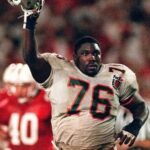
By: Kenneth Harrison
TheSouthernSportsEdition.com news services
We’re going to make a second part to the best ACC football players of all time.
We left off at Lamar Jackson (Louisville).
Maryland: The Terps were a founding member of the ACC in 1953. They joined the Big Ten in 2014.
Randy White (1972-74), the defensive tackle won the Outland Trophy (1974), Lombardi Award (1974), ACC Player of the Year (1974), First-team All-American (1973), Unanimous All-American (1974) and 2x First-team All-ACC (1973-74). He was also named the Liberty Bowl MVP in 1974 even though they lost to Tennessee.
Miami: They have so many great players like Michael Irvin, Ray Lewis, Ed Reed, Sean Taylor, Jim Kelly, Edgerrin James, Vinny Testaverde and Clinton Portis.
These legends played when UM was an independent (1942-1990) or in the Big East (1991-2003).
Warren Sapp (1991-94) is the best Hurricane of all time. He won the Lombardi Award (1994), Bill Willis Trophy (1994), Bronko Nagurski Trophy (1994), Big East Defensive Player of the Year (1994) and Unanimous All-American (1994).
As a junior in 1994, he had 84 tackles and led the Hurricanes in sacks with 10.5. He also finished sixth in Heisman Trophy voting that year.
North Carolina: Julius Peppers (1998-2001) is currently ranked second all-time in UNC history with 30.5 sacks. He has 53 tackles for loss, 167 tackles, five interceptions, two fumble recoveries, five forced fumbles, 13 passes deflected, and 42 quarterback pressures (hurries) and returned two interceptions and one fumble recovery for touchdowns.
He won the Lombardi Trophy (2001), Chuck Bednarik Award (2001), Bill Willis Trophy (2001), Unanimous All-American (2001), Second-team All-American (2000) and 2x First-team All-ACC (2000-01).
NC State: Philip Rivers (2000-03) broke almost every NC State and ACC passing record.
Rivers completed a conference record 1,147 passes on 1,710 attempts, with 95 touchdowns.
He finished his Wolfpack career with 13,484 passing yards, 13th all-time among Division I quarterbacks (he finished in second place at the end of his collegiate career).
He was the NCAA passer rating leader and completion percentage leader (2003), ACC Athlete of the Year (2004), ACC Player of the Year (2003), ACC Rookie of the Year (2000) and First-team All-ACC (2003).
Pitt: Tony Dorsett (1973-76) led the Panthers to win the national championship as a senior. He won the Heisman Trophy (1976), Maxwell Award (1976), Walter Camp Award (1976), Unanimous All-American (1973-76) and 3x First-team All-American.
Dorsett finished his college career with 6,082 total rushing yards, then the NCAA rushing record. That would stand as the record until it was surpassed by Ricky Williams in 1998.
Stanford: Christian McCaffrey (2013-16) has the most career all-purpose yards (6,987) and the most all-purpose yards in a season (3,864) in 2015.
He won the Paul Hornung Award (2015), Jet Award (2015), AP College Football Player of the Year (2015), Consensus All-American (2015) and Pac-12 Offensive Player of the Year (2015).
SMU: Eric Dickerson (1979-1982) was a Unanimous All-American (1982), Second-team all-American (1981) and 2x Southwest Conference Offensive Player of the Year (1981-82).
Syracuse: Donovan McNabb (1994-98) was 3x Big East Offensive Player of the Year (1996-98), 4x First-team All-Big East (1995-98) and Big East Rookie of the Year (1995).
Virginia: Chris Long (2004-07) won the Ted Hendricks Award (207), Dudley Award (2007), ACC Defensive Player of the Year (2007) and Unanimous All-American (2007).
Virginia Tech: Bruce Smith (1981-84) won the Outland Trophy (1984), Consensus All-American (1984) and First-team All-American (1983).
Wake Forest: Brian Piccolo (1961-64) was the ACC Player of the Year (1964) and Second-team All-American (1964).
He led the nation in rushing and scoring in 1964. He’s most known for the movie about his life, Brian’s Song (1971).
All-Time ACC Players
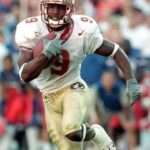
By: Kenneth Harrison
TheSouthernSportsEdition.com news services
We’re going to take a look at some of the best ACC players of all time.
I want at least one player to represent each team. Some of them may have played in a different conference before their respective school joined the conference. This will also be part one because there are 17 schools and I can’t fit them all in one article.
Boston College: Doug Flutie (1981-84) won the Heisman Trophy and was a Unanimous All-American in 1984.
He led the Eagles to a 10-2 that season and they finished ranked #4 in the Coaches Poll. That also features one of the most famous game winning Hail Mary’s at #12 Miami.
In his career he passed for 10,579 yards and 67 touchdowns. He also rushed for 739 yards and 7 scores.
Cal: Marshawn Lynch (2004-06) was the Pac-10 Offensive Player of the Year and a First-team All-American in 2006. In 2005 he rushed for 1,246 yards and 10 TD’s.
In 2006 he rushed for 1,356 yards and 11 touchdowns. For his career he averaged 6.6 ypc. He also caught 68 passes for 600 yards and 6 scores.
Clemson: Deshaun Watson (2014-16) was a 2x Davey O’Brien Award winner, 2x Manning Award (2015-16), Johnny Unitas Golden Arm Award (2016), ACC Player of the Year (2015), 2x ACC Athlete of the Year (2015-16) and First-team All-ACC (2015).
In 2016, he led the Tigers to a National Championship win over #1 Alabama. He was named the CFP National Championship Offensive MVP.
In his career he passed for 10,163 yards and 90 touchdowns. He also rushed for 1,934 yards and 26 touchdowns.
Duke: Clarkston Hines (1986-89) is the only player in ACC history to lead the league in receiving yards three consecutive seasons. He had over a thousand yards and double-digit touchdowns in his final 3 seasons. As a Blue Devil he caught 189 passes for 3,318 yards and 38 scores.
He was inducted into the College Football Hall of Fame in 2010. Hines was a Unanimous All-American (1989), First-team All-American (1988), ACC Male Athlete of the year (1990), ACC Player of the Year (1989) and 3x First team All-ACC (1987-89).
Florida State: The Seminoles have several players that could be considered the best in program history. I’m going to go with Peter Warrick (1995-99).
He helped lead the 1999 Seminoles to an undefeated season and the national championship. He played in 9 games that year because he was suspended for 2 games. He still had 71 catches, 934 yards and 8 TD’s. He also rushed for 96 yards and 3 touchdowns.
He won the Paul Warfield Trophy (1999), Unanimous All-American (1999), Consensus All-American (1998) and 2x First-team All-ACC (1998-99). In his career he had 207 receptions for 3,517 yards and 32 touchdowns.
Georgia Tech: Joe Hamilton (1996-99) was inducted into the College Football Hall of Fame in 2014. He won the Davey O’Brien Award (1999), NCAA Quarterback of the Year (1999), ACC Player of the Year (1999), Consensus All-American (1999), ACC Offensive Player of the Year (1999), 2x First team All-ACC (1998-99) and 2x Gator Bowl MVP (1999-00). He also finished second in 1999 for the Heisman Trophy.
Hamilton passed for 8,862 and 65 scores. He also rushed for 1,758 yards and 18 touchdowns.
Louisville: Lamar Jackson (2015-17) won the Heisman Trophy in 2016. He was a Unanimous All-American (2016), ACC Athlete of the Year (2018), 2x ACC Player of the Year (2016-17) and 2x ACC Offensive Player of the Year (2016-17).
Jackson had 9,043 passing yards and 69 TD’s. He rushed for 4,132 yards and 50 touchdowns.
Heze Kent Finding His Way
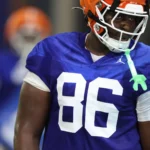
 By: Thomas Tedder
TheSouthernSportsEdition.com news services
There is a quiet confidence about freshman tight end Heze Kent as he walks the practice fields at the University of Florida.
The former high school standout is no longer the biggest or fastest player on the field simply because of his talent. Now, he is learning what it means to be a complete football player in the rugged world of Southeastern Conference football. And that journey may be exactly what helps the Florida Gators climb back into relevance.
At 6-foot-5 and approximately 280 pounds, Kent possesses the size, athleticism, and natural hands that made him one of the most intriguing prospects in the Gators’ recruiting class.
Yet, as he quickly discovered, college football demands far more than raw ability.
“On the field, the biggest adjustment has been playing faster,” Kent said. “The college game is a lot faster.”
That statement reflects the reality facing every freshman entering the SEC. The windows are tighter. The defenders are bigger and stronger. The margin for error disappears quickly.
For Kent, adapting to the speed of the game has become his primary focus as he works to earn the trust of Florida’s coaching staff.
The adjustment hasn’t ended when practice is over. “Off the field, just watching what I eat,” Kent explained. “I need to watch my weight and keep it down. I am currently 280.”
That maturity is encouraging for a Florida program attempting to reclaim its place among the SEC’s elite.
Championship programs are built on players who embrace the daily disciplines that occur behind the scenes—the nutrition, conditioning, recovery, and film study that transform talented athletes into dependable contributors. Kent appears to understand that process.
Perhaps the biggest transformation has come in his approach to playing tight end itself. “I take pride in blocking now,” Kent said. “I wasn’t attached in high school and at Florida I am now an attached TE. If you don’t block, you are going to be taken out the game.”
That mentality could make him invaluable to the Gators moving forward. Florida has long been known for explosive offenses and dynamic skill players, but in the SEC, championships are often won at the line of scrimmage. Tight ends who can block defensive ends, seal the edge in the running game, and still create mismatches in the passing game are worth their weight in gold.
Kent is embracing the physical nature of the position rather than avoiding it. That willingness to do the dirty work is precisely the type of culture Florida must cultivate as it attempts to compete with perennial conference powers.
The Gators have shown flashes of brilliance in recent years but have lacked the consistency and physical identity that once defined the program. Players like Kent can help change that narrative.
More importantly, his development extends far beyond football. When asked who has had the greatest impact on his life, Kent doesn’t mention a famous athlete or coach. Instead, he points to his spiritual mentor. “My Pastor, Mark Baker, has always told me that my life is like walking on a mine field,” Kent said. “I can’t go everywhere, and I can’t hang around the wrong crowd.”
Those words reveal a young man with perspective—a freshman who understands that success at Florida will depend as much on his character as his athletic ability.
That mindset matters.
The SEC is filled with gifted athletes. What separates the great ones is often their discipline, humility, and ability to remain grounded amid enormous expectations. Kent’s reliance on faith and wise counsel gives him a foundation that should serve him well as his role expands.
Florida fans may have to be patient as he continues to adjust to the speed and physicality of college football. Freshman seasons are rarely perfect.
But there is something promising about watching a young player embrace the difficult aspects of his position. There is something encouraging about hearing a freshman talk about blocking before touchdowns and discipline before accolades.
Heze Kent is still finding his way at the University of Florida. And if his growth continues at this pace, the Gators may discover that their path back to prominence in the SEC runs right through the development of a young tight end who is learning to embrace every challenge placed before him.
Sorsby and The Supplemental Draft
By: Colin Lacy
TheSouthernSportsEdition.com news services
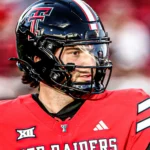
So much has been swirling within the Brendan Sorsby saga that is unchartered territory for many folks following the story. One of the widely unknown elements that has cropped up a few times has been the NFL Supplemental Draft.
The biggest reason that the Supplemental Draft is an unknown commodity in the NFL is due to the fact that it’s been lightly used since it’s inception in 1977.
In the 49 previous years of the Supplemental Draft, there have only been 46 players selected with multiple players being taken nine times before 2000.
There hasn’t been a player even selected since Jalen Thompson was taken by the Arizona Cardinals after being declared ineligible at Washington State for his senior season due to NCAA Rules Violations. One step forward, the NFL hasn’t had a player apply to be considered in the Draft since 2023.
So, what exactly is the Supplemental Draft and how does it work?
The NFL Supplemental Draft is a separate draft that happens in the summer designed for players who were not in the regular first-year player draft in April and ends up losing his college football eligibility.
The NFL Collective Bargaining Agreement has language that the draft has to take place “on or before the seventh calendar day prior to the opening of the first training camp that League Year,” and also prohibits players from electing on their own to bypass the draft for which they are eligible to apply for in order to participate in the Supplemental Draft.
One of the biggest deterrents, and the main reason for the limited selections, especially in recent years, is if a club selects a player in the Supplemental Draft, they forfeit a choice in the corresponding round in the next year’s main draft.
For example, if a team takes Sorsby this year in the third round of the Supplemental Draft, that team would lose their third-round selection for the 2027 First-Year Player Draft.
While the official date of the Supplemental Draft hasn’t been set yet, with the rules outlined in the CBA, it would have to be on or before July 16.
One reason the date hasn’t been set yet is that technically Sorsby isn’t in the field yet. Sorsby’s camp has applied to be in the Supplemental Draft, but league officials must approve each player to be in the selection pool.
Most league officials believe it will be a foregone conclusion that Sorsby will be admitted, but the formality hasn’t happened yet.
Much like other professional league drafts, the NFL Supplemental Draft order gets determined by a lottery, or better yet, three different lotteries.
The NFL will group the teams into three separate groups the first group are teams that won 6 or fewer games, the next group won 7 or more games but missed the playoffs last season, with the final group as teams that played in the postseason. Within each of those groups, the lottery will determine the draft order.
The draft rules are different than the normal draft. In each round of the draft, every team goes “on the clock.” If a team wishes to pick a player in that round, they will put a “bid” in for that player. If only one team submits a pick in that round, they would get the player. If there is more than one team that submits a pick in that round, the player is awarded to the highest team in the Supplemental Draft order.
If there are no picks in that round, all teams are informed that the next round begins, and the same procedure commences. The draft lasts 7 rounds or until all eligible players are selected (whichever comes first).
In the history of the NFL Supplemental Draft, only one player has been selected then go on to the Pro Football Hall of Fame as Chris Carter was selected in the 1987 NFL Supplemental Draft then elected to the Hall in 2013.
Only 8 players have been Supplemental picks and selected to the Pro Bowl with Josh Gordon being the most recent. These numbers don’t include the 1984 Special Supplemental Draft for college seniors that had already signed with the USFL or Canadian Football players when 3 players were drafted and went on to Hall of Fame careers with Steve Young, Garry Zimmerman & Reggie White in 1984.
Where does Sorsby land? The thought right now around the NFL front offices is that Sorsby (who is also the only known player to have applied for the Supplemental Draft) likely lands in the third round of the Supplemental Draft.
That being said, if a playoff team from last year (the lowest tier in the draft hierarchy), thinks that Sorsby could develop to an impact quarterback, they may forego a 2nd round pick next year for him.
What Brendan Sorsby Means For The SEC
By: Michael Spiers
TheSouthernSportsEdition.com news services
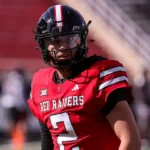
From the perspective of an SEC football fan, the Brendan Sorsby gambling saga feels like one of those moments where college sports has to stop pretending the old rulebook still fits the new world.
This was not a minor eligibility issue. This was not a paperwork mistake. This was not a player taking a meal he should not have taken or signing an autograph before NIL existed.
This involved a starting quarterback, major gambling violations, bets connected to his own team, a seven-figure NIL deal, a court injunction, a conference legal fight, political pressure and, eventually, a path toward the NFL Supplemental Draft.
That is a lot for one offseason story. It is also a warning.
As an SEC fan, I understand better than most that college football is big business. We stopped pretending otherwise a long time ago.
Players are getting paid, rosters are rebuilt through the transfer portal, boosters operate in broad daylight, and quarterbacks can become million-dollar investments before taking a snap for a school. That is the reality now.
But even in this new era, there has to be a line. Betting on college sports, and especially betting on games involving your own team, has to remain one of those lines that cannot be blurred.
The reason is simple. The entire sport depends on trust.
Fans have to believe the game is real. Teammates have to believe everyone in the locker room is fully invested in winning. Coaches have to believe decisions on the field are clean. Opponents have to believe they are competing on equal terms.
Once gambling enters the locker room, even if there is no proof of point shaving or intentional game manipulation, the questions become impossible to ignore.
That is why the backlash to Sorsby being temporarily cleared to play was so strong. It was not just about Texas Tech. It was about every school wondering what happens next if a court can override NCAA discipline in a gambling case.
It was about conferences wondering whether they still have authority to protect competitive integrity. It was about players at other schools who lost eligibility for similar violations watching a star quarterback fight his way back because he had greater value.
That is where this story becomes bigger than Sorsby. College sports is already struggling with consistency.
NIL enforcement has been uneven. Transfer rules seem to change by the year.
Conference realignment has made tradition feel negotiable. Now gambling threatens to become another battleground where discipline depends less on the rule and more on the player, the school, the lawyers and the political pressure around the case.
That cannot be the future.
There should still be room for compassion. If Sorsby was dealing with a gambling addiction, that should be taken seriously.
These athletes are young, suddenly wealthy, constantly online and surrounded by betting advertisements. It is not enough to hand them a rule sheet and assume the problem is solved.
But compassion and eligibility are not the same thing. A player can deserve help and still lose the privilege of playing college football.
That may sound harsh, but I think the alternative is worse. If betting on your own team becomes something that can be negotiated down, explained away or litigated into a two-game suspension, then college football is asking fans to trust a system that does not appear to trust its own rules.
For the SEC, this should be a wake-up call. The league is the biggest stage in college football, and that means it has the most to lose if public confidence starts slipping. Every school should be reviewing its gambling education, compliance systems, NIL contracts and transfer vetting process right now.
The Sorsby saga may be over at Texas Tech, but the larger issue is not going anywhere.
Gambling is now wrapped around sports culture, and college athletics has to decide whether it is going to manage that reality with strength or stumble into the next scandal.
For us fans, the lesson is uncomfortable but clear. The games are bigger than ever. The money is bigger than ever. The temptation is bigger than ever. Now the rules have to be stronger than ever, too.
Why Miami Hurricanes Should Be Favorites To National Championship
By: Thomas Tedder
TheSouthernSportsEdition.com news services
Few programs in college football generate excitement quite like the Miami Hurricanes.
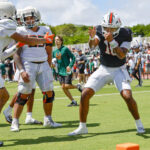
After advancing to the College Football Playoff National Championship Game during the 2025 season, Miami enters 2026 with one goal in mind—finishing the job.
Head coach Mario Cristobal has transformed the Hurricanes into one of the nation’s premier programs, and the roster heading into the upcoming season may be one of the most talented he has assembled since returning to Coral Gables.
The biggest storyline of the offseason is undoubtedly the arrival of quarterback Darian Mensah. The former Duke standout transferred to Miami after leading the ACC in passing yards and touchdowns during the 2025 season.
Mensah threw for 3,973 yards and 34 touchdowns while earning All-ACC honors, making him one of the most coveted players in the transfer portal. Cristobal and his staff believe Mensah has the talent, leadership, and experience necessary to keep Miami among the nation’s elite offenses.
Mensah did not come alone. One of Miami’s most significant additions is wide receiver Cooper Barkate, who developed tremendous chemistry with Mensah during their time together at Duke.
Barkate recorded 72 receptions for 1,106 yards and 7 touchdowns last season and is expected to immediately become one of the Hurricanes’ top receiving threats.
The reunion between Mensah and Barkate gives Miami a ready-made connection that could accelerate the offense’s development during the early portion of the season.
While the newcomers have captured headlines, Miami’s success may ultimately depend on the return of sophomore sensation Malachi Toney.
The explosive receiver earned ACC Rookie of the Year and ACC Offensive Rookie of the Year honors after a remarkable freshman campaign.
Toney emerged as one of the most dangerous playmakers in college football, setting freshman receiving records while showcasing game-changing speed and versatility. Entering 2026, he is expected to be one of the ACC’s premier offensive stars.
The Hurricanes also return one of the conference’s most physical rushing attacks. Running back Mark Fletcher Jr. emerged as a major contributor during Miami’s playoff run and provides balance to an offense that should be among the nation’s best.
With a talented offensive line anchored by highly regarded young players and experienced veterans, Miami has the ability to dominate games both through the air and on the ground. However, maintaining offensive-line depth remains a concern that the coaching staff continues to address.
The Hurricanes now have former Brunswick High School offensive line standout Jamal Meriweather, who transferred in from the University of Georgia.
Defensively, Miami faces the challenge of replacing several key contributors who moved on to professional football. Yet Cristobal has consistently recruited at an elite level, and the Hurricanes possess the depth necessary to remain one of the ACC’s top defensive units.
The combination of talented returning players and impact transfer additions should allow Miami to continue playing the aggressive, physical style that has become the program’s identity.
Perhaps the most encouraging sign for Hurricanes fans is the culture that has been established throughout the program. Cristobal has elevated recruiting, strengthened player development, and restored national expectations. For the first time in many years, Miami is no longer hoping to compete with college football’s elite—it expects to be among them.
The outlook for 2026 is clear. Miami enters the season as a legitimate ACC Championship contender and a strong candidate for another College Football Playoff appearance.
If Mensah quickly settles into the offense, Barkate provides another explosive weapon, and Toney continues his rise toward stardom, the Hurricanes will have one of the most dangerous offenses in America.
Combined with a talented defense and strong coaching staff, the pieces are in place for Miami to make another run at the national championship.
For Hurricanes fans, the message is simple: The U is back, and 2026 could be the season that finally brings another national title to Coral Gables.
Online

Radio/Podcasts