College Football
House of Cards?

 By: Michael Spiers
TheSouthernSportsEdition.com news services
LSU is 3-0, ranked 3rd in the country, and last Saturday beat Florida 20-10 in a rivalry game. On paper, things look great in Baton Rouge. But if you really watch the games, the Tigers’ start isn’t as flawless as it seems.
Brian Kelly made headlines after that Florida win for snapping at a reporter about LSU’s struggling running game. He later apologized, but honestly, you can’t blame him.
The offense has been frustrating to watch. Through three games, LSU is last in the SEC in scoring at just 20 points per game and has only five offensive touchdowns.
In a league like the SEC, if your offense isn’t clicking, even wins start to feel shaky.
The running game has been the biggest problem.
Against Florida, LSU barely managed 100 yards on the ground, and half of those yards came on one big burst from Caden Durham. Outside of that play, the Tigers were stuck in neutral.
Kelly insists LSU can run the ball and points to the last play of the game as proof. Sure, one play is nice, but relying on a single breakaway won’t get you through the tougher SEC matchups coming up.
Quarterback Garrett Nussmeier has had a lot to deal with too. He’s now battling a torso injury and lingering knee issues and is limited on how much he can throw in practice.
Still, he’s completing 65 percent of his passes, but the offense hasn’t looked like the high-powered unit everyone expected with a potential first-round talent at quarterback. If Nussmeier isn’t 100 percent, the pressure on the running game only grows.
The defense, thankfully, has been carrying the team.
Even after All-American linebacker Whit Weeks was ejected for targeting in the first half, LSU forced five turnovers against Florida and played physical from start to finish. Transfer Jack Pyburn and the secondary stepped up big time.
But let’s be real: in the SEC, you can’t expect the defense to win every game. The offense has to start showing up, or the schedule is going to catch up to them fast.
Outside of on field action, there’s been some good news for the Tigers this week. LSU just landed 2027 quarterback Peyton Houston, the top-rated pocket passer in the nation for his class, and the godbrother of former LSU star Devin White.
He’s the first commit of that class and gives hope for the future at a spot where LSU has struggled to find consistency. With Nussmeier leaving after this season, Houston or another QB recruit is going to have to step up eventually.
So where does all this leave LSU? Unbeaten? Yes. Ranked in the top five? Check. But the offense looks sloppy, the quarterback isn’t fully healthy, and the run game has no rhythm.
Kelly might be right that fans can get spoiled, but when you’re running an SEC powerhouse, just winning isn’t enough. People expect domination.
The next few games will tell the story. The Tigers host Southeastern Louisiana this Saturday in what is supposed to be a tune-up, but the real test comes when LSU heads to Ole Miss on September 27.
If the Tigers struggle there, all the questions about the offense will come screaming back. If they pull off a convincing win, Kelly’s outburst and early offensive struggles might just fade into the background.
Right now, LSU is a bit of a paradox: unbeaten with a frustrated coach, a hobbled quarterback, and an offense that hasn’t hit full stride.
Wins are nice, but the cracks are already showing, and the rest of the SEC is ready to expose them if LSU doesn’t clean things up.
Time To Go?

 By: Kenneth Harrison
TheSouthernSportsEdition.com news services
You may have heard that the #13 Florida Gators lost to USF over the weekend, 18-16. The game was at home at Ben Hill Griffin Stadium, aka The Swamp.
South Florida deserves credit. They started the season by beating #25 Boise State 34-7. With that being said, Florida views their program as superior to South Florida. This is a loss that cannot happen for a coach on the hot seat like Billy Napier.
“It’s not good enough,” Coach Billy Napier said. “We’ve got work to do. You guys know it. I know it. Anybody that watched it knows it. We got to take ownership of it, and we got to go back to work. That’s it.”
Napier’s record at Florida is 20-20, with a 14-7 home record. He’s been 1-1 after the first 2 games each season he’s been in Gainesville.
The offense finished with 355 yards but they had to settle for three field goals. Florida’s lack of discipline was on display. The Gators held a one-point lead in the final three minutes of the game.
They had two costly penalties on South Florida’s final drive. Defensive back Dijon Johnson was called for pass interference. On the next play, defensive lineman Brendan Bett was flagged and ejected on the final drive for spitting at an opponent.
The surprising thing is this was two days after Philadelphia Eagles defensive tackle Jalen Carter was ejected for spitting on Dak Prescott.
“I haven’t had that conversation with him yet,” Napier said of Bett. “We’ll take a good look at it, but it’s unacceptable. I think we’ve got a lot of players in that room as well that have the same belief that it’s unacceptable.”
“When a guy does something like that, he’s compromising the team. He’s putting himself before the team. Everything the game is about, you’re compromising, so there will be lessons to be learned there. Yeah, it’s that simple.”
That helped set up the 20-yard field goal by Nico Gramatica as time expired. This was the first road win against a ranked opponent for USF since they beat #16 Notre Dame on September 3, 2011.
“We created it. We deserve it,” Napier said. “If you play football like that, you’re going to be criticized. It comes with the territory, right? Only thing you can do is go get it fixed, and that’s what we’ll start working on (Sunday).”
This was Florida’s first defeat at home against a school from Florida, other than Florida State or Miami, since a 16-14 loss to Stetson in 1938.
Clearly UF fans are angry and talks about firing Napier have resurfaced.
The next game is on the road at #3 LSU. The last time the Gators won in Baton Rouge was 2016. The following games are at #5 Miami, home against #7 Texas and at #16 Texas A&M. The odds seem to be stacked against Napier.
They needed to beat South Florida to have a chance to get to six wins. I think UF will finish with a losing record. The question is, how will the fan base react if they lose their next four games? I wonder when they will run out of patience. I don’t think he will make it to the end of the season.
His buyout is 85% of his current remaining contract, which would be $19.38 million after this season, with 50% of the buyout ($9.7 million) being due within 30 days of Napier being fired and the rest being paid out in equal installments every July through 2028.
There is no offset for the buyout if Napier gets another job.



Pretenders?
 By: Robert Craft
TheSouthernSportsEdition.com news services
I’d have a hard time saying anything positive about Alabama.
In fact, that debacle against Florida State reminded me a lot of that FSU-Georgia Tech game last year, when a team didn’t just lose but also got dominated along the lines.
This was not a result you could blame on a first-time starting quarterback. Ty Simpson was fine when he wasn’t running for his life. The Noles looked like a better team in every aspect of the game.
Could it be that FSU will go on to win the national title, and Alabama’s loss makes more sense in context? Perhaps. Could the Tide look much better three weeks from now against Georgia, especially if they get back top running back Jam Miller and proven defensive tackle Tim Keenan III? Of course.
But there’s not much recent precedent for a ranked team getting humiliated in its opener, then turning around and having an amazing season.
A few recent examples, in reverse chronological order.
2023: No. 8 Florida State 45, No. 5 LSU 24. Though Jayden Daniels went on to win the Heisman, LSU went 9-3 in the regular season and would have missed a 12-team College Football Playoff.
2023: Duke 28, No. 9 Clemson 7. Dabo’s team finished 4-4 in the ACC.
2021: No. 1 Alabama 44, No. 14 Miami 13. The Canes went 7-5, and Manny Diaz got fired.
2018: No. 25 LSU 33, No. 8 Miami 17. The Canes went 7-6, and Mark Richt retired.
Alabama fans looking for a ray of optimism might recall 2016, when the top-ranked Tide destroyed No. 20 USC 52-6. The Trojans went on to win the Rose Bowl.
But there was a clear spark to that run: At 1-2, Clay Helton benched QB Max Browne for redshirt freshman Sam Darnold, who went 9-1 from there. Again, QB was not the problem for the Tide in Tallahassee last weekend.
I do believe Nick Saban got out at just the right time. The ability to sustain that level of year-in, year-out dominance, particularly in the SEC, seems next to impossible in an age when everyone can leave at any time.
Ohio State could become an exception, simply because it’s long recruited at a higher level than anyone else in the Big Ten. (Michigan included, thought that’s starting to change.) The razor is much thinner between Alabama/Georgia/LSU/Texas.
After week one FSU is playoff contender, and Alabama is definitely a pretender.
That’d be poetic, but no, only the first part seems feasible at the moment.
Let’s Play Nine

By: Robert Craft
TheSouthernSportsEdition.com news services
Four years after the nine-game debate heated up, and over two years after SEC commissioner Greg Sankey compared the decision to landing a plane, they finally did. They finally landed the plane.
The SEC recently announced that it is officially going to a nine-game schedule, ending a long saga with a vote of school presidents. Now comes the saga within the saga: Who are each team’s annual rivals? They get three now.
The nine-game format has two main components:
Three games against annual opponents.
Six games against non-annual opponents, rotated such that everybody plays each other twice in four years, home and away. (Other than neutral-site games: Georgia-Florida and Oklahoma-Texas.)
This format will begin in 2026 and will be on a four-year cycle.
Sources reiterated that the three annual rivals could be revisited and revised. That gives the conference flexibility to change those annual opponents — either because rivalries evolve, competition standards evolve, or financial needs evolve.
The SEC did not announce the three annual rivals for each team. Sankey pointed to an announcement in December, since those announcements have worked well the past few years.
He added that the schools themselves will be notified earlier, which indicates that the proposed list from years ago has already changed.
That list was done in 2023, and it prioritized historical rivalries and competition. The conference worked with an analytics company to develop a metric that took into account every team’s 10-year record in an effort to balance schedules.
The result was keeping each team’s top one or two rivalries, but sometimes not their third.
Georgia, for instance, would play Florida and Auburn, but then Kentucky, rather than Tennessee or South Carolina. There was also the odd matchup between Florida and Oklahoma.
These odd matchups may still end up being these team’s three annual rivalries.
But sources indicate that the SEC will not follow the earlier proposed 2023 matchup list.
Sankey, appearing on the SEC Network on Thursday, emphasized tradition: “We’ll look at historical rivalries. That’s a really important component,” Sankey said. “We have a lot of those. In fact, in many ways, we’re uniquely positioned to honor those historic rivalries. So those become annual opponents on a schedule. Not everyone has three, but that’s the basis, is three annual opponents.”
The last point is key: Not every school has three teams they would consider historic or geographic rivals. Some have over four. It’s going to be hard to create everyone’s ideal list.
On the other hand, it’s better than the alternative: The eight-game schedule had one annual rival, which meant games like Texas-Texas A&M, Alabama-Tennessee and Auburn-Georgia might not have been played every year.
Yes, Sankey said this year they had a way of continuing to play those games in an eight-game schedule, but it would have created a headache for schedule makers.
That also may have been Sankey’s way of signaling that they were going to end up protecting those rivalries through a nine-game schedule.
So how will it look?
Here is a potential list, prioritizing tradition and geography, not competition. The seemingly most important rivals are listed first:
Alabama: Auburn, Tennessee, LSU
Arkansas: Missouri, Texas, Kentucky
Auburn: Alabama, Georgia, Florida
Florida: Georgia, Auburn, South Carolina
Georgia: Auburn, Florida, South Carolina
Kentucky: Tennessee, Mississippi State, Arkansas
LSU: Alabama, Ole Miss, Texas A&M
Mississippi State: Ole Miss, Kentucky, South Carolina
Missouri: Oklahoma, Arkansas, Vanderbilt
Oklahoma: Texas, Missouri, Texas A&M
Ole Miss: Mississippi State, LSU, Vanderbilt
South Carolina: Georgia, Florida, Mississippi State
Tennessee: Vanderbilt, Alabama, Kentucky
Texas: Oklahoma, Texas A&M, Arkansas
Texas A&M: Texas, Oklahoma, LSU
Vanderbilt: Tennessee, Ole Miss, Missouri
This isn’t perfect. It leaves out some natural geographic rivals like Alabama and Mississippi State, which are only about 90 miles apart.
It also leaves out historic rivals like Florida and LSU, who developed a good cross-division rivalry during the SEC East-West days. But it does restore Auburn and Florida, who were annual opponents until 2002.
There are also “fill-in” games, such as South Carolina-Mississippi State. It would be great to have Mississippi State play Alabama, but who would Alabama ditch among Auburn, Tennessee and LSU?
Television matters. ESPN is set to pay each school an estimated $5 million extra for adding the ninth game, per multiple sources.
A driving force of this decision was to enhance the viewership of the regular season, sources confirm.
This makes the most sense as the conference enters the College Football Playoff expansion, which would seem to erode the impact of the regular season.
Should I Stay Or Should I Go?
By: Michael Spiers
TheSouthernSportsEdition.com news services
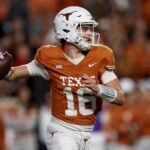
Arch Manning has not even played his first full season as the Texas starter and the talk has already shifted to his future.
Will he be a one-year starter who takes off for the NFL in 2026, or will he do what Peyton and Eli did and stick around for four full years before making the leap?
It is not an easy question, but it is one that shows just how unique Arch’s situation is.
The NFL is obviously interested. Everywhere you look you see him ranked as the number one or number two overall prospect for 2026 and the top quarterback on the board.
People who study the game see the arm strength, the mobility, and the calm presence that stood out when he stepped in last year.
His limited stats still popped off the page. Eight touchdowns, only two picks, and more than 800 yards on just 72 passes.
In today’s game, where guys like Caleb Williams and Bryce Young left school after two years of starting, Arch could very easily go early too.
But there is a catch. Arch has barely played. He has fewer than 250 career snaps, which is the same as about three and a half games. Even if he starts every game this season, that still leaves him with only 18 career starts.
When you look at the current NFL, almost every starting quarterback had 25 or more starts in college. That experience matters when you are running the most important position on the field.
This is where family history comes in. Peyton went back to Tennessee for his senior year even though he was already projected as the first pick. Eli stayed at Ole Miss when he could have gone out early.
Both of them believed in being patient, in developing more before cashing in. Arch has shown the same kind of mindset. He stayed at Texas behind Quinn Ewers instead of transferring. That tells me he is not in a rush.
Money also does not change the equation like it used to. In the past, leaving early meant you secured your first big contract sooner. Today, staying in school can be just as profitable thanks to NIL.
Arch is already tied in with brands like Red Bull, Panini, Uber, and EA Sports. His family is more than secure financially and being the quarterback at Texas brings seven figures in NIL deals anyway.
There is also the idea of legacy. Texas is ranked number one to start the season and they believe they can win a national championship.
If they fall short, does Arch decide he wants one more crack at it in 2026? It is possible. He has talked about how much he loves Austin, his teammates, and the program. That could make it easier to stay.
NFL scouts are excited but also cautious. They know he looks the part, but they want to see how he handles the road trips against teams like Ohio State, Florida, and Georgia this year.
They want to know if he can stay calm when the spotlight is brightest. Until then, he is still more potential than proven.
The Mannings have always played the long game. Eli held out on draft day because the Chargers were not the right fit. Peyton turned down the NFL as a junior even though he was a lock to go first overall.
Arch may make his decision based more on where he might land in 2026 than when he could be drafted. If the right team has the top pick, maybe he goes. If not, sticking at Texas makes sense.
If you ask me, Arch should wait. Give it another year, get more starts, build up confidence, and maybe bring Texas a national title.
He does not need the money and he does not need to race his uncles to the NFL. What he needs is to be fully ready when he gets there.
And if history tells us anything, patience has worked out pretty well for the Manning family.
Panthers on The Prowl
By: Kenneth Harrison
TheSouthernSportsEdition.com news services
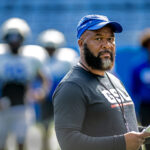
Georgia State hired Dell McGee as their head coach in February of 2024. He got a late start on recruiting and the Panthers went 3-9 last season.
McGee coached at University of Georgia from 2016-23 as the running backs coach and assistant head coach.
The Panthers added many new faces in 2025. They signed 34 high school signees and walk-ons and 43 transfers via the portal.
“We feel like those 77 new additions have supplemented our program,” McGee said at the Sun Belt’s Preseason Media Days event in New Orleans. “But ultimately, the direction of our program is going to be spearheaded by the 45 guys who return.”
This is his first real recruiting class he has signed. “I really can’t compare (to where we were last year), but I can say the 77 additions, we’ve created competition in every single room, and we feel like the competition will push the needle from a standpoint of accountability and competitiveness,” McGee said.
Some of the top incoming transfer players are CB Tyler Scott (Auburn), RB Jordon Simmons (Ole Miss), RB Rashad Amos (Memphis), RB Branson Robinson (Georgia), S Jordan Huff (East Carolina), IOL Deandre Duffus (Maryland), CB Isiah Dunson (Baylor), CB Bernard Causey III (LSU), OT Obadiah Obasuyi (NC State), QB Cameran Brown (Texas Tech), WR Javon Robinson (Georgia), WR Leo Blackburn (Georgia Tech) and LB Zavier Carter (UCF).
As you can see, they have added several players from Power 4 programs. The problem with building a team with transfers is maintaining the program’s culture. You also have to worry about not having a cohesive team if things get rough. A great example of this would be last year’s Florida State team that went 2-10.
Four of GSU’s losses in 2024 were by a touchdown or less, so they were competitive. They have been picked to finish last in the East Division in the preseason poll conducted by the coaches.
The Panthers have two players selected to the Sun Belt’s preseason all-conference team; wide receiver Ted Hurst (first team) and defensive lineman Henry Bryant (second team). Hurst is a senior from Savannah and he transferred in from Valdosta State. He led the team with 56 receptions for 961 yards and a school-record nine touchdowns.
Bryant is a redshirt senior from Delray Beach, Florida. He transferred in from Louisville in 2023. Last year he played in all 12 games and had 30 tackles, 5.5 TFL, 4 sacks, 1 FF and 1 FR.
“Holding our team accountable is really one of the tiers that our players must uphold,” McGee said. “With the leadership of our 45 returning guys, they understand how we practice. They understand what it takes in the off-season, in the weight room and in summer conditioning. They’ve done a great job pushing that agenda forward.”
Georgia State will start the season August 30th at #21 Ole Miss. They play Memphis and Murray State after that. Memphis was 11-2 last season and Murray State is an FCS team that only won one game last year.
Week 4 is a trip to Vanderbilt. GSU beat Vandy 36-32 last season so I expect them to be looking for revenge.
They start conference play October 4th against James Madison. They were picked to finish first in the East Division and Georgia Southern was picked second
The games after that are Appalachian State, @ Georgia Southern, South Alabama, @ Coastal Carolina, Marshall, @ Troy and @ Old Dominion.
I don’t expect the Panthers to win six games but they should improve on the three wins from last season.
Ramming Into New Era

 By: Colin Lacy
TheSouthernSportsEdition.com news services
The offseason has been eventful all across the country, but nowhere as much as in Chapel Hill, North Carolina.
Back in December, the Tar Heels made the announcement that shocked the college football world in hiring one of the best coaches in not just football but all of sports in Bill Belichick.
After 24 years and six Super Bowl titles with the New England Patriots, Belichick fires up a new challenge as he enters year one as any kind of college coach.
Carolina finished the 2024 season falling under .500 with a loss to UConn in the Wasabi Fenway Bowl game to bring the season mark to 6-7.
Belichick has been upfront with the way he plans on hitting college football head on. He plans to bring the NFL mindset and preparation into the college game.
One of the first pieces of that model was announced almost synonymously (if not before) Belichick was officially announced.
The first move for the former Pat’s coach was bringing in NFL front office veteran Michael Lombardi as the General Manager for the Tar Heels. Lombardi brings over 30 years of NFL experience between scouting, personnel, and serving as the Browns GM in 2013.
With Belichick and Lombardi in place, the next thing that the former “pro-model masters” was to tackle the college version of free agency.
The Tar Heels brought in the second most players in the transfer portal with 41 newcomers coming in from the portal only behind West Virginia and Purdue who brought in 54 via transfers.
The first position that had to be addressed right off the bat was at quarterback. After Drake Maye was drafted by the Patriots (coincidentally), it was a struggle for the Heels in 2024 with the signal caller.
UNC started three different quarterbacks last season and never had anyone take the bulls by the horns. This year Carolina looks to be set with Gio Lopez transferring in late from South Alabama after an impressive couple of years for the Jags in the Sun Belt Conference.
The Tar Heels have bolstered the offensive line and linebacking core in the offseason to be two of the best position groups in the ACC, but some questions really remain around some unproven talent in the skill positions.
One of the biggest losses in all of college football was what UNC lost with Omarion Hampton who was both the leading rusher and third leading receiver a year ago before now competing for the LA Chargers.
North Carolina also lost their top two pass catchers from a year ago in J.J. Jones and John Copenhaver who are no longer in the locker room.
All of the skill position replacements (at least on the offensive side) seem to be coming from within the program or Aziah Johnson who transferred in from Michigan State (albeit only hauling in 276 yards a year ago).
This North Carolina program has been one of the most talked about programs in the country, there’s no question.
To me the unprecedented transition for an NFL Head Coach to move into the college world for the first time that Bill Belichick is taking is one of the most fascinating stories in recent history of the sport.
Among those that are even remotely close to the program, I think the consensus is that Belichick will build something impressive in Chapel Hill, the question just becomes “How long will it take?”.
I don’t know if it’s realistic to think they will compete for the ACC crown and the College Football Playoff in year one, but a winning season and massive step toward that ultimate goal of the CFP is well within grasp of the Tar Heels in 2025.
Rebuilding The Armor

By: Robert Craft
TheSouthernSportsEdition.com news services
The 2025 season forecasts a pivotal chapter for the UCF Knights, as former head coach Scott Frost returns to Orlando aiming to reignite the magic from his undefeated 2017 campaign.
Armed with a five-year contract through 2029, Frost brings hope and history to a program that stumbled to a disappointing 4–8 finish in 2024.
Frost’s reappointment rekindles optimism among fans and players alike. His previous tenure at UCF produced a 13-0 record, and despite struggles at Nebraska, his return carries the potential of that golden era.
He fortified his staff with trusted confidants like McKenzie Milton as quarterbacks coach and associate head coach Sean Beckton, who now oversees the receiver corps.
The ground game remains the heart of UCF’s offensive identity.
In 2024, RJ Harvey rushed for 1,577 yards, ranking sixth in the FBS, before declaring for the NFL. The torch now passes to Myles Montgomery, a steady transfer from Cincinnati with a history of contribution, and Jaden Nixon from Western Michigan.
Although neither may replicate Harvey’s dominance, their physicality and versatility offer hope for improvement.
The offensive line will be key. New O-line coach Shawn Clark, known for molding NFL linemen, arrives with only one player, Paul Rubelt, as a returning starter. Building cohesion early will be vital for protecting quarterbacks and halfbacks.
UCF’s aerial attack averaged under 200 passing yards per game in 2024, a low point in recent memory. To improve, Frost needs production from a revamped receiving corps—Marcus Burke, DJ Black, and Duane Thomas Jr.—who are touted as fast and intriguing targets.
At quarterback, the competition includes transfers Tayven Jackson (Indiana), Cam Fancher (Marshall/FAU), and returner Jacurri Brown. Tayven Jackson brings starting experience and high efficiency.
On defense, turnover creation was scarce in 2024—only 11 in 12 games, ranking near the bottom nationally.
Frost has hired Brandon Harris to revitalize the secondary, blending experience with speedy, hungry returnees like the Henderson twins and Braeden Marshall, along with an impressive slate of transfers.
The linebacker corps has reason for optimism, led by Keli Lawson (Virginia Tech transfer), Jayden McDonald, and TJ Bullard, supported by newcomers Lewis Carter and others.
The D-tackles, represent continuity and grit—forged by veteran staffer Kenny Martin and bolstered by experienced returnees like John Walker. Newcomers like Horace Lockett and R.J. Jackson will be great additions.
Externally, expectations are modest. RJ Young’s “Ultimate 136” ranks UCF 74th nationally, down from 54th last year, projecting a win total slightly over 5.5. PFF gives a similar outlook, projecting around 6.3 wins for the season.
Meanwhile, the Big 12 preseason media polls (via aggregated outlets) place UCF between 15th–16th in the conference.
UCF opens at home against Jacksonville State (Aug 28), then hosts North Carolina A&T before a challenging test at North Carolina (Sept 20) and at Kansas State (Sept 27).
A strong start could build momentum, while losses would underscore the rebuild ahead.
2025 is a season of reset and cautious hope for the Knights. Frost’s return brings familiarity and a blueprint for success, but roster turnover and inexperience at key positions pose real challenges.
If the offensive line gels, the running backs provide consistency, the quarterbacks mature, and the defense creates turnovers, UCF could surprise.
A 5–7 or 6–6 record, flirting with bowl eligibility, seems like a fair forecast—and a solid step toward reintroducing the Knights’ winning identity.
Above The Radar

By: Michael Spiers
TheSouthernSportsEdition.com news services
The buzz around South Carolina football is as loud as it’s been in a long time.
After rattling off six straight wins to close the 2024 season, finishing 9-3, and just missing out on a playoff spot, the Gamecocks have folks thinking this could be the year they break through.
Shane Beamer is heading into his fifth season in Columbia, and his message to the team has been simple: take it a step further.
Beamer’s already done plenty to get the program trending up. His 29 wins in four seasons are more than any South Carolina coach has ever managed in that span, even Steve Spurrier. He’s also notched seven wins over ranked teams, three of them against top-10 opponents.
In today’s college football world of transfer portals, NIL deals, and constant roster changes, Beamer has kept things steady with a team-first culture.
Even with 39 letterwinners moving on, the staff is mostly intact, and the roster has been bolstered through both high school recruiting and the transfer portal.
The biggest reason for optimism? Quarterback LaNorris Sellers.
The redshirt sophomore turned heads last year after overcoming a rocky start. He threw for more than 2,500 yards and 18 touchdowns, ran for nearly 700 more, and finished the season looking like one of the SEC’s most dangerous dual threats.
Sellers is already popping up on Heisman watch lists, and if he takes another step, he could be the star that makes everything click.
The challenge is what’s around him. The Gamecocks lost Raheim “Rocket” Sanders, their top rusher, and tight end Josh Simon, who led the team in receiving.
Utah State transfer Rahsul Faison and returnee Oscar Adaway III are expected to handle much of the running game, but Sellers’ legs will be leaned on again.
At receiver, South Carolina has young talent waiting for a breakout. Nyck Harbor has the athleticism to be special, and freshman Donovan Murph could make noise right away.
Tight end Michael Smith is also back, giving Sellers a go-to target across the middle.
Defense is a bit more of a question mark.
Last year’s unit was nasty, finishing near the top of the SEC in sacks and interceptions.
But five key players are gone, including Nagurski Trophy winner Kyle Kennard and both starting linebackers. That leaves a lot of pressure on young guys to grow up quickly.
Edge rusher Dylan Stewart is the headliner after a huge freshman year, and Jalon Kilgore is a playmaker in the secondary.
The linebackers don’t have much experience, but defensive coordinator Clayton White has more overall depth to work with than in years past.
Special teams, normally a South Carolina strength under Beamer, will look a lot different.
All-American punter Kai Kroeger is gone, along with the starting kicker, holder, and snapper. Punter Mason Love is expected to hold things down, but other spots may take a few games to sort out.
As always, the schedule is a grind. Things start with a showcase game in Atlanta against Virginia Tech, followed by the home opener against South Carolina State.
Then comes a stretch with Vanderbilt, Missouri, and Kentucky—games the Gamecocks need to take care of before October arrives.
That’s when things get brutal: at LSU, then home games against Oklahoma and Alabama in back-to-back weeks.
November isn’t much easier with trips to Ole Miss and Texas A&M before closing with Coastal Carolina and the annual Palmetto State showdown against Clemson.
The formula for a playoff push is clear. If South Carolina can start 6-2 or better, they’ll have a shot to control their own destiny down the stretch.
Sellers gives them the kind of quarterback who can carry a team, Stewart is a budding star on defense, and Beamer has proven he knows how to get his players believing.
The question is whether this group can grow up fast enough in the right spots to survive the SEC grind.
One thing’s for sure the season. The Gamecocks won’t be flying under the radar in 2025.
Hootie-Who
By: Kenneth Harrison
TheSouthernSportsEdition.com news services
Kennesaw State went 2-10 last season. It was their first year as an FBS/Division 1A team. They play in Conference USA.
Head coach Brian Bohannon held that position from the inception of the program in 2013. The Owls began playing in 2015. He stepped down as the head coach November 10, 2024 after starting the season 1-8. His overall record is 72-38.
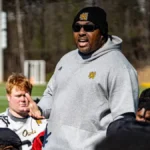
Jerry Mack was hired as the new head coach December 1, 2024. He was the head coach at North Carolina Central Univ. from 2014 to 2017 and his record was 31-15.
He was the offensive coordinator and quarterbacks coach at Rice from 2018-20. He went to University of Tennessee as the running backs coach from 2021-23. He went to the Jacksonville Jaguars in February 2024 as the running backs coach.
He spoke at the Conference USA media day event and he said signing local talent is his priority.
“What we decided to do here at Kennesaw is basically draw about a four-hour radius and try to stay more regional than anything else from the standpoint of recruiting,” Mack said. “But with the transfer portal, we’re always going to venture out and try to take the best student-athletes to fit our style of play.”
The current roster features nine players from Cobb County or Cherokee County, 25 others from metro Atlanta and 21 more from the rest of Georgia.
An example of this is redshirt senior wide receiver Christian Moss. He was a three-star recruit from North Cobb High School and he committed to Virginia Tech. He transferred to KSU in 2024.
The Owls used to run the triple option under Bohannon. Mack plans to run a spread offense.
“It’s no secret that my background has always been more of a spread, no-huddle style of tempo,” said Mack. “I want to continue to try to incorporate those things and try to do those things here at Kennesaw. The plays are the plays, but the plays aren’t as good as the players, and as we continue to get better players, they’ll get a chance to grow and develop their craft.”
Senior QB Dexter Williams II was named the starting quarterback in the spring. Williams grew up in Macon and graduated from Mount de Sales, where he threw for 1,524 yards and 15 touchdowns and ran for 984 yards and 14 touchdowns as a senior when he was named Middle Georgia Player of the Year by the Macon Telegraph.
He played at Indiana from 2020-23 but missed 2021 because of a season-ending ACL injury that occurred in the spring. He transferred to Georgia Southern in 2024 and played in five games.
The Owls added 16 transfer players in 2025. Some of the standouts are S Isiah Thomas (Miami), IOL Brandon Best (Georgia Tech), DL Donovan Westmoreland (South Carolina), CB Alexander Ford (Western Kentucky) and RB Coleman Bennett (Rice).
The season begins August 29th at Wake Forest. The next week is at #20 Indiana.
They play two more non-conference games after that against Merrimack and Arkansas State. Both of these are home games.
After Week 4 KSU will face Conference USA opponents. They will play Middle Tennessee, Louisiana Tech, at FIU, UTEP, at New Mexico State, at Jacksonville State, Missouri State and at Liberty.
Kennesaw State should be better in 2025 but that might not equal a winning season.
Online

Radio/Podcasts