College Football
Florida Gators Plan B?

 By: Robert Craft
TheSouthernSportsEdition.com news services
Florida is aggressively pursuing Lane Kiffin to become its next head coach. That has become obvious in the first month of the program’s search to replace Billy Napier.
Since day one, Kiffin has been Florida’s top choice for many reasons; he’s a sentiment shared by athletic director Scott Stricklin and one of Florida’s most influential boosters and fans.
Florida’s interest has unsurprisingly already led to conversations between the Gators and Kiffin’s camp in recent weeks. While Kiffin is not directly involved yet, multiple sources confirm the Gator athletic department is making preliminary moves.
Beyond the clarity of the aforementioned pursuit, not much is clear at all regarding who UF will ultimately end up with.
No clear Plan B has emerged in Florida. Potential candidates such as former Penn State head coach James Franklin and Missouri’s Eli Drinkwitz have been floated as only potential candidates, but nothing more.
Arizona State head coach Kenny Dillingham privately turned down a spot in the candidate line behind Kiffin.
Washington head coach and UF alumnus Jedd Fisch has gone unmentioned as an option regarding plan B. It currently appears he is not seriously being considered for the role at this time.
Southern California’s Lincoln Riley, Louisville’s Jeff Brohm and Georgia Tech’s Brent Key are externally viewed as possible candidates; however, their internal standing on Florida’s board is unknown. We will have to wait and see what they do.
Call it bold, call it risky, call it whatever term you prefer, Florida’s coaching search can be summarized succinctly as ‘Lane Kiffin or bust.’
While their resumes are starkly different, that reality bears some similarity to UF’s pursuit of Napier four years ago: Stricklin zeroed in on one coach and one coach only, and it’s the hire he made.
While this coaching search has come with much more public consensus about who the “right” hire would be, Stricklin’s seemingly go-for-broke approach is no less precarious. If anything, it comes with even more pitfalls. And continuing to hire head coaches won’t get any easier.
Kiffin’s Rebels are all but certain to secure their first College Football Playoff berth in program history this postseason, with the first round kicking off on Dec. 19.
It would mark an unprecedented move for a coach to move on from a playoff team in the midst of its run.
The situation begs several critical questions. Among them:
How willing is Florida to be very patient for its top target?
Is Kiffin planning to leave Ole Miss at all?
If he is, but intends to coach the Rebels’ playoff run, would a handshake agreement be enough for the Gators?
If it all falls apart and Kiffin ultimately spurns UF, what would Florida do next?
It’s that last question that presents a rather considerable red flag.
The inherent risk in Florida’s approach to selling out for Kiffin is its potential backup options are currently having hiring conversations, if not making agreements with other programs, or their current program is taking the opportunity to lock them in.
Franklin, for example, is in talks with Virginia Tech for the Hokies’ head coach opening. Dillingham said he’s staying put at Arizona State. Brohm is reportedly discussing an extension with Louisville. Indiana’s Curt Cignetti signed a lucrative contract extension last month, three days before Napier was fired.
Florida’s engagements with non-Kiffin candidates or their camps have been limited to early-stage conversations about whether or not they would be willing to get in line behind the current Ole Miss coach.
Internally, there is a sense of confusion regarding what Florida’s backup plan would be.
The hope, of course, is that one isn’t needed. The worry is that one could be.
Kiffin is the most prominent perceived candidate of the 2025 college football coaching carousel for good reason. He turned Ole Miss into a team nobody wants to face year-over-year after decades of mediocrity.
Since John Vaught’s 1970 retirement, the Rebels have finished the season ranked only 10 times. Kiffin’s Ole Miss has won 10 or more games in four of his six seasons at the program’s helm; the team had only reached that mark seven times in its history prior to his arrival, including just twice in the 2000s.
Accordingly, Florida is not alone in its pursuit of Kiffin.
LSU, which fired Brian Kelly shortly after UF dismissed Napier, is targeting the 50-year-old. Kiffin is also rumored to be a person of interest for several NFL head coaching openings, including the New York Giants, where his former Rebels quarterback, Jaxson Dart, was a first-round pick this past offseason and has since turned heads.
Not only is Kiffin staying put in Oxford a threat to the Gators, so is the possibility that they simply finish second in the race to secure his services.
Florida feels like a high-performance vehicle pushing to its speed limit. It’s tearing down a narrowing road at a rate that leaves no margin. The wall ahead isn’t theoretical. It’s visible and closing fast.
The only thing between that machine and a catastrophic collision is Kiffin. He’s the emergency brake, the last-second steering correction, the only mechanism that keeps a reckless trajectory from becoming a ruin. But he is not a sure thing.
If the Kiffin plan connects, the whole thing could level out, the wheels grabbing just enough road to survive and potentially flourish.
If it doesn’t, though, and that single-coach system fails, then there’s presently nothing left between the Gators and catastrophic impact. No airbags. No backup plan. No Lane to save them. Just a spectacular, violent crash no one in the Gator Nation can afford.



Plain Candidates

By: Robert Craft
TheSouthernSportsEdition.com news services
After Auburn lost 10-3 to a Kentucky team that was on a 10-game SEC losing streak, it was obvious head coach Hugh Greeze’s time with the Tigers was over.
In his third season, the program was floundering, with a 6-16 mark in SEC play. The offensive-minded head coach’s teams had been held to 17 points or less in 11 of those 22 games.
Whether the job is considered on the level of LSU and Florida or Arkansas depends on who you ask.
Gene Chizik did win a national title at Auburn within the last 20 years, but this Auburn program hasn’t won more than six games in a season since 2019. And it has often been very volatile SEC standards.
The Tigers should have some good options, but the candidate pool feels like a mixed bag between Group of 6 upstarts and retreads.
Last time, Auburn pursued Lane Kiffin before Freeze ended up with the job. We doubt Kiffin will be in play this time around. If he gets tempted to leave Oxford now, maybe it’s for Florida or LSU, but not Auburn. However, there is one sitting Power 4 coach we could see the Tigers pursuing hard.
Arizona State head coach Kenny Dillingham was Auburn’s offensive coordinator in 2019, the Tigers’ last good season. 35-year-old Dillingham has been fantastic at his alma mater, taking the Sun Devils into the College Football Playoff in Year 2 and then almost knocking off Texas in the Peach Bowl quarterfinal.
Arizona State finished 11-3 and No. 7. The Sun Devils are off to a 6-3 start this season.
They recently beat Iowa State in Ames despite losing their star quarterback Sam Leavitt for the season with a foot injury.
Dillingham is one of the most energetic and creative coaches in the Football Bowl Subdivision, but would he leave his home for this job? Especially when he has an easier path to the Playoff in the Big 12 than he would in the SEC?
Tulane head coach Jon Sumrall seems like another very attractive option here. The 43-year-old former SEC linebacker and Alabama native has coached in the conference at Kentucky and Ole Miss and did very well within the state in his first head coaching job at Troy, in the state. He’s 38-11 as a head coach and has the presence and authenticity that Freeze seems to lack.
The list of other G6 head coaches we think will be in play starts with Memphis’ Ryan Silverfield, a 45-year-old former NFL offensive line coach who keeps piling up wins, going 29-6 the past three years. Memphis could be a Playoff team this year, which could muck up the timing if Auburn really wants him.
South Florida coach Alex Golesh, formerly Tennessee’s offensive coordinator, took over a hapless program and got it going. The Bulls, who are 6-2 with a blowout win against Boise State and road win over Florida, also have legit CFP hopes this season. Golesh, we hear, also is drawing a lot of interest from Oklahoma State, where he spent a season as a grad assistant under Mike Gundy.
Southern Miss coach Charles Huff, a 42-year-old former Alabama assistant, did a very good job at Marshall, where he had a 10-3 season and won the Sun Belt championship last year.
In his debut season at Southern Miss, which had won a total of four games over the previous two years, he has the Golden Eagles 6-2 and in contention for a Sun Belt title.
The other intriguing option is former Texas A&M and FSU coach Jimbo Fisher, who is now doing TV work for the ACC Network.
He took the Seminoles to a national title following the 2013 season and led the Aggies to a No. 4 finish in 2020.
He did get a boatload of cash to leave College Station after things really fizzled out there, but his 45-25 record was a lot better than anything the Tigers have been doing of late.
It’s worth noting things also fell apart for him in Tallahassee late in his tenure. The 60-year-old played college football in-state at Samford, where he also started his coaching career, and he spent six seasons at Auburn as quarterbacks coach.
If Fisher really wants back into coaching and Auburn is game, this might be very tempting for him.
Coaching searches are running rapid in college football this season. Auburn isn’t the last SEC opening. It’s just another.
Empty Plains

 By: Kenneth Harrison
TheSouthernSportsEdition.com news services
Auburn head coach Hugh Freeze was fired after losing to Kentucky at home recently.
Freeze was 15-19 in his two-plus seasons at Auburn. He will be owed $15.8 million in buyout money, with no mitigation, after he signed a six-year, $49 million deal to replace Bryan Harsin in 2022.
“I have informed Coach Freeze of my decision to make a change in leadership with the Auburn football program,” athletic director John Cohen said in a statement. “Coach Freeze is a man of integrity, and we are appreciative of his investment in Auburn and his relentless work over the last three years in bolstering our roster. Our expectations for Auburn football are to annually compete for championships, and the search for the next leader of Auburn football begins immediately.”
Defensive coordinator D.J. Durkin was named interim coach of the Tigers.
“It’s my fervent belief that great days are ahead for the Auburn football program,” Freeze wrote in a statement. “Thank you for allowing me to be a part of this chapter. I love this place, and I’ll carry the friendships with me always.”
Freeze is the eighth Power Four coach to be fired this season. That now makes four open positions in the SEC, which include Florida, Arkansas and LSU. If we are ranking these positions, obviously Arkansas is the worst job. Auburn has to be the second worst behind Florida and LSU. What direction will Auburn move in for their next head coach?
Lane Kiffin is being talked about for every major job opening. He has guided #7 Ole Miss to an 8-1 record so far. Kiffin has been mentioned for the Florida and LSU positions already.
Curt Cignetti (Indiana) is the best coach that we expect to leave for a bigger program. The Hoosiers are having a great season. He has won over 20 games at Indiana and he’s in his second season there. He should be a top candidate but he might consider other Big Ten programs like Penn State or UCLA as his top destination.
Eli Drinkwitz (Mizzou) is another good candidate. He’s a Gus Malzahn disciple and he became the head coach at Missouri in 2020. The Tigers have been very succesful over the past three seasons, including a Cotton Bowl victory and AP Top 10 finish in 2023. They have been in the upper tier of the SEC for most of the season.
Former Penn State coach James Franklin was fired earlier in the season but he still wants to coach. His record at Penn State was 104-45. He cannot win big games but he typically wins against lesser opponents. He also coached at Vanderbilt from 2011-13 with a 24-15 record. He led the Commodores to a bowl game each season.
Auburn used to be a program that would have one great season every few years. Some examples of this are the 1993 team that was 11-0 and finished #4. They were on NCAA probation so they were banned from postseason play.
In 2004, they went 13-0 and finished the season #2. In 2010, they won the national championship and went 14-0. In 2013, they made it to the national championship game but lost to Florida State 34-31. They were 12-2 and finished the season #2.
Their last season with at least ten wins was in 2017 when they finished 10-4. It will be interesting to see who they hire.
QB Comparision

 By: Colin Lacy
TheSouthernSportsEdition.com news services
The matchup between the Florida Gators and the Georgia Bulldogs has been full of outstanding games, Hall of Fame players and oddities all the same, but virtually every year, the game has seen a matchup of great quarterbacks.
Names like Rick Casares in the early days to Steve Spurrier, Buck Belue, Aaron Murray stood out in this Jacksonville based event.
This year’s rendition of the rivalry will see Georgia’s Gunner Stockton square off with DJ Lagway for the Gators. Both are relatively familiar within their respective fanbases, but let’s dive into the two signal callers.
Florida’s DJ Lagway will be going into his 15th career start and carries a 9-5 record as a starter. 2025 has been a slow start with the only FBS win of the year coming against Mississippi State.
Much of the “slow start” was because of missing much of the spring and fall camp with injuries.
Lagway was a highly heralded recruit coming out of Willis High School in Texas. His high school career was capped off with being named the National Gatorade Player of the Year and finished with 8,392 passing yards and 100 touchdowns (58 coming in his senior year).
Last season, he began the season as QB2 but was thrown into the fire after Graham Mertz went down with injury early in the season. Lagway would finish with 1,900 passing yards with 12 TDs and 9 picks thrown.
The freshman Gator racked in the FWAA and ESPN Freshman All American honors.
There were high hopes entering the season, but the 2025 campaign has been an up-and-down affair.
The lows came in the matchup with the Bayou Bengals when he threw 5 interceptions against LSU on September 13th.
However, since then, in the last four games, Lagway has only thrown 3 picks since. The previous three games before the bye week were arguably the most consistent of Lagway’s career.
The Sophomore slinger threw for 280 yards in the win against Mississippi State while connecting on 20 of 34 passes and neared the 300-yard mark against the 9 Texas Longhorns when DJ went 21-28 through the air with 298 yards and a pair of touchdowns.
Lagway has unreal talent and may be coming into his own finally in his Florida career.
On the flip side Georgia has been breaking in a first year starting quarterback, but a familiar name for Bulldog fans. Gunner Stockton took over the full time QB1 role as a redshirt-junior after serving as the backup to Carson Beck the last two seasons in Athens after redshirting in 2022.
Stockton comes from the athletic family and a “coach’s kid.” Gunner’s dad, Rob, was a Georgia Southern Hall of Fame safety from 1992-1995 and had a huge impact on the development of Gunner (to the point that Gunner wears “14” because that was what his dad wore in the Blue and White with the Eagles.
Stockton’s mom was also a collegiate athlete playing for Erskine women’s basketball in the 90’s in Due West, SC. Stockton (similar to Lagway) was thrust into the fire last season, but on a much larger scale.
Stockton had to come in to finish the first half and play the entirety of the 2nd half of the SEC Championship game against Texas last season when Carson Beck wind down with an injury.
The hard-nosed Stockton set a career high passing in his first true road game of his career when he connected for 304 yards against the Tennessee Volunteers in week 3 of the year.
So far, Stockton is completing 70 percent of his passes and has already eclipsed 1,500 yards through the air to go along with averaging 5.7 yards per carry on the ground this year.
While both are still relatively new in the starting role of QB1, both QBs have shown glimpses at least of greatness.
Stockton has been more consistent throughout the season, but Lagway could quiet the naysayers that want to bring up the 5-interception game with a big showing in Jacksonville.
Georgia Florida Game Hall Of Fame Class

By: Robert Craft
TheSouthernSportsEdition.com news services
The Florida-Georgia rivalry is one of college football’s most enduring traditions, and each year the Florida-Georgia Hall of Fame honors former players, coaches, and contributors.
Established in 1995 by the City of Jacksonville’s Office of Sports and Entertainment (later associated with Jacksonville’s sports and tourism arms), the Florida-Georgia Hall of Fame celebrates those who left indelible marks on the Florida–Georgia rivalry.
Each year, two representatives from the University of Florida and two from the University of Georgia are selected and formally inducted at a luncheon held on the Friday before the annual Florida-Georgia football game in Jacksonville — a weekend now embraced by SEC fans as part of the “Florida-Georgia Weekend.”
Jacksonville plays host to fan events and the buildup to what is often called “the world’s largest outdoor cocktail party” in college football lore. Here are 2025’s honorees:
Brandon James: James might be the most electric return specialist in Southeastern Conference history. Competing for Florida from 2006 to 2009, he appeared in 50 games, leaving a statistical legacy: four SEC records and eleven Florida records, including career kickoff return yards (2,718), punt return yards (1,371), most total kick returns (229), and total return yardage (4,089).
He is among the select few Gators to have returned both a punt and a kickoff for a touchdown, finishing with five return scores in total.
His accolades include 2008 SEC Special Teams Player of the Year, FWAA All-America honors, and multiple All-SEC designations.
Beyond special teams, he chipped in offensively (as a receiver and rusher), contributing more than 700 yards and additional scores.
During his era, Florida claimed two SEC championships and a 2008 BCS national title — and James was a key weapon in shifting momentum and field position.
Todd Johnson: A stalwart in Florida’s secondary from 1999 through 2002, Todd Johnson started 35 games and played in 47.
He was twice named First-Team All-SEC (2000, 2001) and Second-Team in 2002.
Over his career, Johnson amassed 284 tackles, executed 40 “big plays” (including nine interceptions, eight fumble recoveries, and three blocked kicks), and led the team in total plays two years in a row.
His 2000 season was a highlight: 102 tackles and 5 interceptions in a single year.
Off the field, he earned SEC Academic Honor Roll recognition.
After college, he was selected in the 4th round of the 2003 NFL Draft by the Chicago Bears and went on to play in the NFL with the Bears, Rams, and Bills, totaling 80 games and accumulating 196 tackles, two forced fumbles, two fumble recoveries, and a sack.
Freddie Gilbert: Gilbert was a rock on Georgia’s defensive front from 1980 to 1983.
Notably, he posted an undefeated 4–0 record against Florida during his career, anchoring some of Georgia’s most memorable rivalry victories — including a 44–0 shutout in 1982 and a tight 10–9 win in 1983. In 1981, he logged eight tackles (three for loss) against Florida, prompting then-coach Vince Dooley to laud his “outstanding” effort.
Over four seasons, Gilbert racked up 233 tackles and 26 sacks, ranking sixth all-time at Georgia, and set the school’s single-game sack record with five against Temple in 1983.
He earned two First-Team All-SEC nods and was a 1983 All-American. After college he played professionally in the USFL and later in the NFL, including appearances in Super Bowls XXI and XXII with the Denver Broncos.
Sony Michel: Michel was a prolific running back for Georgia from 2014 to 2017, and his performances in rivalry games and postseason matchups cemented his place in Bulldog lore.
In his final Florida–Georgia game, he rushed for 137 yards and scored two long touchdowns in a dominant 42–7 win.
During his collegiate tenure, Michel amassed 3,638 rushing yards, 33 touchdowns, and added more than 600 receiving yards, becoming the third-all-time leading rusher at Georgia.
He was a two-time permanent team captain, and he led Georgia to the 2017 SEC Championship and a berth in the College Football Playoff.
Michel’s final college season included a standout performance in the Rose Bowl with 181 yards and three touchdowns, propelling Georgia to the national title game.
In the NFL, Michel was selected in the first round by the New England Patriots and went on to win two Super Bowls — famously scoring the only touchdown in Super Bowl LIII — before later joining and winning another title with the Los Angeles Rams.
The 2025 inductee class continues the Hall’s mission to spotlight those whose impact rippled beyond individual games.
Their achievements in Florida–Georgia matchups, on broader stages, and in post-collegiate careers embody the rivalry’s blend of excellence, drama, and enduring loyalty.
The Jacksonville luncheon remains more than an award ceremony — it’s a gathering of the rivalry’s past and present, connecting generations of fans, players, and media in celebration of one of college football’s greatest traditions.
As October 31 approaches and fans flock to Jacksonville, the 2025 Hall of Fame class will be immortalized among the legends of the Florida-Georgia rivalry — their stories woven into the fabric of one of the sport’s most storied matchups.
The War For The Oar

 By: Michael Spiers
TheSouthernSportsEdition.com news services
Few games in college football have the same feel as Georgia–Florida.
Every fall, the Bulldogs and Gators meet in Jacksonville for a border war that splits families, fills the stands with half red and black and half orange and blue, and reminds the rest of the country how much fun a real rivalry can be.
Depending on which record book you believe, the two first met in either 1904 or 1915, but since 1926 they’ve battled nearly every year, taking only one break during World War II.
The matchup has lived in Jacksonville since 1933, which is considered neutral ground right on the border, and the party that surrounds it is legendary.
For years, fans called it The World’s Largest Outdoor Cocktail Party, and while the schools have dropped that name officially, the energy hasn’t gone anywhere.
This rivalry has always swung in streaks. Georgia owned the early years, Florida took control in the ’50s and early ’60s, then Vince Dooley’s Bulldogs flipped the script through the ’80s.
The ’90s were all Gators thanks to Steve Spurrier, and Urban Meyer kept it rolling into the 2000s. But lately, it’s been Kirby Smart’s world. Georgia has won seven of the last eight, and they don’t look ready to give it up.
Still, there’s more to this rivalry than touchdowns and bragging rights.
Since 2009, coincidentally around the time the Largest Outdoor Cocktail Party moniker was abandoned, the Okefenokee Oar has added a unique twist to the Georgia–Florida story.
The Oar is exactly what it sounds like. It is a 12-foot wooden oar carved from a 1,000-year-old tree pulled from the Okefenokee Swamp, that massive wetland straddling the Georgia–Florida border.
The swamp’s ownership was once disputed between the two states, which makes it the perfect symbol for this tug-of-war rivalry.
Nobody’s really sure why an oar was chosen. The story goes that an anonymous Florida donor came up with the idea in 2009, and student leaders from both schools ran with it.
One side of the Oar features Georgia’s Bulldog and state crest; the other side shows Florida’s Gator and seal. Down the handle, every score since 2009 is carved in, with enough space to keep track for another 150 years.
Florida won the first two “Wars for the Oar,” but Georgia brought it home in 2011 after a 24–20 win.
Since then, it’s traded hands a few times, usually staying with the winner for three-year stretches.
When the Bulldogs have it, you can find the Oar proudly displayed in the Tate Student Center in Athens, Bulldog side facing out. When the Gators win, the Gator side gets the spotlight in Gainesville.
The original idea for the Oar didn’t come from the athletic departments, but instead came from the students. The University of Georgia and University of Florida student governments teamed up to make it official with a joint resolution in 2011.
Ever since, the winning school’s students have been in charge of hauling the massive thing to Jacksonville for the next game.
When Georgia wins, the Redcoat Band usually gets the honor of bringing it back home on the bus.
The Oar started as a quirky idea, but it’s grown into a genuine part of the rivalry. ESPN’s College GameDay has featured it, fans use the hashtag #WarForTheOar, and it’s become one more layer of pride in a matchup that already oozes history and heart.
This year’s game kicks off November 1, and the stakes are as high as ever. Bragging rights, playoff hopes, and a little piece of carved swamp history are all on the line.
When Georgia and Florida meet in Jacksonville, it’s never just a football game. It’s the annual border battle for the Okefenokee Oar, and there’s nothing quite like it in college football.
The Next Man In The Bayou?
By: Robert Craft
TheSouthernSportsEdition.com news services
LSU is college football’s latest tier 1 team to fire their coach and enter the most exciting coaching carousel in recent history.
Not only are the Tigers in the mix, but they also move right to the front of the line as the top job available.
Brian Kelly’s 34-14 record wasn’t the type of failure that we typically see associated with major program firings. At a program with expectations like Louisiana State University, 34-14 with no championships isn’t good enough.
In a coaching cycle that’s already breaking buyout records and showcasing major names, LSU is a job that will attract the best and brightest.
In most cases, what this new job was and what it is can be two completely different things.
In LSU’s case, there may be no better time to demand the best of the best. With that in mind, here’s a look at some upside vs. challenges that the next coach will face at LSU.
If you could design the perfect recruiting base, it might be LSU. Though in-state players leave at times, the best from Louisiana often stay home to play for the Tigers.
There’s a state pride connection to the university like no other, and that’s a great starting point, considering Louisiana produces the most NFL players per capita.
The Tigers also border Texas to the east giving them easy access to pop into the nation’s most talented recruits. Their proximity to Mississippi and the rest of the Greater Southeast means that LSU has a geographical and reputational footprint many programs envy.
At their best, they can be a national recruiter going coast-to-coast and up and down the eastern seaboard. LSU possesses access and natural advantages when it comes to talent. They are among the best in the country.
We’ve already discussed the recruiting base as an advantage, but it can’t be overstated how big of a jump that gives the Tigers in potential roster building.
Additionally, LSU has one of the country’s best game day environments with night games in Death Valley. Their prodigious number of former Tigers in the NFL makes LSU an attractive option for players looking to reach the next level.
Though Kelly was vocal about the need for more NIL money at times, the Tigers showed the ability to be big spenders this past offseason with a roster value estimated to be around $30 million, according to sources.
LSU also has a sizable front office, having put together one of the country’s top personnel groups.
A new coach may want to restructure some, but the support is already in place for a plug-and-play candidate.
It’s still early in the aftermath, but all indications are that LSU recruiting class looks stable and the Tigers’ roster seems to be in the same shape under interim coach Frank Wilson.
Unlike most jobs where there’s major upheaval following a change, the right staff could retain key pieces and be set up for success in year one.
Louisiana is home to good food, good music and generally messy politics. With LSU playing in the state capital of Baton Rouge, those politics are right on the doorstep.
In fact, Louisiana governor Jeff Landry went to social media and voiced his disapproval of LSU’s rising season ticket prices after Saturday’s 49-24 beat down against Texas A&M and played a big part to remove Kelly.
Landry’s role is more out of necessity at the moment because LSU is without a school president. Still, political influence and pressure to win is at an all-time high within the program.
The Tigers showed the ability to raise the funds necessary to compete with the best in the country this year, but they will need continued contributions to stay at that level.
That can be difficult when LSU’s other athletic programs have mouths to feed. Their baseball program and women’s basketball team are both among the nation’s elite while their men’s basketball hopes to rise again. In the rev-share era, those can be tough waters to navigate for an athletic department.
There’s a reason this opening resonated within the industry when news of Kelly’s departure broke. Many in the industry consider LSU an elite job, if not the best.
No place has more natural advantages, I think it’s the easiest place to win in the country when you consider all of the factors.
Look no further than Les Miles and Ed Orgeron winning national titles during their time there. No school has the access they do to the amount of talent needed to win, and the administration has shown time and again they will back them if needed.
I don’t think people outside of the state understand how powerful the Tiger’s brand is in that region. It’s everywhere in Louisiana, and because of the displacement from Katrina, it’s moved into Texas and Florida and other parts of the Southeast.
I think the fit matters. We saw it with Kelly, and I think you have to understand you’re recruiting and coaching a different type of player there. If they find a guy who understands that the sky is the limit.
Just days removed from the decision, any talk of concrete names is still premature. But it’s safe to say that Lane Kiffin is a top contender.
Kiffin is likely to be the belle of the coaching ball with Florida also in play and Ole Miss working to extend his contract.
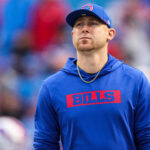
My short list includes former Penn State coach James Franklin, Buffalo Bills offensive coordinator Joe Brady, who previously called plays for LSU during their 2019 championship season, and Tulane coach Jon Sumrall.
Given the attractiveness of the position, LSU could even take a big swing inside NFL circles. Athletic director Scott Woodward said that he intended on a national coaching search, and the Tigers should use everything at their disposal to attract the best candidates.
Georgia Memories

 By: Joe Delaney
TheSouthernSportsEdition.com news services
Well, here we are with the latest installment pf the “World’s Largest Outdoor Cocktail Party”.
This year’s edition has twist and turns as is usual in this heated rivalry.
Gone is Billy Napier and the Gators are in disarray. The Dawgs are ranked #5 and should win easily right? Not so fast………….
When you look at the history of the rivalry it makes you realize how scary a game this is for the Dawgs.
The Gators have absolutely nothing to lose and that makes them very dangerous. The Dawgs better be ready to play because this IS the biggest game for Florida and stranger things have happened.
Let’s look at a few of the great games, notes and players in Georgia Florida history through the Bulldogs eyes.
Let’s start at the beginning. Did you know the two schools can’t even agree on how many games have been played?
Florida says that the 1904 game doesn’t count because that was the University of Florida Lake City. Well Georgia won the game 52-0 played in Macon. The great UGA historian Dan Magill remarked many years later, “that’s where Florida was back then. We can’t help it if they got run out of Lake City.” Now that’s how you start a rivalry!
Who can forget the 1975 game and the amazing Larry Munson. Yes it’s the Appleby to Washington game with Larry being ……well Larry!
With 3:10 left in the fourth quarter Vince Dooley calls an end around pass. Larry takes it from there………“and Washington caught it thinking of Montreal and the Olympics and ran out of his shoes right down the middle 80 yards!” Georgia goes on to win 10-7.
A year later it was Florida leading the Dawgs 27-20 in the third quarter. Head Coach Doug Dickey has a brain fart of epic proportions and goes for it on 4th and 1 from his own TWENTY NINE yard line. Florida gets stuffed and Georgia goes on to win 41-27. The play and the game are always remembered as “fourth and dumb”.
Ah yes, 1980. No column on the Georgia/Florida game is done without it. A strong dose of Herschel and a shot of Buck and Lindsay! The great Larry Munson ends the call of Buck and Lindsay with “man is their gonna be some property destroyed tonight! I gave up….you did too….out of it…..out of it and gone. Miracle!” Nuff said.
In 2007 it was the “Gator Stomp”. Georgia’s Knowshon Moreno dives into the endzone for a first quarter touchdown and the ENTIRE Georgia team runs on the field. Georgia goes on the sack Heisman winner Tim Tebow 6 times in the 42-30 Georgia win.
And who can forget the “evil genius” aka Steve Spurrier. Ole Stevie went 11-1 against the Dawgs in his Tenure as Head Coach of the Gators.
He was a brilliant coach and probably loved beating the Dawgs more than anything. His “fun and gun” offenses had some of basics of what offenses run today.
So why did Spurrier have such a distain for Red and Black? It goes back to 1966.
Dooley’s Dawgs roll into the old Gator Bowl to face the Heisman winner Spurrier and the Gators. Well, the Dawgs intercept Spurrier 3 times and he was constantly harassed by Bill Stanfield, the Georgia great.
In the funniest quote I’ve ever seen the good old country boy Stanfield would say, “holding pigs for my dad to castrate was quite a challenge. I can’t say that it helped me prepare for football, but it sure did remind me an awful lot of sacking Steve Spurrier”!
Yeah its Georgia Florida. The old boys from Florida have their share of golden memories also. That’s what makes it so great. For many it’s the biggest game of the year.
No matter what the records are. Its Georgia Florida, a great big slice of Americana. Strap em up Dawgs and don’t forget that injured Gators are dangerous.
You Ain’t From Round Here

By: Michael Spiers
TheSouthernSportsEdition.com news services
I need to preface this opinion piece by sharing that I’m a Louisiana boy.
It’s where I was born, where I went to college, and I have been a fan of the LSU Tigers since I was big enough to pick up a ball.
I could tell from day one that Brian Kelly just didn’t fit at LSU.
Folks in Louisiana can smell when someone’s not genuine, and from that first awkward “fam-uh-lee” speech, it was clear he wasn’t one of us.
He came to the bayou from Notre Dame, a polished outsider with a big reputation, but he never seemed to understand that LSU football isn’t just a job. It’s a way of life.
In Louisiana LSU football is part religion, part family reunion, and part street parade.
When Saturday rolls around, the whole state moves to the rhythm of Tiger Stadium.
We like our coaches with a little grit, a little edge, and a whole lot of heart.
Nick Saban had the drive, Les Miles had the magic, and Ed Orgeron sounded like the bayou itself.
Brian Kelly, on the other hand, always felt like he was reading off a script written by someone else.
Now, to be fair, the man could coach. He won plenty of games at Notre Dame and came to Baton Rouge with a plan. But plans don’t win you over in Louisiana.
Passion does. And that was the problem. Kelly treated LSU like a business venture. He ran it like a CEO, not like a coach trying to rally a community that bleeds purple and gold.
He fired longtime strength coach Tommy Moffitt, a guy everyone respected and trusted. He shuffled assistants like playing cards. He even complained about NIL money instead of figuring out how to make it work.
In the SEC, that’s like bringing a butter knife to a crawfish boil. You’re already behind.
At first, things looked promising. His first season brought a win over Alabama and a trip to the SEC Championship Game. Then Jayden Daniels won the Heisman, and folks thought maybe Kelly had turned the corner. But cracks started showing fast.
The defense was a mess one year, the offense sputtered the next. Players didn’t seem inspired. You could see it in the way they played, talented but not tough. LSU teams are supposed to hit you in the mouth.
Kelly’s Tigers looked more like they were trying to make it to Monday.
And that’s when the politics kicked in, because in Louisiana, everything eventually turns political.
After that home loss to Texas A&M, the governor himself, Jeff Landry, was reportedly in on the decision to fire Kelly. Let me tell you, when the governor’s mansion gets involved in a coaching decision, you know it’s serious.
Boosters and board members started calling around, figuring out who’d chip in to pay that monster buyout. Fifty-three million dollars is a lot of money, but this is LSU. They were never going to let pride take another beating.
Behind closed doors, word is Kelly had lost the locker room. Players thought he was checked out.
He wasn’t recruiting like the other big dogs in the SEC, and he was spending more time on the golf course than in living rooms convincing mamas to let their sons play for him.
If you ask me, that’s the real work of a head coach. Building relationships, not spreadsheets.
At the end of the day, Brian Kelly got fired because he never made LSU feel like home. He tried to lead with his head in a place that runs on heart.
You can’t fake the accent, you can’t fake the culture, and you sure can’t fake belonging. LSU fans want someone who loves this program the way they do, loud, proud, and a little rough around the edges.
Kelly never got that. And in Louisiana, when the fit isn’t right, it’s only a matter of time before the door locks you out.
Let’s Play Here

 By: Jeff Doke
TheSouthernSportsEdition.com news services
For over nine decades, the annual clash between the Georgia Bulldogs and Florida Gators has been more than a football game; it’s a cultural phenomenon.
Hosted almost exclusively in Jacksonville since 1933, this SEC rivalry draws over 80,000 rabid fans to EverBank Stadium, injecting an estimated $50 million into the local economy each year through hotel stays, bar tabs, and Bulldog-Gator-fueled revelry along the St. Johns River.
But as EverBank Stadium, the 30-year-old home of the Jacksonville Jaguars, faced obsolescence, whispers grew about relocating the game permanently to campus sites or other neutral venues.
Enter the “Stadium of the Future.”
A renovation project that’s not just revitalizing an aging sports facility but safeguarding Jacksonville’s cherished tradition, the $1.4 billion project was approved unanimously by NFL owners in October 2024.
The overhaul began in February 2025 and is slated for completion by the 2028 season.
Funded roughly equally by the city and Jaguars owner Shad Khan, the project commits the team to a 30-year lease, dispelling relocation fears.
Construction will disrupt play. Jaguars games will run at reduced capacity in 2026 before the team relocates temporarily to either Orlando or Gainesville in 2027 but crucially, it spares the 2025 Florida-Georgia matchup.
More importantly, the upgrades are engineered to lure the rivalry back post-renovation, ensuring its return from 2028 to 2031 under a freshly inked four-year extension announced in November 2024.
At the heart of this strategy is expanded capacity tailored for college football’s biggest bashes. EverBank’s current setup holds 67,838 for Jaguars games but swells to over 82,000 for the Cocktail Party with temporary seating.
The renovated stadium drops to a sleek 63,000 permanent seats for NFL action—optimizing sightlines and revenue but boasts expandable configurations up to 71,500, with potential for 70,000-plus in special-event mode.
This isn’t arbitrary; university athletic directors from Florida and Georgia collaborated directly on the design, insisting on features that accommodate the game’s unique chaos: massive tailgate zones, riverfront access for yachts, and reinforced structures for the influx of RVs and vendors that turn Jacksonville into the epicenter of college football.
The upgrades go far beyond seating. A groundbreaking protective canopy will shade fans from Florida’s brutal sun and afternoon thunderstorms, creating a climate-controlled bowl that feels premium without enclosing the open-air vibe.
Wider elevated concourses will ease the pre-game crush, while new seating tiers offer everything from field-level suites to sky-high club seats.
Enhanced digital tech, including upgraded lighting, massive video boards, and seamless Wi-Fi, ensures modern amenities like instant replays and app-based concessions, appealing to younger demographics in an era of streaming and NIL deals.
The current deal nets each university $5-5.5 million annually, but post-2028, payouts jump to at least $10 million per school, plus travel stipends ($350,000 for Georgia, $60,000 for Florida).
Unlike before, Jacksonville retains all ticket, concession, and merchandise revenue, making the game profitable for the city while sweetening the pot for the schools.
During the interim, $1.5 million per university in 2026 and 2027 covers relocation to Atlanta’s Mercedes-Benz Stadium and Tampa’s Raymond James Stadium—neutral sites that preserve the game’s off-campus ethos but lack Jax’s intimate, party-hard charm.
Skeptics might point to college football’s seismic shifts; conference realignments, playoff expansions, and revenue chases that moved the Red River Rivalry fully on-site.
Georgia coach Kirby Smart once floated playing at Sanford Stadium for recruiting perks, but the mutual $10 million guarantee and Jacksonville’s proven track record quashed that. The city’s deep ties, from co-sponsoring RV lots to hosting fan fests, create an unmatched ecosystem.
By 2028, when the Gators and Bulldogs return, EverBank won’t just be renovated, it’ll be reborn as a multipurpose marvel, drawing concerts, WrestleMania, and more while prioritizing this annual October ritual.
The upgrades don’t merely fix a leaky roof; they fortify a legacy, ensuring Jacksonville remains the beating heart of college football’s wildest weekend.
In a sport chasing the next billion, sometimes the best play is doubling down on tradition.
Online

Radio/Podcasts