Michael Spiers
Protect College Sports Act




 By: Michael Spiers
TheSouthernSportsEdition.com news services
For the past few years, I’ve written plenty about how college athletics has become almost unrecognizable.
The transfer portal has become free agency. NIL has evolved from athletes making money off their name, image and likeness into something that often looks a lot like recruiting payroll. Schools can now share revenue directly with athletes. And seemingly every few months another court ruling changes the rules again.
Something has to give. That is why the Protect College Sports Act (PCSA) currently moving through Congress deserves our attention.
The bipartisan legislation, sponsored by Senators Ted Cruz of Texas and Maria Cantwell of Washington, cleared an important hurdle in early September when the Senate voted 77-22 to move it forward for debate and possible final passage.
At its core, the PCSA attempts to create one national set of rules, which is something college athletics desperately needs.
Among other provisions, the legislation would establish federal standards for NIL, place limits around revenue sharing, provide the NCAA and conferences certain antitrust protections to enforce rules, establish medical and health protections for athletes, and create protections for scholarships and roster spots in nonrevenue sports.
It also attempts to put some sanity back into the transfer portal by generally allowing athletes one unrestricted transfer without losing eligibility.
There are parts of that I really like. I’ve never had a problem with college athletes making money. If somebody wants to pay a Georgia quarterback to appear in a commercial or an offensive lineman to promote his business, good for them.
But what we’ve created isn’t really NIL anymore. When players are essentially being recruited from one school to another based on who can assemble the largest financial package, let’s at least admit what we’re watching.
That’s professional sports without contracts, salary caps or collective bargaining. College football needs rules, but the problem is deciding who gets to make them, and that’s where I’m a little uncomfortable with the PCSA.
One of the biggest criticisms is that it provides antitrust protection allowing the NCAA, conferences and schools greater authority to regulate compensation and enforce restrictions.
That deserves scrutiny. For decades, college athletics fought against giving athletes a larger share of the enormous amount of money they helped generate. The courts eventually forced much of the change we’re seeing today.
Now we’re being asked to give some of those same institutions greater legal protection to regulate the new system.
You can understand why athletes and their advocates might be skeptical. Critics such as Senators Chris Murphy and Cory Booker, the NAACP and athlete advocacy organizations argue the legislation places too many restrictions on players while doing comparatively little to restrain spending elsewhere in college athletics.
That’s a legitimate concern, but at the same time, doing nothing isn’t much of a solution either. I don’t believe the current system is sustainable.
Unlimited movement, constantly changing eligibility rulings, recruiting inducements disguised as NIL agreements and different laws from state to state aren’t good for the long-term health of college athletics.
And my biggest concern isn’t Georgia football, Alabama football or Ohio State football.
Those programs will survive. I’m worried about wrestling, swimming, track, tennis, softball and all the other sports that don’t generate millions of dollars in television revenue.
The PCSA specifically attempts to protect scholarships and roster opportunities in those sports, and that may ultimately be one of its most important provisions.
So, count me among those who believe college sports desperately needs guardrails. I just don’t want those guardrails to become handcuffs for the athletes.
The goal shouldn’t be returning college athletics to the old days when everyone made money except the people actually playing the games.
But the answer can’t be pretending the current system is working perfectly either.
Camden County Wildcats Coach’s Show with Tucker Pruitt September 22 2026


The New Era

By: Michael Spiers
TheSouthernSportsEdition.com news services
We are now a month into the Tucker Pruitt era at Camden County and I think we are beginning to get a pretty good idea of what this new version of Wildcat football might look like.
It certainly hasn’t been perfect. There have been mistakes, some defensive breakdowns and one tough loss. Most importantly, the Wildcats have already shown they can win in several different ways.
The season began with a strange two-day victory at Brunswick. Lightning stopped the game Friday night and forced Camden to return Saturday morning to finish it. The Wildcats handled the disruption, leaned heavily on the running game and came away with a 35-21 victory.
A week later, Camden looked much more comfortable offensively in a 42-13 win over Glynn Academy. Xavier Collins threw four touchdown passes, Sean Green caught three of them and the Wildcats rolled up more than 400 yards of offense.
Then came the first real punch in the mouth. Camden went to Savannah and lost 27-23 to a very good Benedictine team. The frustrating part was that the Wildcats had a 23-17 lead entering the fourth quarter and couldn’t finish it.
That’s why I think what happened against Godby might tell us more about this team than either of the first two wins.
This time Camden was the team trailing entering the fourth quarter, 21-18. Godby quarterback Landon Dougherty threw for 416 yards and 5 touchdowns, and there were plenty of moments when it looked like the Wildcats might suffer a second straight close loss.
Instead, Camden scored 21 points in the fourth quarter and found a way to win 39-36. Collins completed 17 of 20 passes for 214 yards and 3 touchdowns, while Green caught 8 passes for 133 yards and 2 touchdowns. Just as importantly, the defense came up with two interceptions at critical moments.
A week after failing to protect a fourth-quarter lead, Camden found a way to erase a fourth-quarter deficit. That’s progress.
Pruitt inherited a program with plenty of talent, but changing coaches always means changing expectations, terminology, schemes and culture. Four games isn’t nearly enough time to judge where the program ultimately goes under Pruitt, but a 3-1 start gives Camden something solid to build on.
The Wildcats still have Ed White and West Broward before an open week gives them a chance to prepare for what really matters, and that’s Region 1-7A play.
Anyone that knows about Region 1-7A knows it’s not a friendly walk in the park. Lowndes and Valdosta are both 4-0 and ranked among the top teams in Class 7A.
Lowndes has been especially impressive defensively, allowing only 14 points through four games, including shutouts of Harris County and Blanche Ely.
Valdosta has gone the opposite direction and simply overwhelmed people offensively. The Wildcats have scored at least 52 points in every game and have piled up 222 points in four weeks.
Richmond Hill is also 4-0, including a 13-7 road win over Ware County last Friday. Then there is Colquitt County, which may be 2-2 but has played a much different schedule, with losses to unbeaten Thomas County Central and unbeaten Lee County.
Nobody has played a region game yet, so all of this is simply setting the stage. Camden begins region play October 9 at Lowndes, followed by Richmond Hill at home, Valdosta on the road and Colquitt County at home. There won’t be an easy Friday night anywhere in that stretch.
But that’s still a few weeks away. For now, Pruitt’s first Camden team is 3-1. They’ve won on the road, won comfortably at home, lost a close one and responded by winning a shootout.
There is plenty left to clean up. But through four games, these Wildcats have also given us plenty of reasons to keep watching.
Camden County Wildcats Coach’s Show with Tucker Pruitt September 15 2026
LSU To Be Ousted From SEC?

By: Michael Spiers
TheSouthernSportsEdition.com news services
Welcome to college football in 2026.
On Saturday night, LSU looked like one of the best teams in America, dismantling Clemson 51-10 in Lane Kiffin’s debut.
By Tuesday, the Tigers had climbed to No. 8 in the AP poll. And on that same day, the Southeastern Conference was preparing for a meeting that could potentially result in LSU being kicked out of the league. You can’t make this stuff up.
The dispute centers around Dae’Quan Wright and Zxavian Harris, two former Ole Miss players who signed NFL contracts and spent time with professional teams this summer before attempting to return to college football at LSU.
The SEC says they shouldn’t be eligible. A Louisiana judge has ruled, at least temporarily, that they can play. LSU didn’t use either player against Clemson, but the fight has continued anyway.
And naturally, Lane Kiffin couldn’t resist having a little fun with it.
With LSU leading Clemson 31-3 at halftime Saturday, Kiffin joked during his television interview, “Imagine if we had pro players.”
I’m guessing SEC Commissioner Greg Sankey didn’t find that nearly as funny as Kiffin did.
Now the situation has escalated to the point where SEC presidents and chancellors are scheduled to meet and potentially consider LSU’s future in the conference.
We’re talking about LSU here. A founding member of the SEC. One of the biggest brands in college football; Tiger Stadium, national championships and generations of SEC history.
Personally, I think kicking LSU out would be a massive overreaction. But I also understand the SEC’s position.
A conference has to be able to make rules and expect its members to follow them. If the schools agree on an eligibility rule and one member can simply go to court and have that rule blocked, how does the conference govern itself?
But that’s also why this story is about much more than LSU. College football has changed almost everything about itself in a remarkably short period of time without developing a system capable of governing what it has become.
NIL changed the financial landscape. The transfer portal changed roster building. Revenue sharing changed the relationship between players and schools. Eligibility rules continue to be challenged in court.
And every time the NCAA or a conference tries to draw a line, someone seems ready to file another lawsuit.
So, who’s actually in charge of college football? The NCAA? The conferences? The schools? The courts? I’m not sure anybody knows anymore.
I don’t blame the players for taking advantage of every opportunity available to them. I don’t necessarily blame LSU for challenging a rule it believes is wrong. And I certainly don’t blame the SEC for believing membership in its conference should require following conference rules.
But college football desperately needs some consistency. That’s the bigger story here.
The crazy part is that LSU might actually be really good. The Tigers just embarrassed Clemson and suddenly look like a legitimate playoff contender.
Yet only a few days later, we’re barely talking about football.
Instead, we’re wondering whether one of the SEC’s founding members could actually be thrown out of the conference.
That’s college football in 2026. LSU may be ready to compete for an SEC championship.
First, apparently, the Tigers have to make sure they’re still in the SEC.
Camden County Wildcats Coach’s Show with Tucker Pruitt September 8 2026
1-7A Week One

By: Michael Spiers
TheSouthernSportsEdition.com news services
If the opening weekend of Georgia high school football told us anything about Region 1-7A, it’s that nobody should expect many easy Friday nights once region play begins.
Camden County, Valdosta, Lowndes and Richmond Hill all opened with victories, while Colquitt County suffered the region’s lone defeat. That makes Region 1-7A a combined 4-1 after week one.
Of course, we’re only talking about one game. Nobody wins a region championship in August. But first impressions are still important, and each of the five teams gave us something to think about.
Let’s start close to home with Camden County. The Wildcats’ 35-21 victory at Brunswick might have told us something about Tucker Pruitt’s first Camden team that won’t show up in the box score.
Camden led 14-7 Friday night when lightning interrupted the game. After a lengthy delay, the decision was made to suspend play and resume Saturday morning.
Think about that from a high school player’s perspective. You prepare all week, travel to a rival’s stadium, get yourself emotionally ready, play one quarter….. and then go home. A few hours later, you’re getting up, loading the buses and doing it all over again.
Brunswick tied the game at 14 before halftime Saturday, but Camden responded by taking control in the second half.
That’s a pretty good first test for a new coaching staff.
Valdosta probably made the loudest statement of anybody in the region. The Wildcats went on the road and absolutely dismantled Jones County, 52-14.
It’s only Week One, but putting 52 points on the scoreboard away from home gets my attention. If anyone wondered whether Valdosta would once again be a serious factor in Region 1-7A, the first answer appears to be yes.
Lowndes wasn’t quite as explosive, but the Vikings did exactly what good football teams are supposed to do.
Jenkins scored first, but Lowndes responded with 31 unanswered points and cruised to a 31-6 victory.
The game itself was delayed nearly two hours by lightning, so apparently Mother Nature decided everybody in South Georgia needed a little extra adversity on opening night.
Richmond Hill had a much more stressful evening. The Wildcats escaped Effingham County with a 22-21 victory after Effingham scored on a long touchdown run with just over two minutes remaining. The potential tying extra point was blocked, allowing Richmond Hill to survive.
It wasn’t pretty, but I’ve never seen a standings column that asks how pretty the win was.
And then there’s Colquitt County. The Packers drew easily the toughest opening assignment of anyone in the region, facing defending Class 5A state champion Thomas County Central. Still, I don’t think anybody expected a 57-21 final score.
I’m certainly not ready to write off Colquitt after one game against one of Georgia’s best programs. The Packers have earned far too much respect over the years for that kind of overreaction. But 57-21 is still 57-21.
So what did we learn? Maybe nothing. It’s August. But we did get our first clues.
Camden showed resilience. Valdosta showed firepower. Lowndes took care of business. Richmond Hill found a way to survive. And Colquitt discovered it has some work to do.
The best part is that none of these teams have played each other yet. Eventually they will. And judging by the first weekend, Region 1-7A might be every bit the fight we expected it to be.
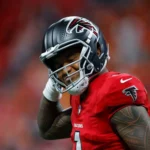
Expectations For Tua and Atlanta Falcons
By: Michael Spiers
TheSouthernSportsEdition.com news services
There probably aren’t many quarterbacks in the NFL entering the 2026 season with more to prove than Tua Tagovailoa.
And there may not be a better place for him to try to prove it than Atlanta.
Tagovailoa’s time in Miami ended with plenty of questions about whether he could still be the quarterback who once looked like one of the NFL’s rising stars. Now, at 28 years old, he’s getting something of a fresh start with the Falcons. But let’s not confuse a fresh start with a pressure-free one.
If anything, the pressure may be greater than ever.
Atlanta brought Tagovailoa in this offseason while Michael Penix Jr. continues working his way back from the ACL injury that ended his 2025 season. That has opened the door for Tua to potentially begin the season as Atlanta’s starter.
His first preseason appearance certainly didn’t quiet any concerns. Tua completed just three of five passes for 22 yards in Atlanta’s 27-7 loss to Denver. The Falcons managed only one first down during his two possessions, and a fumbled snap didn’t help matters.
Am I ready to panic over two preseason possessions?
Absolutely not. If preseason football told us everything we needed to know, there would be a lot of August Hall of Famers who somehow disappeared by October.
But Tua isn’t in a position where he can afford many bad performances, either.
This is a quarterback who needs to remind people why Miami once believed enough in him to build its offense around him. He needs to stay healthy, take care of the football and consistently get the ball into the hands of Atlanta’s playmakers.
And there are plenty of them.
Bijan Robinson is one of the most dangerous running backs in football. Drake London has developed into a legitimate No. 1 receiver, and Kyle Pitts gives Atlanta another potentially dangerous weapon at tight end. This offense shouldn’t need Tua to play Superman every Sunday.
That’s why I think the definition of a successful season for Tagovailoa is pretty simple.
He needs to get the Atlanta Falcons into the playoffs.
He doesn’t need to throw for 5,000 yards. He doesn’t need to be an MVP candidate. He doesn’t even necessarily need to make the Pro Bowl.
He needs to win. Atlanta hasn’t made the postseason since the 2017 season. We’ve watched this franchise spend year after year hovering around mediocrity. They have usually been good enough to remain interesting and not quite good enough to matter in January.
At some point, that has to change.
If Tua starts most of the season, stays healthy, limits turnovers and helps Atlanta win nine or 10 games and reach the playoffs, I’d call his season a success.
Win the NFC South? Even better. Win a playoff game? Now we’re talking about one of the better comeback stories of the NFL season.
But another seven or eight-win Falcons season with Tua putting up decent statistics while Atlanta watches the playoffs from home wouldn’t do much for me. We’ve seen enough “almost” in Atlanta.
The good news is Tua doesn’t have to carry this team by himself. Atlanta needs the quarterback who can distribute the football, make quick decisions, protect the ball and allow Robinson, London, Pitts and the rest of the offense to do the damage.
There’s also another element hanging over all of this. Penix is still there.
The Falcons drafted Penix in the first round because they believed he could become their quarterback of the future. Once he’s completely healthy, every bad performance from Tua will inevitably bring questions about whether it’s time to make a change.
That’s life as an NFL quarterback. Tua is getting another opportunity to prove he can lead an NFL team. The Falcons are getting another opportunity to finally escape the middle of the pack.
For both of them, simply being competitive isn’t enough anymore.
It’s time to win.
Camden County Wildcats Coach’s Show with Tucker Pruitt August 18 2026
Ole Miss Rebels 2026 Preview

By: Michael Spiers
TheSouthernSportsEdition.com news services
There may not be a more fascinating team in the SEC heading into the 2026 season than Ole Miss.
The Rebels are coming off the best season in program history, winning 13 games and advancing all the way to the College Football Playoff semifinals.
They have now won at least 10 games in three consecutive seasons, something that had never happened before in Oxford.
Yet instead of entering 2026 with nothing but excitement and momentum, Ole Miss also enters with one very big question.
What does this program look like without Lane Kiffin?
Pete Golding takes over for his first full season as head coach after Kiffin left for LSU following the 2025 regular season. Golding helped guide the Rebels through their playoff run, but now this is officially his football team.
The challenge will be maintaining the expectations Kiffin helped create while establishing his own identity.
Fortunately for Golding, he inherited a roster with some serious firepower.
It starts with quarterback Trinidad Chambliss. After transferring from Ferris State, Chambliss took over the starting job and became one of the biggest stories in college football.
He threw for 3,937 yards with 22 touchdowns and only three interceptions while finishing eighth in the Heisman Trophy voting.
He gives Ole Miss something every new head coach would love to have, an experienced quarterback capable of taking over a football game.
Then there is Kewan Lacy. Lacy rushed for a school record 1,567 yards and 24 touchdowns last season and returns as one of the best running backs in America. Having Chambliss and Lacy together gives Ole Miss one of the best backfields in college football.
The biggest offensive concern is replacing production at receiver. Deuce Alexander returns after catching 44 passes for 684 yards, but Ole Miss lost Harrison Wallace III and De’Zhaun Stribling after the pair combined for more than 1,700 receiving yards.
Once again, the transfer portal became an important part of the solution, with Johntay Cook II and Darrell Gill Jr. among the new additions.
That portal success has become part of the culture at Ole Miss, and apparently it did not leave town with Kiffin. The Rebels assembled the number two ranked transfer class according to 247Sports while returning 49 letterwinners from last season.
Defense might be the bigger question. Ole Miss must replace seven defensive starters, including significant production at linebacker and safety. Golding’s defensive background should help, and there are some excellent pieces remaining.
Suntarine Perkins returns after recording 81 tackles and 12.5 tackles for loss last season.
Will Echoles anchors the defensive front, while Kam Franklin returns after collecting five sacks and 15 quarterback hurries. The Rebels also added experienced transfers throughout the defense.
The problem for Ole Miss is that the schedule is brutal. The SEC opener against LSU on September 19 will receive enormous attention because it brings Kiffin back to Oxford.
Then there are road games at Florida, Texas and Oklahoma, along with matchups against Georgia and Missouri. Louisville also presents a difficult challenge to open the season.
That schedule is why I am not ready to predict another 13 win season.
I do, however, think Ole Miss is better than an eight win football team. Chambliss and Lacy give the Rebels enough offensive talent to win games when everything else is not perfect, and Golding has already shown he can lead this program on the biggest stage. My prediction is 9-3.
I think Ole Miss loses three games somewhere in that SEC gauntlet but remains in the College Football Playoff conversation deep into November. If the rebuilt defense comes together faster than expected, 10 wins is absolutely possible.
The Kiffin era may be over in Oxford, but that does not mean the winning has to end with it.
In 2026, we find out whether Ole Miss simply had a great run under one coach or whether the Rebels have truly become one of the programs that expects to compete nationally every single year.
Online

Radio/Podcasts