Michael Spiers
The Kiffin Effect



 By: Michael Spiers
TheSouthernSportsEdition.com news services
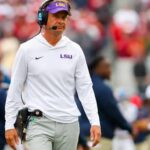
If you are looking for the team that could shake up college football in 2026, look no further than the Bayou Bengals of LSU.
The Tigers did not just hire a new football coach this offseason. They made one of the biggest moves in college football by bringing Lane Kiffin to Baton Rouge.
At LSU, the expectation is never just to have a winning season. The expectation is to compete for SEC championships and national championships.
Based on what Kiffin has already accomplished this offseason, I believe the Tigers are built to do exactly that.
Kiffin has won everywhere he has coached. He turned Florida Atlantic into a winner, made Ole Miss a legitimate College Football Playoff contender, and now takes over one of the most talent rich programs in America.
This is the first time in his career that he has inherited a roster and resources capable of competing for a national title from day one.
The biggest reason for the excitement is the transfer portal. LSU landed what many believe is the top transfer class in the country, and almost every addition fills a major need.
After finishing 7-6 last season, the Tigers needed a complete makeover on offense, and Kiffin delivered.
Quarterback Sam Leavitt could be the key to everything. If he stays healthy after recovering from a foot injury, he is an ideal fit for Kiffin’s offense.
He also has plenty of weapons around him. Receivers Jayce Brown, Tre Brown, Jackson Harris, Winston Watkins, and Eugene Wilson III give LSU one of the deepest and fastest receiving groups in college football.
Just as important is the rebuilt offensive line. Colorado transfer Jordan Seaton may prove to be the most valuable addition on the roster.
LSU struggled to protect it’s quarterback and establish a running game last season.
Seaton and several experienced transfers should completely change that. If the Tigers can simply become a respectable rushing team, Kiffin’s offense has the potential to become one of the best in the nation.
The defense should be every bit as impressive.
One of Kiffin’s smartest decisions was keeping defensive coordinator Blake Baker in Baton Rouge. Baker already had LSU playing solid defense despite the offense often putting the unit in difficult situations.
Now he has even more talent to work with. The addition of edge rusher Princewill Umanmielen strengthens the defensive front, while linebacker.
Whit Weeks returns as the emotional leader of the defense. When Weeks was sidelined by injury last year, LSU simply was not the same football team. His return gives the Tigers one of the best linebackers in the SEC leading an already talented group.
Even with all the excitement, the schedule will certainly test LSU. Clemson, Alabama, Texas, Texas A&M, Tennessee, and Ole Miss are all capable of making life difficult. But championship teams do not shy away from challenging schedules.
Several of LSU’s biggest conference games will be played in Death Valley, where few opponents enjoy success.
There may be a few growing pains early with so many new faces learning a new system, but I do not expect them to last very long. Kiffin has consistently built explosive offenses throughout his coaching career, and now he has the roster to match his creativity.
Everything appears to be in place. LSU has upgraded the quarterback position, rebuilt the offensive line, added explosive playmakers, strengthened the defense, and hired one of the brightest offensive minds in college football.
I believe the Tigers will not only return to the College Football Playoff this season, but they will be right in the middle of the SEC championship race from start to finish.
If they stay healthy, do not be surprised if LSU is playing for the national championship when the season comes to an end.
Top Receiver Transfers To Camden County Wildcats
By: Michael Spiers
TheSouthernSportsEdition.com news services
The excitement surrounding Camden County football has continued to build throughout the offseason, and the Wildcats may have just added another major piece to the puzzle.
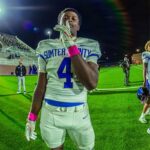
Sophomore wide receiver Ayden “Pocket” Robinson has officially transferred from Sumter County High School to Camden County, giving first-year head coach Tucker Pruitt another explosive weapon as he begins his first season in Kingsland.
According to Sumter County head coach Will Rogers, Robinson’s transfer is the result of a bona fide family move, as a member of Robinson’s family accepted an employment opportunity in the Brunswick area.
Regardless of how he arrived, there’s little question that Robinson immediately upgrades an already intriguing Camden County offense.
Standing 6-foot-2 and 190 pounds, Robinson is an impressive physical presence for a player who will only be a sophomore this fall.
Last season as a freshman at Sumter County, he wasted little time showing why many believe he has a bright future.
In 10 varsity games, Robinson hauled in 27 receptions for 356 yards and six touchdowns, averaging 13.2 yards per catch. He also contributed on special teams, finishing with 379 all-purpose yards during his freshman campaign.
Those numbers are impressive on their own, but they become even more intriguing when considering Robinson was producing against varsity competition as a ninth grader.
His combination of size, athleticism, and ability to find the end zone gives Camden County another legitimate playmaker on the outside.
And perhaps the most exciting part for Wildcat fans is who he’ll be lining up alongside.
Robinson joins a receiving corps already headlined by Sean Green, one of Georgia’s top receiving prospects and a Florida State commitment.
Green has developed into one of the most dangerous receivers in the state with his ability to stretch the field, make contested catches, and create explosive plays after the catch.
Now, opposing defenses will have to account for both Green and Robinson. That challenge becomes even greater when you factor in another major offseason addition.
Transfer quarterback Xavier Collins arrives in Kingsland after throwing for more than 2,000 yards and 16 touchdowns last season at Columbia High School in Florida.
Collins gives Camden County an experienced signal caller with the arm strength and confidence to distribute the football all over the field.
On paper, it’s a combination that should fit perfectly into Tucker Pruitt’s offensive philosophy.
Since taking over the Wildcats program, Pruitt has emphasized playing fast, physical football while creating opportunities for his athletes to make plays in space.
His offenses have consistently featured balance, but they’ve never been afraid to attack defenses vertically when the opportunity presents itself.
With Collins delivering the football and Green and Robinson stretching defenses on the perimeter, Camden County suddenly possesses the kind of offensive firepower that can force opposing defensive coordinators into difficult decisions.
Double-team Green, and Robinson could find himself in favorable one-on-one matchups. Roll coverage toward Robinson, and Green becomes even more dangerous. Play too many defensive backs, and Pruitt’s offense can attack with the running game. That’s the kind of balance every coach hopes to build.
Of course, Robinson is still just a sophomore, and expectations should remain realistic. There will undoubtedly be an adjustment period as he learns a new offense, develops chemistry with Collins, and settles into a new school. But his potential is undeniable.
When you combine Robinson’s arrival with Collins at quarterback, Green’s star power at wide receiver, and Pruitt’s reputation for developing productive offenses, it’s easy to understand why optimism continues to grow around Camden County football.
The Wildcats have undergone significant changes since last season, but each new addition appears to move the program one step closer to becoming a serious contender once again.
If Robinson develops the way many expect, Camden County may have landed one of the biggest impact transfers in South Georgia, and one that could help shape the future of the Wildcats’ offense for years to come.
Next Step For Jacksonville Jaguars?

By: Michael Spiers
TheSouthernSportsEdition.com news services
There’s always a sense of optimism when NFL training camps open, but this year feels different in Jacksonville.
The Jaguars officially opened training camp Wednesday at the Miller Electric Center, and for the first time in a long time, they’re doing so with the weight of expectations instead of hope.
After winning 13 games, capturing the AFC South title, and reaching the playoffs in Liam Coen’s first season as head coach, this franchise is no longer viewed as an up-and-coming team.
The Jaguars have officially entered the conversation as one of the AFC’s contenders. That’s both exciting and challenging.
Training camp is about preparing for a new season, but it’s also about answering questions. Jacksonville has plenty of them.
The biggest concern entering camp is along the offensive line. Starting left tackle Cole Van Lanen begins camp on the Physically Unable to Perform list as he continues recovering from a knee injury.
While the Jaguars remain optimistic he’ll return before the regular season, his absence puts the spotlight on rookie Emmanuel Pregnon and the rest of the offensive line depth.
Protecting Trevor Lawrence has to remain priority number one if this team wants to build on last year’s success.
Another storyline worth watching is the return of Travis Hunter. The dynamic two-way star is fully healthy after an LCL injury limited him to just seven games during his rookie season.
Jacksonville plans to use Hunter primarily at cornerback, but don’t expect him to stay off the offensive side of the ball for long. His unique ability to impact games in multiple ways gives Coen another weapon to deploy, and if Hunter stays healthy, he could become one of the NFL’s most exciting players.
The running back position is another battle that could shape the season. With Travis Etienne Jr. no longer in Jacksonville, second-year back Bhayshul Tuten appears to have the inside track, but nothing has been decided.
Chris Rodriguez Jr. and LeQuint Allen Jr. will also have opportunities to earn significant playing time, making this one of the most competitive position battles in camp.
Offensively, I’m also intrigued by what Coen plans to do with the tight ends. Second-round draft pick Nate Boerkircher and fifth-round selection Tanner Koziol fit perfectly into Coen’s vision of using more two- and three-tight end formations.
If those heavy personnel packages develop the way the coaching staff hopes, Jacksonville could become one of the more physical offenses in the AFC while creating favorable matchups for Trevor Lawrence in the passing game.
There are other interesting storylines as well. Could veteran receiver Zay Jones find his way back to Jacksonville? Is rookie Emmanuel Pregnon ready for meaningful snaps if needed? How quickly will the secondary come together after adding veteran cornerback Corey Ballentine? Those questions will begin to be answered over the next several weeks.
I don’t believe the Jaguars are going to sneak up on anyone this year. Every opponent knows Jacksonville is a legitimate playoff team, and that makes repeating as division champions much more difficult.
That said, I believe this team is better than it was a year ago.
Trevor Lawrence has another season under Liam Coen’s offense. Brian Thomas Jr. has emerged as one of the league’s premier young receivers.
The defense continues to mature, and if Hunter stays healthy, he adds another playmaker capable of changing games.
The biggest question remains depth. Can the offensive line withstand injuries? Will the young running backs produce consistently? Can the defense avoid the injury bug that has derailed so many promising seasons?
If those answers are yes, I think Jacksonville has every opportunity to win the AFC South again.
My prediction is another division title with an 11-6 or 12-5 record. It may not match last year’s 13 victories, but the schedule is tougher, expectations are higher, and every team on the Jaguars’ schedule will have them circled.
One thing is certain: the days of simply hoping the Jaguars are competitive are over. This franchise has entered a new era where success is expected, and that’s exactly where Jaguars fans have wanted this team to be for years.
New Camden County Wildcats Baseball Coach

By: Michael Spiers
TheSouthernSportsEdition.com news services
When Camden County High School began searching for its next head baseball coach, it wasn’t simply looking for someone to fill a vacancy.
The Wildcats were looking for a leader capable of building on the program’s proud tradition while taking it to new heights. It appears they found exactly that in Joey Ray.
Officially introduced as Camden County’s new head baseball coach earlier this month, Ray arrives in Kingsland with one of the most impressive resumes of any coach currently leading a high school baseball program in Georgia.
His career has been defined by winning, player development, and competing at the highest levels of the game, making him an exciting addition to the Wildcat athletic department.
Ray takes over a Camden County program that has consistently produced talented players and enjoyed its share of success over the years.
Following the tenure of former head coach LaDonis Bryant, Ray inherits a team that hopes to become a regular contender for region championships and deep state playoff runs.
If history is any indication, Wildcats fans have plenty of reasons to be optimistic.
Before arriving at Camden County, Ray spent six successful seasons at Flowery Branch High School, where he transformed the Falcons into one of North Georgia’s most consistent programs. During his tenure, Flowery Branch compiled 116 victories, reached the state playoffs five times, and posted four 20-win seasons.
The Falcons also advanced to the state semifinals in 2018 and followed that with an impressive 24-9 campaign in 2021.
Success, however, has followed Ray throughout his coaching career. Before his time at Flowery Branch, he established Milton High School as one of Georgia’s premier baseball programs.
Under his leadership, the Eagles captured five region championships and reached the state championship series in consecutive seasons. The pinnacle came in 2013 when Milton claimed the Georgia Class 6A State Championship, a milestone that cemented Ray’s reputation as one of the state’s elite baseball coaches.
What makes Ray’s resume even more impressive is that his impact extends well beyond Georgia high school baseball.
Since 2013, he has been actively involved with USA Baseball, helping identify and develop some of the nation’s top young talent. He served as an assistant coach for the USA Baseball 12-and-under National Team in 2016 and was later selected as an assistant coach for Team Navy in Major League Baseball’s Prospect Development Pipeline League.
The PDP League serves as one of the country’s premier showcases for high school players with professional baseball aspirations, giving Ray valuable experience working with many of the nation’s top prospects.
Those experiences should prove invaluable for Camden County players hoping to continue their baseball careers beyond high school.
Ray’s coaching accomplishments have also earned the respect of his peers across the state. He has been named Region Coach of the Year five times and has received two Georgia Dugout Awards, recognition reserved for coaches who consistently demonstrate excellence both on and off the field.
But perhaps the greatest strength Ray brings to Camden County is his reputation for building complete programs rather than simply winning games.
Successful high school baseball isn’t built solely on talent. It requires discipline, player development, strong relationships, and a culture that emphasizes accountability every day—not just on game day.
Those qualities have become hallmarks of Ray’s coaching career and are exactly what Camden County hopes will help elevate the Wildcats to another level.
The expectations surrounding Wildcat baseball have always been high. Camden County has long been known for producing outstanding athletes and competing with many of Georgia’s top programs. With Joey Ray now leading the dugout, there is renewed excitement about what the future holds.
Winning championships is never easy in Georgia’s highly competitive baseball landscape, but Camden County has made a statement with this hire. By bringing in one of the state’s most accomplished and respected baseball coaches, the Wildcats have positioned themselves to compete at the highest level for years to come.
A new era has officially begun at Camden County High School, and if Joey Ray’s track record is any indication, Wildcat baseball fans have every reason to believe the best may still be ahead.
Charlton County Indians 2026 Preview
By: Michael Spiers
TheSouthernSportsEdition.com news services
Football has always meant something in Folkston.
For generations, Charlton County has built one of South Georgia’s proudest football traditions, a program defined by toughness, discipline and a belief that every season brings another opportunity to compete for championships.
Those expectations don’t disappear simply because the calendar changes or a new coach arrives. Instead, they grow.
The 2026 season marks the beginning of a new era for the Indians as Brandon Byram takes over a program that reached the second round of the Class A Division II state playoffs a year ago.
Charlton finished 6-6 overall in 2025, battling through a demanding schedule before seeing its postseason run come to an end against Screven County. Now, the focus shifts from what was accomplished last season to what lies ahead.
And what lies ahead won’t be easy.
The Indians open the season with three consecutive road games, beginning August 21 with perhaps their toughest non-region challenge.
Charlton travels across the state line to face West Nassau, a Florida powerhouse that finished 12-2 last season and reached the postseason after placing third in its district. It will be an immediate measuring stick for a team looking to establish its identity under a new coaching staff.
The road doesn’t get much easier a week later when the Indians visit McIntosh County Academy. While the Buccaneers finished just 5-6 a year ago, they reached the state playoffs and will present another early challenge before Charlton heads to Berrien on September 4.
The Rebels struggled to a 4-8 record last season, making that contest one the Indians will hope to use to build momentum before returning home.
Fans in Folkston won’t have to wait long for a marquee matchup.
Charlton’s home opener comes September 11 against Frederica Academy, a defending region champion that finished 8-4 and advanced to the second round of the playoffs.
One week later, the schedule becomes even more demanding when Early County visits. The Bobcats posted a 10-4 record in 2025, won their region and advanced all the way to the state semifinals before their impressive season came to an end.
Region play begins October 2 when Lanier County visits Folkston. Although the Bulldogs finished just 2-9 last season, region games often have a way of ignoring the previous year’s records, making every Friday night significant.
Charlton then travels to Atkinson County on October 9 to face a team that finished 9-1 a year ago, one of the biggest challenges on the region schedule.
After an open week to regroup, the Indians return home October 23 to host Mitchell County, a playoff team that lost a heartbreaking overtime game in the opening round last season.
The regular season concludes with two road games that could ultimately define Charlton’s postseason hopes.
First comes the annual showdown with Clinch County, one of the state’s perennial Class A powers. The Panthers finished 13-1 last season, captured the Region 2 championship and advanced to the state semifinals. Every year this rivalry delivers a physical, hard-fought contest, and 2026 should be no different.
The finale sends the Indians to Irwin County on November 6. While those Indians struggled to a 1-9 record in 2025, road region games are rarely easy, particularly when playoff berths and postseason seeding may still be hanging in the balance.
There are certainly questions surrounding Charlton County entering a season with a new head coach. There always are.
But the Tribe from Folkston has never been short on confidence. Confidence that hard work will win games. Confidence that tradition matters. Confidence that when the lights come on Friday night, Charlton County will be ready to compete.
The road through the 2026 schedule is demanding, but that has never discouraged football in Folkston.
If the Indians embrace the challenges ahead and continue building on last year’s playoff success, another memorable chapter in Charlton County football history could soon be written.
Camden County Wildcats 2026 Preview
By: Michael Spiers
TheSouthernSportsEdition.com news services
There is something different in the air around Chris Gilman Stadium.
Maybe it is the arrival of a new head coach. Maybe it is the return of August football in Kingsland. Or maybe it is simply the belief that Camden County football is ready to begin writing its next great chapter.
Whatever it is, the 2026 season feels important.
The Wildcats enter the year under first-year head coach Tucker Pruitt, a proven winner who brings a championship resume and a clear vision to Camden County.
Pruitt won big at Fitzgerald, captured a state championship, took teams deep into the playoffs, and spent last season leading Appling County to a region title.
Now, he steps into one of Georgia’s most tradition-rich programs with the task of restoring Camden to consistent statewide relevance.
That journey will not come with an easy schedule.
After a preseason scrimmage against Florida power The Bolles School on August 14, the Wildcats open the regular season at home against Brunswick on August 21. The Pirates went 9-3 last season and reached the playoffs before falling to Gainesville, giving Camden an immediate test against a strong coastal opponent.
One week later, Glynn Academy comes to Kingsland. The two programs have not met in several years, adding a little extra intrigue to a rivalry matchup that once carried plenty of familiarity. Glynn finished 6-5 last season, but records rarely matter much when old rivals get back together.
September will reveal even more about Camden’s toughness.
The Wildcats travel to Benedictine on September 4 to face a program that went 11-3 last season, won the Region 1-4A championship and came within one play of a state title, falling 42-39 to Creekside in the championship game. That matchup may be one of the best non-region measuring sticks on the entire schedule.
Camden then returns home for three straight games against Florida opponents. Amos P. Godby visits on September 11 after a 5-7 season in which it still finished second in its district. Ed White follows on September 18 after going 9-3 and winning its district. On September 25, Camden hosts West Broward, a team the Wildcats beat 32-13 last season, but one that finished 12-3 and should arrive looking for payback.
By the time Camden reaches its October 2 bye week, Pruitt and his staff should have a clear picture of where the Wildcats stand.
Then comes the gauntlet of play in the newly re-established Region 1-7A.
There may not be a tougher four-game stretch in Georgia high school football. Camden opens region play October 9 at Lowndes, last year’s region champion. The Vikings went 10-2 before falling to North Gwinnett in the second round.
Richmond Hill comes to Chris Gilman Stadium on October 16 after finishing 6-5 and reaching the playoffs. Then Camden travels to Valdosta on October 23 to face a Wildcats team that went 12-2, finished second in the region and reached the quarterfinals before losing to Buford.
The regular season closes October 30 at home against Colquitt County, another heavyweight that went 9-3 last season and advanced to the second round before falling to Grayson.
In other words, nothing will be handed to Camden County. But maybe that is exactly the point.
Pruitt has emphasized discipline, physicality, accountability and toughness since arriving in Kingsland. With veteran defensive coordinator Alan Rodemaker joining the staff and transfer quarterback Xavier Collins adding experience to the offense, the Wildcats have reasons for optimism.
The road back will be demanding, but Camden County has never been a program built on shortcuts. This is a place where expectations are earned under the lights, in the weight room and through the grind of Friday nights.
The 2026 season is more than a schedule. It is the beginning of a new era. And in Camden County, new eras still come with old expectations.
Southern Soccer Explosion

By: Michael Spiers
TheSouthernSportsEdition.com news services
For decades, soccer in the United States was viewed as a niche sport. It was something kids played on Saturday mornings before eventually moving on to football, baseball, basketball, or another traditional American sport.
If you asked most sports fans where soccer was strongest in America, they probably would have pointed to California or the Northeast. Not anymore.
As the 2026 FIFA World Cup unfolds across North America, one thing has become increasingly clear. The Southeast is rapidly becoming the center of soccer growth in the United States.
Just look at the host cities. Atlanta, Miami, and other Southern venues have become major destinations for World Cup matches and fan events.
Atlanta’s Mercedes-Benz Stadium has established itself as one of the premier soccer venues in the world, regularly drawing crowds that rival those seen in Europe and South America. Miami has become an international soccer hotspot, attracting global attention through both club and international competition.
What’s remarkable is how quickly this transformation has occurred. Twenty years ago, many sports fans across the South viewed soccer as an afterthought. Football ruled Friday nights, Saturdays, and Sundays. Baseball was woven into the fabric of communities across Georgia, Florida, Alabama, and the Carolinas. Soccer simply wasn’t part of the sports conversation.
Today, that’s changing. Youth soccer participation throughout the Southeast continues to grow. Communities like mine here in Camden County have thriving recreational and travel soccer programs.
Weekend tournaments routinely bring hundreds of families together, filling hotels, restaurants, and sports complexes. Young athletes who once may have focused exclusively on football or baseball are now dedicating themselves year-round to soccer.
The growth isn’t limited to youth sports.
Atlanta United helped prove that professional soccer could thrive in the South. Since entering Major League Soccer, the club has drawn some of the largest crowds in the league and created an atmosphere that rivals many traditional American sports franchises.
Nashville SC has experienced similar success, while Charlotte FC has quickly developed a passionate fan base of its own.
The result is that an entire generation of young Southern sports fans is growing up viewing soccer differently than previous generations.
And then there’s the World Cup. The excitement surrounding the tournament has given soccer another significant boost.
Southern cities have embraced the event with enthusiasm, welcoming fans from around the world and showcasing the region on an international stage.
I think for many Americans, this World Cup is the first opportunity to experience the energy, passion, and global significance of soccer up close.
What makes the Southeast uniquely positioned for continued growth is that soccer isn’t replacing traditional sports. It’s joining them.
Football remains king throughout much of the South. College football Saturdays still dominate the sports calendar. High school football remains a cultural institution in communities large and small. But soccer has carved out its own place alongside those traditions.
In many ways, soccer fits perfectly within the Southeast’s sports culture. Fans appreciate passionate competition, community pride, and family-friendly events. Soccer delivers all three.
The sport’s accessibility also makes it attractive. All a child really needs is a ball and a patch of grass to begin developing a love for the game.
The World Cup will eventually leave North America, but its impact is likely to remain. Young players inspired by what they’ve seen this summer will sign up for youth leagues.
Families will continue attending professional matches. Communities will continue investing in soccer facilities and programs.
The Southeast’s sports identity is evolving. Football will always be at the heart of it. But soccer is no longer an outsider looking in.
It has become part of the conversation, part of the culture, and increasingly, part of the future.
The rest of the country may still be catching up, but the evidence is becoming impossible to ignore: when it comes to the growth of soccer in America, the Southeast is leading the way.
What Brendan Sorsby Means For The SEC
By: Michael Spiers
TheSouthernSportsEdition.com news services
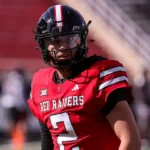
From the perspective of an SEC football fan, the Brendan Sorsby gambling saga feels like one of those moments where college sports has to stop pretending the old rulebook still fits the new world.
This was not a minor eligibility issue. This was not a paperwork mistake. This was not a player taking a meal he should not have taken or signing an autograph before NIL existed.
This involved a starting quarterback, major gambling violations, bets connected to his own team, a seven-figure NIL deal, a court injunction, a conference legal fight, political pressure and, eventually, a path toward the NFL Supplemental Draft.
That is a lot for one offseason story. It is also a warning.
As an SEC fan, I understand better than most that college football is big business. We stopped pretending otherwise a long time ago.
Players are getting paid, rosters are rebuilt through the transfer portal, boosters operate in broad daylight, and quarterbacks can become million-dollar investments before taking a snap for a school. That is the reality now.
But even in this new era, there has to be a line. Betting on college sports, and especially betting on games involving your own team, has to remain one of those lines that cannot be blurred.
The reason is simple. The entire sport depends on trust.
Fans have to believe the game is real. Teammates have to believe everyone in the locker room is fully invested in winning. Coaches have to believe decisions on the field are clean. Opponents have to believe they are competing on equal terms.
Once gambling enters the locker room, even if there is no proof of point shaving or intentional game manipulation, the questions become impossible to ignore.
That is why the backlash to Sorsby being temporarily cleared to play was so strong. It was not just about Texas Tech. It was about every school wondering what happens next if a court can override NCAA discipline in a gambling case.
It was about conferences wondering whether they still have authority to protect competitive integrity. It was about players at other schools who lost eligibility for similar violations watching a star quarterback fight his way back because he had greater value.
That is where this story becomes bigger than Sorsby. College sports is already struggling with consistency.
NIL enforcement has been uneven. Transfer rules seem to change by the year.
Conference realignment has made tradition feel negotiable. Now gambling threatens to become another battleground where discipline depends less on the rule and more on the player, the school, the lawyers and the political pressure around the case.
That cannot be the future.
There should still be room for compassion. If Sorsby was dealing with a gambling addiction, that should be taken seriously.
These athletes are young, suddenly wealthy, constantly online and surrounded by betting advertisements. It is not enough to hand them a rule sheet and assume the problem is solved.
But compassion and eligibility are not the same thing. A player can deserve help and still lose the privilege of playing college football.
That may sound harsh, but I think the alternative is worse. If betting on your own team becomes something that can be negotiated down, explained away or litigated into a two-game suspension, then college football is asking fans to trust a system that does not appear to trust its own rules.
For the SEC, this should be a wake-up call. The league is the biggest stage in college football, and that means it has the most to lose if public confidence starts slipping. Every school should be reviewing its gambling education, compliance systems, NIL contracts and transfer vetting process right now.
The Sorsby saga may be over at Texas Tech, but the larger issue is not going anywhere.
Gambling is now wrapped around sports culture, and college athletics has to decide whether it is going to manage that reality with strength or stumble into the next scandal.
For us fans, the lesson is uncomfortable but clear. The games are bigger than ever. The money is bigger than ever. The temptation is bigger than ever. Now the rules have to be stronger than ever, too.
Who Are The 2026 Diamond Dawgs?

By: Michael Spiers
TheSouthernSportsEdition.com news services
For Georgia baseball fans, the wait is finally over. For the first time since 2008, the Bulldogs are headed back to Omaha and the College World Series.
After nearly two decades of watching other programs celebrate on college baseball’s biggest stage, Georgia has earned its place among the final eight teams standing. Now comes the exciting part. The Dawgs must finish the job.
Just getting to Omaha is an accomplishment. The College World Series is one of the most difficult events in sports to reach, requiring teams to survive the grind of the regular season, the SEC schedule, conference tournaments, regionals, and super regionals. Georgia has done all of that and enters Omaha as the highest remaining national seed.
What makes this run even more special is how complete it has been. These Bulldogs didn’t sneak into the field or catch lightning in a bottle at the right time.
They won the SEC regular season championship. They captured the SEC Tournament title for the first time in program history. They rolled through both the regional and super regional rounds with five consecutive postseason victories.
This team has earned every bit of the national attention it’s receiving.
For longtime Georgia fans, reaching Omaha brings back memories of the program’s proud history. The Bulldogs won the national championship in 1990 and made several College World Series appearances during the 2000s. But since the heartbreaking runner-up finish in 2008, Omaha has felt frustratingly distant.
That is why this trip feels different. There is a sense that Georgia isn’t simply happy to be invited. Head coach Wes Johnson and his players have consistently carried themselves with confidence and purpose throughout the season.
The message has been clear. This is not a celebration trip. This is a championship pursuit.
The Bulldogs certainly have the offensive firepower to make that dream a reality. Georgia enters the College World Series leading the nation with 174 home runs.
Every inning feels dangerous for opposing pitchers because there are threats throughout the lineup. One swing can change a game, and Georgia has produced those swings all season long.
Led by veteran stars and an experienced lineup, the Bulldogs have demonstrated an ability to score in bunches and deliver in pressure situations. Their offense has become one of the most feared units in college baseball.
Of course, Omaha is never easy. Georgia opens against a talented Texas team that has its own championship aspirations.
The Longhorns are making their 39th College World Series appearance and have played some of their best baseball during the postseason.
A victory over Texas would immediately position Georgia as a serious favorite to reach the championship series.
The road beyond that won’t get any easier. Alabama, Oklahoma, North Carolina, Ole Miss, West Virginia, and Troy all arrive in Omaha believing they can win the national title. Nobody gets this far by accident.
Still, there is plenty of reason for Bulldog fans to believe. This team has already accomplished things that few Georgia squads ever have. The Bulldogs have shown resilience, confidence, and the ability to rise to every challenge placed before them. They have excelled under pressure and embraced the expectations that come with being one of the nation’s best teams.
Most importantly, they have given Georgia fans something priceless. Hope.
Hope that the championship drought that stretches back to 1990 is nearing its end.
Hope that the celebration that slipped away in 2008 can finally be completed in 2026.
Hope that when the final out of the College World Series is recorded, it will be Georgia players dogpiling on the field.
Omaha is where champions are made. The Bulldogs have waited 18 years for another chance. Now they have it. And Bulldog Nation cannot wait to see what happens next.
Camden County Wildcats New Defensive Coordinator
By: Michael Spiers
TheSouthernSportsEdition.com news services
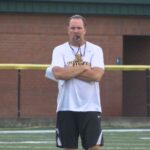
When Tucker Pruitt arrived at Camden County High School earlier this year, one of the biggest questions surrounding the Wildcats football program was how quickly the new coaching staff could come together and establish its identity.
Pruitt’s track record spoke for itself. The veteran head coach built championship programs at Fitzgerald and Appling County and arrived in Kingsland with a reputation for developing tough, disciplined football teams.
But no successful head coach does it alone. Building a staff is just as important as building a roster. That is where Alan Rodemaker enters the picture.
The new Camden County defensive coordinator brings a wealth of experience, championship credentials, and perhaps most importantly, an unmistakable passion for the game.
For football fans across South Georgia, Rodemaker is a familiar name. He served as head coach at Valdosta High School from 2016 through 2019 and immediately made an impact, guiding the Wildcats to the 2016 state championship.
That title was Valdosta’s first football state championship in 18 years and cemented Rodemaker’s reputation as one of the area’s top defensive minds.
Prior to joining Camden County, Rodemaker also spent time at Colquitt County, serving as defensive coordinator and safeties coach while continuing to build a reputation for fielding aggressive, disciplined defenses.
His coaching résumé is impressive, but those who have spent time around Rodemaker will tell you that statistics and championships only tell part of the story. What truly stands out is his energy.
All you have to do is listen to Rodemaker following a practice or a game to understand how deeply he cares about football and the young men he coaches. If you’ve ever heard his voice, you won’t forget it.
Years ago, I remember hearing Coach Rodemaker call in to a radio show focused on Valdosta football. You could tell just how demanding his practice had been simply by listening to his voice. The intensity was unmistakable. You could literally hear the passion.
That same passion is now making its way into the Camden County football program.
I saw a recent social media post where he was asked why he coaches, and Rodemaker’s answer reveals exactly what motivates him.
“I coach to compete in the greatest team sport ever created since I can’t play anymore. I love to help raise young men and help them achieve more than they ever dreamed of and I get the biggest thrill of seeing a young freshman grow into a senior ready to take on life.”
That perspective aligns perfectly with the culture Pruitt has emphasized since arriving at Camden. Winning football games matters but developing young men remains the ultimate goal.
Competition has been a recurring theme throughout Pruitt’s first several months on the job.
Throughout spring practice and the Blue-White Game, Pruitt stressed eliminating mistakes, improving fundamentals, and creating a culture where players compete every day for improvement. Rodemaker appears to be a natural fit within that philosophy.
As Camden County continues navigating a unique transition following the coaching changes that occurred during the offseason, having experienced leaders on staff becomes even more valuable.
Rodemaker has coached in some of the biggest football environments in Georgia and understands the expectations that come with leading a high-profile program.
The Wildcats still have plenty of work ahead before the season kicks off this fall. New schemes are being installed. Players are learning new responsibilities. Coaches are continuing to evaluate personnel. But one thing already seems clear. The Camden County defense is being led by a coach whose passion for football is impossible to miss and whose championship experience speaks for itself.
For Tucker Pruitt, and all of us with Camden-blue blood, that makes Alan Rodemaker exactly the kind of coach you want helping build the next chapter of Wildcat football.
Online

Radio/Podcasts