Michael Spiers
The Walking Dead




 By: Michael Spiers
TheSouthernSportsEdition.com news services
For the past couple of seasons, it has felt like the Atlanta Braves have been playing two opponents at once: whoever is on the schedule and the relentless injury bug.
Unfortunately for Braves fans, the second opponent is already winning again in 2026, and the season hasn’t even officially begun.
Spring training is supposed to be a time for optimism. It is when teams fine tune their rosters, build momentum, and dream about October baseball.
Instead, the Braves once again find themselves scanning medical reports and patching together a pitching staff before Opening Day.
The latest blow came when Spencer Strider was scratched from his final spring start and placed on the injured list with an oblique strain.
Strider had shown encouraging signs this spring after working his way back from surgery and other injuries that affected the previous season.
Now he will begin the year on the shelf, leaving a major hole in the rotation before the first real pitch of the season is even thrown.
On its own, losing Strider would be a concern. He is one of the most dominant strikeout pitchers in baseball when healthy and a cornerstone of Atlanta’s pitching plans. But the real problem is that he’s just one name on a growing list.
Spencer Schwellenbach is already on the 60-day injured list after elbow surgery earlier this year. Hurston Waldrep is also sidelined following elbow surgery. Joey Wentz tore his ACL during a spring training game and will miss the entire season.
Suddenly the Braves are entering the season with a rotation that looks very different than what the front office envisioned when camp opened.
Chris Sale will almost certainly take the Opening Day start, but the rest of the rotation already feels like it is being assembled on the fly.
Reynaldo López is attempting to return after shoulder surgery and has shown a concerning drop in velocity during recent outings, though he insists it was simply mechanical issues.
Behind him are pitchers like Grant Holmes and Bryce Elder, with depth options such as José Suárez or Didier Fuentes potentially being forced into action earlier than expected.
It is the type of situation that makes Braves fans feel like they have seen this movie before. Over the last few seasons, Atlanta has had the talent to compete for championships, but injuries have repeatedly disrupted the plan. When one key player returns, another seems to go down.
The pitching staff in particular has been hit hard, and the cycle is continuing in frustratingly familiar fashion.
If you ask me, the thing that makes this year especially concerning is the timing.
These injuries are piling up before the regular season even begins. Teams expect to deal with injuries during a long 162 game season. They do not expect their roster to look like a triage unit in March.
Even the position player group has not been spared from setbacks.
Newly re-signed shortstop Ha Seong Kim is expected to miss time following finger tendon surgery, while catcher Sean Murphy is still recovering from hip surgery.
As we all know, Jurickson Profar will miss the entire season due to a PED suspension, and I hope he is never given the chance to put on a Braves jersey again.
Add it all together and the Braves are entering the year already short-handed.
The frustrating part is that this roster, when healthy, still looks like a legitimate contender. The core talent is there. The lineup can still produce runs and the pitching staff still has high end arms.
But baseball seasons are not played on paper, and championships rarely go to the team with the best roster on opening day. They go to the team that survives the grind of six months.
Right now, the Braves are already grinding before the real games even start.
Of course, there is still a long season ahead. Some of these injuries may turn out to be minor setbacks rather than long-term problems.
Pitchers will return. Young arms may step up. Baseball seasons often take strange and unpredictable turns. But the early signs are impossible to ignore.
For a team that has spent the last few years battling bad injury luck, the Braves appear to be picking up right where they left off.
SEC 10-Step
By: Michael Spiers
TheSouthernSportsEdition.com news services
March Madness is finally here, and once again the SEC is right in the middle of it all.
For years the Southeastern Conference was known mostly as the king of college football, but that reputation has clearly expanded. SEC basketball is now one of the most powerful forces in the sport, and this year’s NCAA Tournament bracket is another example of that.
The SEC placed 10 teams in the 2026 NCAA Tournament field, the most of any conference in the country. That kind of representation tells you just how deep the league has become. It also means that when the tournament tips off, there will be SEC teams all over the bracket.
Florida leads the way for the conference as a number one seed. The Gators not only won the SEC regular season title, but they also come into the tournament as the defending national champions. That makes them one of the teams everyone will be watching closely.
Florida has the talent and experience to make another deep run, but March is never easy. Even high seeds can run into trouble quickly.
Right behind Florida are Alabama and Arkansas, both coming in as four seeds.
Alabama has been one of the most explosive offensive teams in the country this season. When the Crimson Tide get hot from the outside, they can score points in a hurry.
Arkansas, meanwhile, comes into the tournament with momentum after winning the SEC Tournament. That kind of late season confidence can be huge when the games start getting tighter in March.
Vanderbilt earned a five seed, which is one of the program’s best tournament positions in years. The Commodores have quietly put together a very solid season and could easily be one of those teams that makes a surprising run if things fall their way.
Tennessee comes in as a six seed and looks like another tough out. The Volunteers play the kind of physical defense that tends to translate well in tournament games where every possession matters.
Kentucky, as usual, finds itself back in the tournament as a seven seed. The Wildcats open against Santa Clara, and while Kentucky has had its ups and downs this year, it is still a roster full of talent. Kentucky teams always seem capable of catching fire at the right time.
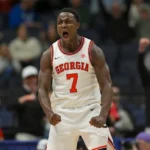
Georgia also made the field as an eight seed, which means the Bulldogs could be looking at a difficult path if they want to advance deep into the tournament.
Missouri and Texas A&M both landed as ten seeds, making them classic upset candidates in the opening round.
Texas barely squeezed into the field as an eleven seed and will have to win a First Four game in Dayton just to reach the main bracket. But once a team gets into the tournament, anything can happen. Every year we see someone make an unexpected run.
Outside the SEC, several other conferences also had strong showings.
The Big Ten placed nine teams into the tournament, led by number one seed Michigan. Purdue, Michigan State, Illinois, Nebraska, Wisconsin, UCLA, Ohio State, and Iowa also made the field.
The Big 12 sent eight teams to the tournament as well. Arizona leads that group as a number one seed, with Houston and Iowa State both coming in as two seeds.
The ACC also bounced back with eight teams in the field, led by top overall seed Duke.
From an SEC fan’s perspective, though, the biggest headline is simple. Ten teams from the conference are dancing this year, and several of them have a real shot to make serious noise.
If the regular season was any indication, the SEC could once again be a major storyline throughout March Madness.
Running Out Of Jacksonville
By: Michael Spiers
TheSouthernSportsEdition.com news services
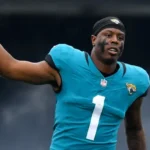
For the past few seasons in Jacksonville, Travis Etienne was more than just the starting running back. He was one of the players who made the Jaguars offense go. Now he is gone.
Etienne reportedly signed a four year, 52 million dollar deal with the New Orleans Saints, and while the move was not exactly shocking, it still leaves a big question mark in Jacksonville’s backfield.
The Jaguars may have had financial reasons for letting him walk, but there is no denying that losing a player like Etienne changes the look of this offense.
Players with his skill set are not easy to replace. Since being drafted in the first round, Etienne developed into one of the more exciting offensive weapons the Jaguars had.
His speed and ability to make defenders miss made him dangerous every time he touched the football. He could break a long run, catch passes out of the backfield, and create big plays that could flip momentum in a game.
Last season under head coach Liam Coen, Etienne rushed for more than 1,100 and continued to be a major part of the passing game as well. That kind of versatility gave Jacksonville something every offense wants. Balance.
When the running game is working, it takes pressure off the quarterback and keeps defenses from teeing off. For Trevor Lawrence, having Etienne in the backfield made life a lot easier. Without him, things get a little more complicated.
The Jaguars will point out that they saw this coming. General manager James Gladstone drafted two running backs in 2025, Bhayshul Tuten and LeQuint Allen, and both showed some promise during their rookie seasons. Tuten especially has the speed and pass catching ability that fits nicely in Coen’s system.
But there is still a big difference between flashing potential and carrying the load for an entire season.
Right now Jacksonville’s running back room is extremely young. Tuten, Allen, and Ja’Quinden Jackson are all entering just their second season in the league.
DeeJay Dallas is the only veteran in the group, and even he is not guaranteed to make the roster.
That means the Jaguars are asking a lot from players who simply have not proven themselves yet, and that’s a huge gamble.
There is also the bigger picture to consider. The Jaguars likely knew they could not match the contract the Saints were willing to give Etienne.
In today’s NFL, teams rarely want to invest big money at running back when they believe they can find production through younger and cheaper players.
From a salary cap standpoint, letting Etienne walk probably makes sense. It gives the Jaguars flexibility to focus on other areas of the roster, including defense, where they still have important decisions to make.
But football is not just about cap space. Etienne was one of the few players on the Jaguars roster who could take a routine play and turn it into something special. When an offense needed a spark, he was often the guy who provided it.
Now that responsibility is going to fall on someone else. Maybe Bhayshul Tuten steps into that role and becomes the next breakout player in Jacksonville. Maybe the Jaguars add another running back in the draft or in free agency to help fill the gap.
But until someone proves they can do what Travis Etienne did for this offense, there is going to be a noticeable hole in the Jaguars backfield. And that makes this offseason decision feel a little risky.
The Jaguars might be betting on the future. The question now is whether that bet pays off.
The Wrong Impact

By: Michael Spiers
TheSouthernSportsEdition.com news services
Here we go again.
For the second straight March, the Atlanta Braves are opening camp with a Jurickson Profar suspension hanging over the franchise.
Only this time it is not 80 games. It is 162. A full season. Gone.
And at this point, it is fair to ask a simple question: what exactly did the Braves buy?
When Atlanta signed Profar to a three year, 42 million dollar deal after his career year in San Diego, it felt like a savvy move.
He had just hit .280 with 24 home runs, 85 runs batted in, an All Star nod and a Silver Slugger. The Braves needed another professional bat to lengthen the lineup behind Ronald Acuna Jr., Matt Olson and Austin Riley.
Profar looked like a veteran piece who had finally figured it out. Instead, what Atlanta has received is chaos.
Last season, four games in, Profar was suspended 80 games for testing positive for human chorionic gonadotropin. He returned midseason, hit .245 with 14 home runs, and the Braves tried to turn the page.
They publicly expressed disappointment but support. They hoped he would learn from it. Now this.
A second positive test. A full year ban. Fifteen million dollars forfeited. Ineligible for the postseason. Ineligible for the World Baseball Classic. And perhaps most damaging, ineligible for trust.
Major League Baseball increased penalties for repeat offenders in 2014. Since then, only six players have received a 162 game suspension, and now Profar joins that list. That is not company any organization wants to keep.
And this is not just about numbers on a stat sheet. This is about credibility in the clubhouse.
Whit Merrifield, who finished his career in Atlanta just months ago, posted a pointed question on social media: what other profession can you get caught cheating to gain an unfair advantage on your peers and still keep your job?
That sentiment is likely not isolated. I believe ballplayers understand slumps. They understand injuries. They understand bad luck. What they do not tolerate easily is a teammate cutting corners and putting the team in jeopardy. Especially twice.
From a purely baseball perspective, the Braves can try to spin this as manageable. They have some depth.
Sean Murphy’s return could allow Drake Baldwin to spend more time as a hitter. The lineup still features Acuna, Olson, Riley, Ozzie Albies and Michael Harris II. Mike Yastrzemski was brought in to help.
But that misses the larger point. The Braves are not simply replacing a designated hitter. They are replacing stability.
This franchise entered the offseason trying to rebound from a 76 and 86 win season.
Injuries to Spencer Schwellenbach and Hurston Waldrep have already thinned the pitching depth. Questions linger around Spencer Strider’s velocity. And now, before Opening Day, another major storyline overshadows everything.
Profar was supposed to be a bounce back story. Instead, he is a cautionary tale.
It is also fair to wonder about the 2024 breakout that earned him the contract in the first place. Fair or not, suspicion will follow. That is the cost of multiple violations.
Financially, the Braves save the 15 million dollars he forfeits this season. But they cannot recoup the lost momentum, the distraction, or the erosion of trust.
And practically speaking, his time in Atlanta feels finished. Even if an appeal reduces the penalty, how does the organization sell that return to its fan base? How does the clubhouse welcome it?
The Braves have built a culture over the past decade around professionalism and internal development. This situation cuts directly against that identity.
Championship windows do not stay open forever. They require talent, health and trust. Right now, Atlanta is battling injuries, facing roster uncertainty, and dealing with a self-inflicted wound that never needed to happen.
Jurickson Profar was supposed to help extend the Braves’ contention window.
Instead, twice now, he has helped shrink it.
BravesVision

By: Michael Spiers
TheSouthernSportsEdition.com news services
For years Braves fans have lived in a state of television uncertainty.
Regional sports network disputes. Blackouts. Cable providers dropping channels days before Opening Day. Streaming confusion layered on top of it all.
Watching the team was sometimes harder than watching the bullpen hold a one run lead in September.
So, when the Atlanta Braves announced the launch of BravesVision, a team owned and operated broadcast platform that will serve as the official local television home beginning in 2026, it felt like something significant. It felt like control was coming home.
On the surface BravesVision checks nearly every box fans have been asking for.
The organization will oversee production, sales, marketing, and distribution of more than 140 regular season games. In-market fans will have access without local blackouts through Braves.TV.
Cable, satellite, and streaming providers will be able to carry the network through direct agreements with the club.
A select number of games will even be available over the air at no cost across the Southeast through Gray Media stations. That last point matters.
Free television still has value. It keeps the sport accessible to casual viewers, families, and young fans who may not be ready to navigate subscription platforms. The Braves appear to understand that.
There is also something emotionally resonant about this move. Generations of Braves fans just like me grew up watching games on a network closely tied to the club. The broadcast was not just distribution. It was identity.
By bringing television operations in house, the Braves are reclaiming that narrative space. They control how the team is presented, how stories are told, and how the brand evolves across digital platforms. In a fragmented media landscape, that kind of control is powerful.
But optimism has to meet reality at the price point. The Braves have not yet announced subscription cost.
Industry comparisons suggest a likely range around twenty dollars per month or somewhere between one hundred and one hundred fifty dollars for a full season package.
That may not sound unreasonable to diehard fans who watch nearly every game. Over six months of baseball, that cost can feel justified.
The challenge lies with everyone else. Modern sports fans already juggle multiple subscriptions. Cable or streaming television packages. National MLB streaming services. ESPN and other sports platforms.
Adding another recurring fee risks pushing casual viewers away rather than drawing them in. Convenience loses its shine if it arrives with another invoice.
Distribution will also be critical. If BravesVision is widely available through major providers without forcing fans into expensive add on tiers, it will feel seamless.
If it becomes another premium channel that requires an upgrade, frustration will follow quickly.
There is also a broader business question. The collapse of several regional sports networks over the past few years has reduced guaranteed television revenue for many clubs.
Some teams that transitioned to league produced broadcasts have reportedly seen revenue cut nearly in half compared to prior deals.
The Braves are choosing a different path by managing the operation themselves. That decision carries both risk and opportunity. Success will depend not just on subscriptions but on advertising, sponsorship, and overall audience reach.
In the end, BravesVision represents something admirable. It is a proactive solution rather than a reactive one. It removes blackout barriers. It simplifies access. It restores storytelling control to the organization.
Whether it is worth the price will come down to execution. If the Braves deliver broad access at a reasonable cost, this could become a model for other franchises navigating the post cable sports world.
If pricing creeps too high or distribution becomes fragmented, it may feel like trading one complicated system for another. For now, fans have reason to be cautiously optimistic. The intent is strong. The structure is promising.
The next step is making sure BravesVision serves not just the organization’s bottom line but the families across Braves Country who simply want to turn on a game and watch.
Camden’s Wrestling Dynasty

By: Michael Spiers
TheSouthernSportsEdition.com news services
Wrestling supremacy in Georgia continues to run straight through Camden County.
Over one unforgettable season, the Wildcats not only defended their long-standing boys dynasty but also watched their young girls program rise to the top, delivering a historic sweep of state championships and proving that Camden wrestling is stronger than ever.
For the first time, Camden County hosted a Georgia High School Association state championship event, bringing the Class 6A duals to Kingsland.
The tournament was held January 16th through the 18th, and the opportunity marked a milestone for a program that has spent years traveling across the state in pursuit of titles.
Head coach Jess Wilder called the moment a victory for the entire community, crediting school leaders and local support for helping secure the bid.
The Wildcats entered the tournament as defending champions and wasted no time showing why they remain the standard. Camden dismantled North Gwinnett and Archer on the opening day, then crushed Walton in the semifinals.
The stage was set for a fourth consecutive title showdown with powerhouse Buford, a program that has become Camden’s chief rival in recent years.
Backed by a thunderous home crowd, the Wildcats delivered a statement performance in the finals, rolling to a 55 to 16 victory. Camden never trailed.
Caleb Gaskin opened the match with a pin, Ryder Wilder followed with a technical fall, and Clayton Newton added a 17-second pin that sent the gym into a frenzy.
When Hunter Prosen secured another fall to push the lead to 40 to 13, the championship was effectively sealed.
The win marked Camden’s twelfth straight GHSA duals state title and the thirteenth overall, an extraordinary run that spans nearly a decade.
Nineteen different wrestlers earned victories during the tournament, a testament to the program’s depth. Wilder praised that balance, saying dual championships require contributions from every weight class.
While the boys continued their dynasty, the Camden County girls were busy making history of their own.
In only their second year as a program, the Lady Wildcats captured the Division I state duals championship in Carrollton, defeating Campbell, Shiloh, and defending champion Greenbrier in dominant fashion.
Along the way, Camden piled up 24 pinfalls and announced itself as a new force in Georgia wrestling.
Head coach Abe Fernandez said the title reflected the commitment of a group determined to build something special.
Shamise Vila, Peyton Rego, Kyrie-Jade Atkinson, Delaney Spencer, and Serenity Small each went undefeated on the day, while Breanna Higgins, Anneliese Rutherford, Lena Kettering, Trinity Kussmaul, and Gabby Daniels delivered multiple victories.
In the championship match against Greenbrier, Camden recorded six pins in less than two minutes each, including a lightning-fast 31-second fall from Kussmaul.
The girls had earned their state berth earlier in Kingsland with a win over Jackson County, then carried that momentum through the eight-team bracket.
Fernandez emphasized that the program’s focus remains growth and teamwork, but the results already speak loudly.
A state banner now hangs beside those of the boys, signaling that Camden’s wrestling culture is still expanding rather than fading.
From hosting the first GHSA state event in county history to adding two more trophies to an overflowing collection, the season represented a defining chapter.
The boys reinforced their place as Georgia’s gold standard, while the girls proved the future is just as bright.
Together, they delivered a message heard across the state: in Camden County, wrestling excellence is not just a tradition, it is a way of life.
What’s Next For Jaguars?

By: Michael Spiers
TheSouthernSportsEdition.com news services
The Jacksonville Jaguars ended their 2025 season with heartbreak, but also with something that felt unfamiliar after years of turbulence: real optimism.
A 27–24 Wild Card loss to the Buffalo Bills closed the book on a 13–5 campaign that saw Jacksonville win the AFC South and return to the postseason.
For a franchise that finished 4–13 just a year earlier, the turnaround under head coach Liam Coen was nothing short of dramatic.
The Jaguars went from organizational reset to division champion in one offseason, and the foundation now looks sturdier than it has in years.
Jacksonville’s renaissance began with sweeping changes at the top.
After the disappointing 2024 season, the Jaguars parted ways with head coach Doug Pederson and general manager Trent Baalke, ushering in a new era led by Coen and general manager James Gladstone.
Rather than chase splashy free-agent headlines, the new leadership group focused on targeted additions, internal development, and building a roster that fit Coen’s vision on both sides of the ball.
The results were immediate. Jacksonville opened the season with statement wins over Carolina, Houston, and San Francisco, establishing itself as a legitimate contender early.
Trevor Lawrence delivered the best year of his career, posting his highest QBR while operating in an offense that finally maximized his strengths. Injuries and off-field distractions, including ongoing “stadium of the future” planning, could not derail the Jaguars’ momentum.
By season’s end, Jacksonville had claimed the division and a playoff berth, signaling that the rebuild had arrived ahead of schedule.
The playoff loss to Buffalo stung, but it did little to dampen the sense that Jacksonville is trending in the right direction.
While the Jaguars face tough free-agency decisions, they appear to be on the right track on both sides of the ball, as well as off the field.
In a division where Houston, Indianapolis, and Tennessee each face their own questions, Jacksonville’s trajectory stands out.
Still, Year 2 of the Coen era may prove even more challenging than Year 1.
The Jaguars enter the offseason roughly $21 million over the salary cap, limiting their ability to shop for premium talent.
Several key contributors face uncertain futures, including linebacker Devin Lloyd, cornerback Montaric Brown, and running back Travis Etienne.
Lloyd, coming off a breakout season, is poised to command top-market money, while Etienne and Brown will test Jacksonville’s ability to balance financial realities with roster continuity.
Defensive tackle, cornerback depth, and pass rush remain priorities, meaning the draft will likely play a central role in shaping the 2026 roster.
One of the most encouraging developments of the offseason so far is stability on the coaching staff.
Offensive coordinator Grant Udinski, one of the youngest and most highly regarded play callers in the league, drew head coaching interest from Buffalo and Cleveland.
Ultimately, the Bills hired Joe Brady, allowing Jacksonville to retain Udinski with a pay raise and continued influence over Lawrence’s development.
Udinski’s reputation as a rising offensive mind, often compared to Sean McVay’s early career path, underscores the growing respect Jacksonville has earned across the NFL.
Head coach Liam Coen has long praised Udinski as an elite communicator and a coach with no ego, a rare combination that has helped shape Jacksonville’s offensive identity.
Keeping that continuity could be as important as any player signing, especially as the Jaguars prepare for Travis Hunter’s expected two-way role in 2026.
For Jacksonville, the mission now is clear. The Jaguars must transition from surprise contender to sustained contender.
That means navigating a tight salary cap, making difficult roster decisions, and continuing to build through the draft while maintaining the culture Coen and Gladstone have established.
The 2025 season ended short of a Super Bowl run, but it reintroduced Jacksonville to the NFL’s upper tier.
The Jaguars are no longer a rebuilding afterthought. They are a team with a quarterback in his prime, a coaching staff in demand, and a front office that appears to have a long-term plan.
The hard part now is staying there.
The Welcome Wagon

By: Michael Spiers
TheSouthernSportsEdition.com news services
Camden County High School recently officially welcomed Tucker Pruitt as the new head football coach during an introductory ceremony that highlighted his vision for the Wildcats program, his extensive coaching background, and his commitment to developing student-athletes on and off the field.
Pruitt opened by thanking Superintendent Dr. Green, Principal Dr. Phillips, and Athletic Director Welton Coffey, noting the extensive behind-the-scenes work that goes into a major coaching hire.
He emphasized the importance of strong administration in building successful athletic programs and said he had been impressed with the organization and resources already in place at Camden.
After just a week on campus, Pruitt said he had already spent time in the weight room and meeting with coaches, praising both the structure of the program and the large number of athletes participating.
The new head coach acknowledged that leaving Appling County was difficult but said the opportunity to lead Camden County was one he could not pass up.
He described the position as one of the premier jobs in high school football and said it was an easy decision for him and his family, even after a recent move.
Pruitt also noted the challenges ahead, calling Region 1 one of the toughest regions in the country and comparing it to the SEC in terms of competition, resources, and coaching quality.
Rather than being intimidated, he said he is excited to embrace that challenge.
Pruitt outlined three core pillars that will define the Wildcats moving forward: discipline, accountability, and toughness.
He explained that discipline is about how the team approaches every detail, from weightlifting to practice, and that winning often comes down to avoiding mistakes.
Accountability will be reinforced through a team-based scoring system that tracks attendance, effort, discipline, and academics, with points awarded for grades and performance and deducted for missed workouts or disciplinary issues. Pruitt said this system will help him evaluate trust and commitment among players and instill championship-level standards.
Toughness, he said, remains central to football. Pruitt stressed both physical and mental toughness, emphasizing preparation for adversity and the importance of responding to setbacks during games.
He said Camden will strive to play a physical brand of football on both offense and defense, focusing on fundamentals, aggression, and consistent effort.
His goal is for opponents to feel the cumulative impact of that physicality over four quarters and recognize Camden as a program that plays hard and with purpose.
During a question-and-answer session, Pruitt detailed his coaching background, which began as the son of a high school coach and included playing at Valdosta State University on national championship teams.
His coaching career has included stops at Georgia Southern, Valdosta High School, Thompson High School, Coffee County, Lowndes, and Valdosta, where he won a state championship as offensive coordinator.
He served eight seasons as head coach at Fitzgerald, reaching the state semifinals or better six times, including a state championship, before leading Appling County to an 8-4 season and a region title in 2025.
Pruitt also discussed the Wildcats’ upcoming schedule, which includes non-region games against Brunswick, Glynn Academy, Benedictine, Ed White, Godby, and West Volusia, followed by region matchups with Lowndes, Richmond Hill, Valdosta, and Colquitt County.
He noted that scheduling has become increasingly competitive and that Camden is prepared to face top-level opponents.
When asked about defensive philosophy, Pruitt said his approach will be balanced and multiple, focused on stopping the run, limiting explosive plays, creating turnovers, and adapting weekly to opponents. He emphasized fundamentals over scheme and the importance of pressure and coverage working together.
Pruitt closed by expressing excitement about joining the Camden County community and building relationships with players, faculty, and fans.
He said his ultimate goal is to develop young men for life beyond football while producing a program the community can be proud of on Friday nights.
Crownless SEC

By: Michael Spiers
TheSouthernSportsEdition.com news services
For those of us who grew up believing the SEC was not just a conference but a force of nature, the last couple of seasons have felt… unsettling.
Not catastrophic. Not embarrassing. But different.
And when you love the SEC the way some of us love it, when you’ve measured fall Saturdays by kickoff times in Athens and lived and died with the Georgia Bulldogs, “different” can feel like an existential threat.
Let’s start with the uncomfortable evidence.
Two straight national champions from the Big Ten, and possibly a third after next Monday. And now, two straight title games without an SEC logo anywhere near the field.
Alabama got pushed around by Indiana in a way that would have been unthinkable a decade ago.
Bowl season numbers that don’t lie, even if we try to explain them away. Middle-of-the-pack SEC teams losing to middle-of-the-pack Big Ten and ACC teams.
That mystique Curt Cignetti dismissed before his team throttled Alabama? It wasn’t disrespect. It was reality.
And yet, if you’re asking whether the SEC is still the king of college football, the honest answer depends on how you define “king.”
If king means untouchable, inevitable, and hoisting the trophy every January like it’s preordained, then no. That era is over. Probably forever. The sport has changed too much for that kind of monopoly to exist again.
NIL, the transfer portal, revenue sharing, and an expanded playoff have done what no conference alignment or coaching carousel ever could. They’ve redistributed power.
The SEC once thrived on accumulation. Georgia, Alabama, LSU, Florida. They stacked recruiting classes so deep that second strings looked like NFL practice squads.
Kirby Smart’s two-deep defenses during Georgia’s championship run were absurd. Alabama once had four future first-round receivers on the same roster. That’s not happening again.
The four-star kid who used to wait his turn now leaves. The backup guard wants to start. The third receiver wants targets and NIL money. Depth evaporates.
That doesn’t mean the SEC is weaker. It means everyone else is stronger.
And this is where the conversation often loses nuance. The SEC hasn’t fallen. The sport has flattened.
When Illinois flips a running back from Alabama, when Indiana doesn’t flinch at the sight of crimson helmets, when Oregon, Ohio State, Michigan, and Penn State can all realistically believe they belong, that’s not an indictment of the SEC. It’s a reflection of a new ecosystem.
From a Georgia fan’s perspective, this is both frustrating and fascinating.
Frustrating because dominance was comforting. You knew that if the Bulldogs didn’t win it all, someone from “our side” probably would. Fascinating because now, winning actually means something again.
The margin for error is gone. The invincibility is gone. And the sport feels alive in a way it hadn’t for years.
The SEC is still loaded. The league still produces NFL talent at an absurd rate. It still commands the biggest TV audiences, the loudest stadiums, and the deepest emotional investment. Walk into a bar in Athens, Tuscaloosa, Baton Rouge, or Knoxville on a fall Saturday and tell me this league has lost its soul. It hasn’t.
What it has lost is its insulation.
Georgia still recruits at an elite level. Alabama still signs blue chips. Texas has arrived with resources to match anyone. LSU reloads every year. Ole Miss can still win it all. But none of them can hoard talent anymore. None of them can sleepwalk through November. None of them can assume January belongs to them.
And maybe that’s the real test of kingship.
Because the SEC isn’t being dethroned by one rival or one conference. It’s being challenged by parity. By accessibility. By a sport that no longer allows any region to lock the door behind it.
As someone who bleeds red and black, who still believes Georgia under Kirby Smart is capable of winning it all in any given year, I don’t see this as the end of SEC supremacy. I see it as the end of SEC entitlement.
The crown isn’t gone. It’s just heavier now.
And the truth is, if the SEC really is what we’ve always claimed it to be, then it will adapt.
It will evolve. It will win again. Just not automatically. Not easily. Not without earning it.
Which might be the most SEC thing of all.
Camden’s Homerun Hire

By: Michael Spiers
TheSouthernSportsEdition.com news services
After a month of unexpected change and uncertainty, Camden County believes it has found stability and direction in its football program with the hiring of Tucker Pruitt as the Wildcats’ new head coach.
Pruitt, one of the most successful coaches in South Georgia over the past decade, arrives in Kingsland following time as head coach at Appling County High School.
His hiring comes just weeks after Camden County was forced back into the coaching market following the sudden resignation of Jon Lindsey, who stepped down due to personal, unforeseen reasons shortly after being introduced as the program’s head coach.
Now, the Wildcats turn to a coach with a résumé defined by consistency, championships, and long-term program building.
Pruitt brings an 82–27 career record, including 60 wins since 2020, a total tied for the most among South Georgia coaches during that span.
He spent eight seasons at Fitzgerald High School, where he transformed an already proud program into a perennial state title contender.
Under his leadership, Fitzgerald reached five consecutive GHSA Class 2A semifinals, won the 2021 state championship, and finished as state runner-up in both 2020 and 2022.
The title was Fitzgerald’s first since 1948, cementing Pruitt’s reputation as a coach capable of pushing programs to historic heights.
Before taking over at Fitzgerald, Pruitt served as offensive coordinator at Valdosta and Lowndes, two of Georgia’s most storied programs, and also coached under his father, longtime head coach Robby Pruitt, at Coffee.
That background has shaped Pruitt into a coach known for offensive flexibility, attention to detail, and a deep understanding of how to sustain success over time.
Pruitt spent the 2025 season at Appling County, stepping into a difficult situation after the program was forced to forfeit 10 wins due to a GHSA ruling involving an ineligible player.
Despite the challenge, Appling County responded by finishing strong, clinching a region championship and reestablishing competitive footing.
Pruitt used the season to install new schemes, revamp strength and conditioning, and build a culture centered on accountability and toughness.
That experience may prove valuable at Camden County, which has now seen multiple head coaching changes in recent years. The Wildcats have remained competitive, but continuity at the top has been elusive.
Pruitt’s hiring signals an effort by the school system to stabilize the program with a coach who has demonstrated the ability to build and sustain winning cultures.
Like Lindsey before him, Pruitt is stepping into a community where football carries enormous expectations.
Unlike recent hires, however, Pruitt arrives with a lengthy track record as a head coach who has navigated adversity, rebuilt rosters, and maintained success across multiple seasons.
At Appling County, Pruitt often spoke about failure as a teaching tool and growth as a process. His teams were known for adjusting, improving, and peaking late in the season.
That philosophy aligns with a Camden County program that expects physical football, discipline, and steady development rather than quick fixes.
Camden County officials have not yet announced a formal introductory event, but players, parents, and fans will soon get their first opportunity to hear directly from a coach tasked with guiding the next chapter of Wildcat football.
After a whirlwind stretch that included optimism, surprise, and renewed uncertainty, Camden County believes Tucker Pruitt represents a clear step forward. His arrival brings experience, credibility, and a history of winning to a program searching for long-term stability and a return to championship contention.
For the Wildcats, the reset button has been pressed once more. This time, the hope is that it leads to something lasting.
Online

Radio/Podcasts