Southern Sports Edition

Running Out Of Jacksonville

By: Michael Spiers

TheSouthernSportsEdition.com news services

For the past few seasons in Jacksonville, Travis Etienne was more than just the starting running back. He was one of the players who made the Jaguars offense go. Now he is gone.

Etienne reportedly signed a four year, 52 million dollar deal with the New Orleans Saints, and while the move was not exactly shocking, it still leaves a big question mark in Jacksonville’s backfield.

The Jaguars may have had financial reasons for letting him walk, but there is no denying that losing a player like Etienne changes the look of this offense.

Players with his skill set are not easy to replace. Since being drafted in the first round, Etienne developed into one of the more exciting offensive weapons the Jaguars had.

His speed and ability to make defenders miss made him dangerous every time he touched the football. He could break a long run, catch passes out of the backfield, and create big plays that could flip momentum in a game.

Last season under head coach Liam Coen, Etienne rushed for more than 1,100 and continued to be a major part of the passing game as well. That kind of versatility gave Jacksonville something every offense wants. Balance.

When the running game is working, it takes pressure off the quarterback and keeps defenses from teeing off. For Trevor Lawrence, having Etienne in the backfield made life a lot easier. Without him, things get a little more complicated.

The Jaguars will point out that they saw this coming. General manager James Gladstone drafted two running backs in 2025, Bhayshul Tuten and LeQuint Allen, and both showed some promise during their rookie seasons. Tuten especially has the speed and pass catching ability that fits nicely in Coen’s system.

But there is still a big difference between flashing potential and carrying the load for an entire season.

Right now Jacksonville’s running back room is extremely young. Tuten, Allen, and Ja’Quinden Jackson are all entering just their second season in the league.

DeeJay Dallas is the only veteran in the group, and even he is not guaranteed to make the roster.

That means the Jaguars are asking a lot from players who simply have not proven themselves yet, and that’s a huge gamble.

There is also the bigger picture to consider. The Jaguars likely knew they could not match the contract the Saints were willing to give Etienne.

In today’s NFL, teams rarely want to invest big money at running back when they believe they can find production through younger and cheaper players.

From a salary cap standpoint, letting Etienne walk probably makes sense. It gives the Jaguars flexibility to focus on other areas of the roster, including defense, where they still have important decisions to make.

But football is not just about cap space. Etienne was one of the few players on the Jaguars roster who could take a routine play and turn it into something special. When an offense needed a spark, he was often the guy who provided it.

Now that responsibility is going to fall on someone else. Maybe Bhayshul Tuten steps into that role and becomes the next breakout player in Jacksonville. Maybe the Jaguars add another running back in the draft or in free agency to help fill the gap.

But until someone proves they can do what Travis Etienne did for this offense, there is going to be a noticeable hole in the Jaguars backfield. And that makes this offseason decision feel a little risky.

The Jaguars might be betting on the future. The question now is whether that bet pays off.


Jason Bishop Show March 6 2026

Jason Bishop Show March 6 2026
/

Play Ball

By: Colin Lacy

TheSouthernSportsEdition.com news services

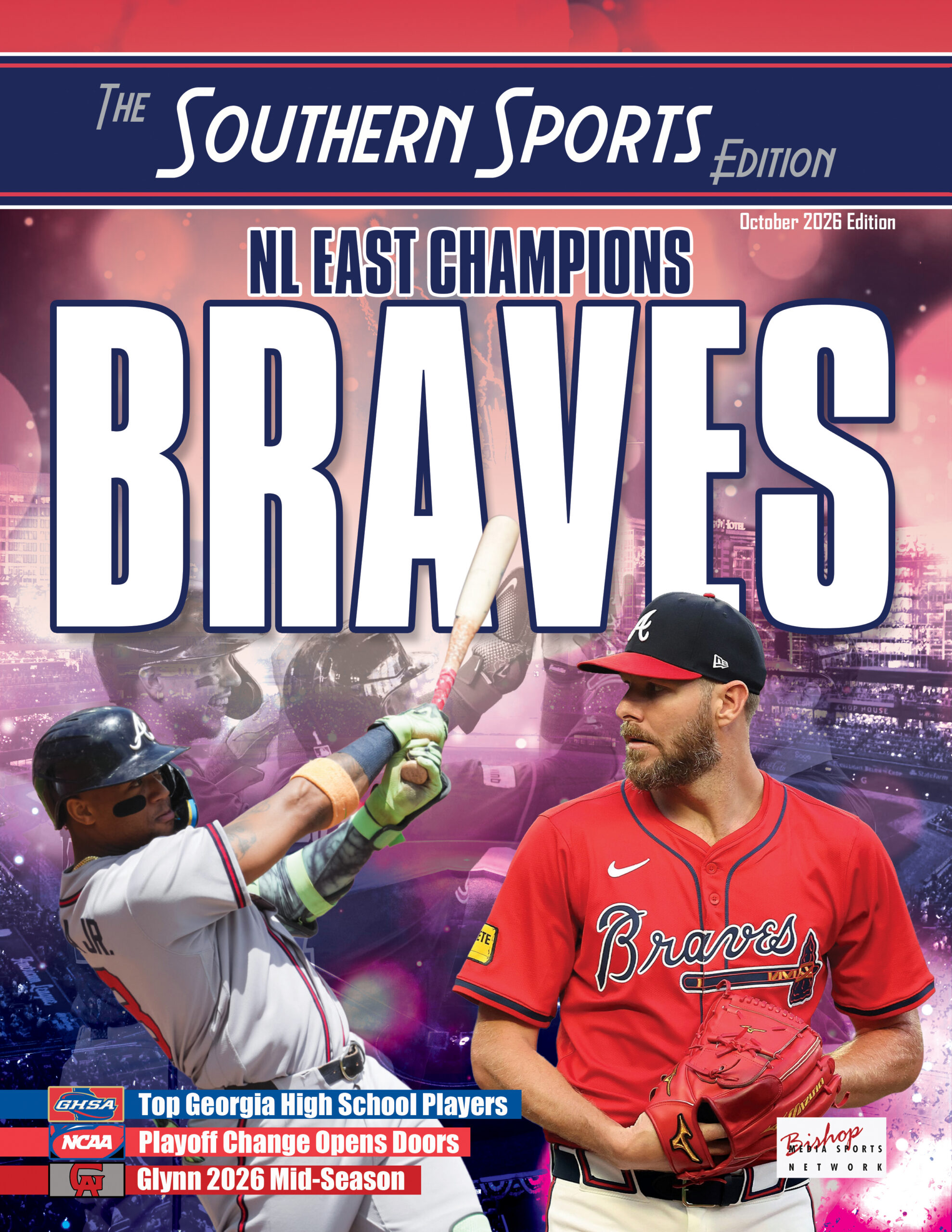
Just barely into March, and it already feels as if the Braves have been put through the ringer with unwelcome news as the organization works through spring training in North Port, Florida.

First it began with newly re-signed shortstop Ha-Seong Kim sustaining a finger injury in January that will keep him sidelined until May.

Soon after flocking to the Grapefruit League, right-handed pitchers Hurston Waldrep and Spencer Schwellenbach went down with injuries that required different arthroscopic surgeries on each. That will have two of the potential five man starting rotation sidelined until at least the summer.

Then as the squad was getting into the swing of things and the calendar turned to March, another bombshell was dropped when Jurickson Profar was popped with performance enhancements for the second consecutive season, and this time (barring an appeal from the MLB Player’s Association) Profar will miss the entirety of the 2026 season.

So, before questions are answered and roles are solidified from camp, Atlanta has lost two starting pitchers and a bat that was expected to be in the top four hitters of the lineup.

After you digest that predicament, I believe that puts the Braves safely as the team that has the most questions to answer going into the 2026 campaign. However, with all of those questions, there are some potential answers within arm’s reach.

After a disappointing season last year, the Braves still have a number of high-level pieces in the mix. It wouldn’t surprise anyone to have three All-Stars in the lineup with Ronald Acuna Jr, Austin Riley, and Drake Baldwin.

In addition, there are a number of players that have severely underachieved recently, and if Atlanta is able to get Ozzie Albies, Michael Harris II, and Matt Olson back to even close to their average career year, the Braves have an impressive lineup.

With that combination of talent and newly signed pieces of Mike Yastrzemski and Mauricio Dubon, the frontline of the Braves offense could be fine (albeit with very little depth coming from the bench).

On the pitching side, while there are many questions floating around the rotation, the firemen coming from the bullpen could be the best collection in baseball. The biggest addition of the offseason is signing Robert Suarez to bolster the back end of the bullpen in a big way.

Suarez has recorded 77 saves in his four-year big-league career including 40 in 2025 with San Diego. The Braves also re-signed Raisel Iglesias to return as the teams closer which puts Suarez in the 8th inning role.

Another bright spot for the Braves has been the early returns that have been spied around North Port with Spencer Strider getting back to normal.

Last season when Strider returned from injury, the velocity and hence the productivity was extremely down.

On the contrary, in spring training shows that Strider’s velo is mostly back (up to 97 already), which is an unbelievably encouraging site for Spencer who expects to slot into the #2 spot in the rotation behind Chris Sale. Reynaldo Lopez and Grant Holmes are expected to be at full force for the season and factor into the rotation in some fashion.

Then comes the last spot (or two) that will be up for grabs. Bryce Elder looks to be the front runner for the vacancy with Joey Wentz and Martin Perez trying to make a push to break camp with the club.

The Braves are an extremely difficult team to get a read on entering the season. On one hand, you could realistically make a case for the Braves winning 100 games and destined for the top of the NL East.

On the other hand, it feels like Atlanta is relying on the best-case scenario from here on out (which doesn’t follow the script for the Braves the past few years).

There is very little wiggle room on any front for this team at the present moment. With the Profar suspension freeing up between $15-18 million, options are dwindling for the beginning of the season for additions.

It feels as if the organization is confident with running the current selection out to open the year, then make moves around the deadline to bolster the club. I just hope they’re in a position for that to be able to make a difference.

The Wrong Impact

By: Michael Spiers

TheSouthernSportsEdition.com news services

Here we go again.

For the second straight March, the Atlanta Braves are opening camp with a Jurickson Profar suspension hanging over the franchise.

Only this time it is not 80 games. It is 162. A full season. Gone.

And at this point, it is fair to ask a simple question: what exactly did the Braves buy?

When Atlanta signed Profar to a three year, 42 million dollar deal after his career year in San Diego, it felt like a savvy move.

He had just hit .280 with 24 home runs, 85 runs batted in, an All Star nod and a Silver Slugger. The Braves needed another professional bat to lengthen the lineup behind Ronald Acuna Jr., Matt Olson and Austin Riley.

Profar looked like a veteran piece who had finally figured it out. Instead, what Atlanta has received is chaos.

Last season, four games in, Profar was suspended 80 games for testing positive for human chorionic gonadotropin. He returned midseason, hit .245 with 14 home runs, and the Braves tried to turn the page.

They publicly expressed disappointment but support. They hoped he would learn from it. Now this.

A second positive test. A full year ban. Fifteen million dollars forfeited. Ineligible for the postseason. Ineligible for the World Baseball Classic. And perhaps most damaging, ineligible for trust.

Major League Baseball increased penalties for repeat offenders in 2014. Since then, only six players have received a 162 game suspension, and now Profar joins that list. That is not company any organization wants to keep.

And this is not just about numbers on a stat sheet. This is about credibility in the clubhouse.

Whit Merrifield, who finished his career in Atlanta just months ago, posted a pointed question on social media: what other profession can you get caught cheating to gain an unfair advantage on your peers and still keep your job?

That sentiment is likely not isolated. I believe ballplayers understand slumps. They understand injuries. They understand bad luck. What they do not tolerate easily is a teammate cutting corners and putting the team in jeopardy. Especially twice.

From a purely baseball perspective, the Braves can try to spin this as manageable. They have some depth.

Sean Murphy’s return could allow Drake Baldwin to spend more time as a hitter. The lineup still features Acuna, Olson, Riley, Ozzie Albies and Michael Harris II. Mike Yastrzemski was brought in to help.

But that misses the larger point. The Braves are not simply replacing a designated hitter. They are replacing stability.

This franchise entered the offseason trying to rebound from a 76 and 86 win season.

Injuries to Spencer Schwellenbach and Hurston Waldrep have already thinned the pitching depth. Questions linger around Spencer Strider’s velocity. And now, before Opening Day, another major storyline overshadows everything.

Profar was supposed to be a bounce back story. Instead, he is a cautionary tale.

It is also fair to wonder about the 2024 breakout that earned him the contract in the first place. Fair or not, suspicion will follow. That is the cost of multiple violations.

Financially, the Braves save the 15 million dollars he forfeits this season. But they cannot recoup the lost momentum, the distraction, or the erosion of trust.

And practically speaking, his time in Atlanta feels finished. Even if an appeal reduces the penalty, how does the organization sell that return to its fan base? How does the clubhouse welcome it?

The Braves have built a culture over the past decade around professionalism and internal development. This situation cuts directly against that identity.

Championship windows do not stay open forever. They require talent, health and trust. Right now, Atlanta is battling injuries, facing roster uncertainty, and dealing with a self-inflicted wound that never needed to happen.

Jurickson Profar was supposed to help extend the Braves’ contention window.

Instead, twice now, he has helped shrink it.

Falcons Failing Offseasons

By: Kenneth Harrison

TheSouthernSportsEdition.com news services

The Atlanta Falcons have made a couple of big personnel decisions before the new league year begins on March 11th.

“The Falcons will release Kirk Cousins before the start of the league year, when his $67.9 million salary would become fully guaranteed under the terms of his reworked contract,” Dan Graziano writes. “Atlanta has to pay Cousins a $10 million roster bonus this year, whether he’s on the team or not, but it does not appear to be interested in bringing back Cousins.”

Atlanta signed Cousins in the 2024 offseason to a four-year, $180 million deal. I’m sure he expected to finish his career in Atlanta.  Shortly after, however, the team drafted Michael Penix Jr. in the first round at No. 8 overall. At that point he never had stability in his position.

Cousins was benched for Penix toward the end of the 2024 season. His play did warrant that move because he was not moving the offense effectively. Then head coach Raheem Morris named Penix the starter heading into 2025 after just three starts, without holding a real quarterback competition during the offseason.

We have to grade the signing of Cousins as an F. Atlanta thought they only needed a quarterback to become a playoff contender, which is why they signed him. He did not lead them to the playoffs and now he’s gone after being there for less than two years.

The Falcons have also placed the franchise tag on tight end Kyle Pitts. General manager Ian Cunningham said it is the “right move” for the organization “right now.”

Per the general manager, the franchise tag is a way to “use the mechanisms provided by the league” — especially considering Cunningham just got to Atlanta, having been hired on Jan. 29 — to allow the team time to fully evaluate what they want for the future of Pitts and the position in Atlanta and how it relates to their roster construction.

“We’re not in the business of letting go really good players,” Cunningham said.

Pitts, who played on his fifth-year option in 2025, is coming off one of his most productive seasons. His yardage total ranked second only to his record-breaking rookie season after being selected No. 4 overall in the 2021 NFL Draft. He had 88 catches, 928 yards and 5 touchdowns last season.

He has been an inconsistent player thus far. He disappears in some games and he’s too talented for that to happen. I do want to point out that having a thousand-yard season is not as impressive as it sounds. In seventeen games getting to one thousand yards means a player averages 58.8 yards per game.

Pitts had 1,026 receiving yards, 68 receptions and 1 touchdown as a rookie. He dealt with injuries in 2022 and only played in ten games. He had 28 catches, 356 yards and 2 touchdowns. In 2023 he had 667 yards and in 2024 he had 602 yards.

As you can see, there’s a reason to be concerned about signing him to a long-term deal. We will have to see if he will have another big season in 2026.

Driving The Wrong Road

By: Robert Craft

TheSouthernSportsEdition.com news services

Two Georgia Bulldogs football players were arrested on driving-related charges recently, per the Athens-Clarke County jail log.

Junior linebacker Chris Cole, who was fourth on the team in tackles last season, was booked on one count of reckless driving and one count of speeding over the maximum limit.

Sophomore edge Darren Ikinnagbon was arrested and charged with three misdemeanors: reckless driving, speeding and following too closely.

It is unclear if the arrests are connected to the same incident. The police report both players were arrested for driving 105 mph on an Athens highway, 40 mph over the speed limit.

Both players were driving 2025 Mercedes SUVs. They were arrested and released at separate times, within an hour of each other. The bonds were $39 for Ikinnagbon and $26 for Cole

While misdemeanor traffic charges typically do not lead to additional jail time, the program’s history with driving arrests could lead to harsher internal punishment for Cole and Ikinnagbon.

There have now been 13 known instances of Georgia Bulldog players being arrested on driving charges since the January 2023 car crash that killed player Devin Willock and staffer Chandler LeCroy.

In recent history, last November reserve offensive lineman Nyjer Daniels was dismissed from the program after being charged with a felony following a traffic arrest.

Last year, receiver Nitro Tuggle and offensive lineman Marques Easley entered the transfer portal shortly after traffic arrests for which they were charged with misdemeanors.

While details of this week’s arrests are not yet public, the players are expected to remain on the team.

Coach Kirby Smart said he has taken different steps to fix the issues, saying two years ago the program would withhold name, image and likeness payments from players who had traffic arrests or even citations. Suspensions and, in some cases, dismissals have also been issued, especially in the last year.

“Each case is a case-by-case basis,” Smart said last November after dismissing Daniels. “And we’ll always evaluate things on a case-by-case basis, based on the student-athlete’s history and the particulars of the case.”

Cole and Ikinnagbon released statements of apology.

“I recognize the seriousness of this matter and the responsibility that comes with representing the University of Georgia and our football program,” Cole wrote. “I understand that there are high standards for how we conduct ourselves, and I take that responsibility very seriously. I deeply regret the impact and negative attention this has caused for my coaches, teammates and family.”

It continues to amaze me how people excuse the behavior just because they’re football players. I’ve spoken to Bulldog fans who state comments like “no one else cares why should we” or “Well it’s just speeding” or “The Athens Police are out of control”.

We call them kids. They are not kids. They are adults. Yes, young people do stupid stuff. I did. We all did. But it does not excuse or even begin to justify their behavior.

I am not saying kick them off the team or drop an atomic bomb. At the same time, we all should face consequences for our actions, and the behavior should not just be blown off because fans care about their football team’s results.

We might need some legal insight from an attorney or paralegal. Are these players getting preferential treatment with fines and the amount of the bond set?

BravesVision

By: Michael Spiers

TheSouthernSportsEdition.com news services

For years Braves fans have lived in a state of television uncertainty.

Regional sports network disputes. Blackouts. Cable providers dropping channels days before Opening Day. Streaming confusion layered on top of it all.

Watching the team was sometimes harder than watching the bullpen hold a one run lead in September.

So, when the Atlanta Braves announced the launch of BravesVision, a team owned and operated broadcast platform that will serve as the official local television home beginning in 2026, it felt like something significant. It felt like control was coming home.

On the surface BravesVision checks nearly every box fans have been asking for.

The organization will oversee production, sales, marketing, and distribution of more than 140 regular season games. In-market fans will have access without local blackouts through Braves.TV.

Cable, satellite, and streaming providers will be able to carry the network through direct agreements with the club.

A select number of games will even be available over the air at no cost across the Southeast through Gray Media stations. That last point matters.

Free television still has value. It keeps the sport accessible to casual viewers, families, and young fans who may not be ready to navigate subscription platforms. The Braves appear to understand that.

There is also something emotionally resonant about this move. Generations of Braves fans just like me grew up watching games on a network closely tied to the club. The broadcast was not just distribution. It was identity.

By bringing television operations in house, the Braves are reclaiming that narrative space. They control how the team is presented, how stories are told, and how the brand evolves across digital platforms. In a fragmented media landscape, that kind of control is powerful.

But optimism has to meet reality at the price point. The Braves have not yet announced subscription cost.

Industry comparisons suggest a likely range around twenty dollars per month or somewhere between one hundred and one hundred fifty dollars for a full season package.

That may not sound unreasonable to diehard fans who watch nearly every game. Over six months of baseball, that cost can feel justified.

The challenge lies with everyone else. Modern sports fans already juggle multiple subscriptions. Cable or streaming television packages. National MLB streaming services. ESPN and other sports platforms.

Adding another recurring fee risks pushing casual viewers away rather than drawing them in. Convenience loses its shine if it arrives with another invoice.

Distribution will also be critical. If BravesVision is widely available through major providers without forcing fans into expensive add on tiers, it will feel seamless.

If it becomes another premium channel that requires an upgrade, frustration will follow quickly.

There is also a broader business question. The collapse of several regional sports networks over the past few years has reduced guaranteed television revenue for many clubs.

Some teams that transitioned to league produced broadcasts have reportedly seen revenue cut nearly in half compared to prior deals.

The Braves are choosing a different path by managing the operation themselves. That decision carries both risk and opportunity. Success will depend not just on subscriptions but on advertising, sponsorship, and overall audience reach.

In the end, BravesVision represents something admirable. It is a proactive solution rather than a reactive one. It removes blackout barriers. It simplifies access. It restores storytelling control to the organization.

Whether it is worth the price will come down to execution. If the Braves deliver broad access at a reasonable cost, this could become a model for other franchises navigating the post cable sports world.

If pricing creeps too high or distribution becomes fragmented, it may feel like trading one complicated system for another. For now, fans have reason to be cautiously optimistic. The intent is strong. The structure is promising.

The next step is making sure BravesVision serves not just the organization’s bottom line but the families across Braves Country who simply want to turn on a game and watch.

Jason Bishop Show February 26 2026

Jason Bishop Show February 26 2026
/

New To North Avenue

By: Kenneth Harrison

TheSouthernSportsEdition.com news services

We are going to take a look at Georgia Tech’s football recruiting for 2026.

The Yellow Jackets have the 29th ranked transfer portal recruiting class. They have a total of 19 commits with 3 four-star players and 16 three-star players.

On the surface that doesn’t sound very impressive. The four schools ranked in front of them are Oregon, USC, Florida State and Florida. By comparison, they are not far off from some major programs.

Four-star junior running back Justice Haynes transfers in from Michigan. Haynes attended Buford (GA) High School and he initially went to Alabama. He transferred to Michigan in December 2024. Last season he rushed for 857 yards, 10 touchdowns and he averaged 7.1 yards per carry. This is a major addition for the offense.

Quarterback Alberto Mendoza (Indiana) has also transferred to Tech. His older brother Fernando won the Heisman Trophy last season and led the Hoosiers to the national championship. If he can play like his brother the Yellow Jackets will have a great season.

Four-star linebacker/edge rusher Noah Carter (Alabama) is also on campus. He was a top-100 player nationally in the 2024 recruiting class. In 2025 he played in 11 games for the Crimson Tide and recorded 9 tackles and a half tackle for loss. He’s 6’4, 242 pounds so he passes the eye test for being a big time LB. Hopefully he can develop into that.

Four-star WR Jaylen Mbakwe (Alabama) can play a few positions. In 2024 he was a DB for Alabama and he had 15 tackles, 1 TFL, 1 interception and 2 pass break ups. He also had two punt returns for a combined 46 yards and a 15-yard kickoff return. He switched to wide receiver before the 2024 bowl game. In 2025 he had three catches for 55 yards and one rush for a four-yard gain.

Wide receiver Isiah Fuhrmann (Elon) played great last season. He had 46 receptions, 907 yards, 9 TD’s and 19.7 yards per catch. He did play for an FCS team but we have seen players from lower divisions excel for Power Four teams.

Some of the other key players in the class include WR Jaiven Plummer (Cal), TE Spencer Mermans (Yale), DL Tim Griffin (Cincinnati), IOL Joseph Ionata (Alabama), Edge Jordan Walker (Rutgers), Edge Taje McCoy (Oklahoma State), DL Vincent Carroll-Jackson (U Conn), CB Jonas Duclona (South Florida), DL Tawfiq Thomas (Colorado), OT Favour Edwin (Auburn), P Alex Bacchetta (Rice), OT Markell Samuel (Oklahoma State),  TE Gavin Harris (New Mexico State) and TE Chris Corbo (Dartmouth).

Tech has 18 outgoing transfers so they did a good job of replacing some of that talent.

The Yellow Jackets are ranked 41st in the 2026 high school recruiting rankings. They add 24 commits with 3 four-star players and 21 three-star players.

Four-star QB Cole Bergeron attended St. Thomas More in Lafayette, Louisiana. He’s 6’4, 215 lbs. and as a senior he passed for 2,346 yards and 27 scores over nine games. He was the No. 12 player in Louisiana and the No. 20 quarterback nationally. He initially committed to Virginia Tech.

Four-star CB Jaedyn Terry attended Manchester High School in Warm Springs, GA. He was ranked as the No. 21 player in the state of GA and he’s a four-sport athlete.

We will see how the new talent will mesh during the spring.

Florida Recruiting

By: Robert Craft

TheSouthernSportsEdition.com news services

While the highlight of Florida’s first offseason under new head coach Jon Sumerall has been the key talent retention, there is no doubt the program’s roster will look much different this season.

Sumrall and the new-look Florida coaching and personnel staff have accepted 30 commitments from transfers over the last month, in addition to 20 high school prospects, and two walk-ons.

Yet, the NCAA’s recent consolidation of its transfer portal windows has left Sumrall wondering if Florida has filled each of its positional needs ahead of the 2026 campaign.

“We don’t have the luxury of that second window now, so that’s a little bit more daunting, because you don’t get a chance —
I’m not going to have any opportunity to watch this team practice and go correct in the second portal,” Sumrall said. “We just have to go watch them practice and try to fix it, or make somebody better or maybe move guys around. That’s a little bit more unnerving.

“I wouldn’t be upset as a first-year head coach if we had the second portal window. I used it to my benefit the last job I was at. I would be okay if they gave us an emergency second portal window.”

Florida has accepted at least one transfer commitment for every position group this offseason, from quarterback to long snapper.

But from Sumrall’s point of view, evaluating the overall quality of the class is not an easy task right now.

Florida took a handful of prospects with proven production, including 12 players with double-digit career starts, such as wide receiver Eric Singleton Jr, edge rusher Emmanuel Oyebadejo, safety DJ Coleman, offensive linemen Harrison Moore and TJ Shanahan Jr,  who each project to earn first-team or significant rotational roles with UF.

On the flip side, transfer pickups like quarterback Aaron Philip, defensive tackle DK Kalyn, tight end Luke Harpring, offensive tackle Eadab Boyer and others — while expected to contribute in 2026 and potentially beyond — have yet to fully prove their worth at the college level, with limited playing experience on their résumés. Florida is, effectively, banking on their potential.

Still, Sumrall expressed appreciation for how Florida’s vast transfer class came together.

Gators’ General Manager Dave Caldwell is spearheading the effort to scout the portal market and narrow the list of quality prospects for Sumrall to evaluate and target.

In High School recruiting, the Gators are behind SEC heavyweights such as Georgia, Texas, Alabama and Oklahoma programs that continue to hoard top-five classes. This sharpens how Florida’s progress should be measured.

Florida’s 2026 haul reflects targeted intention, with a class that features 13 four-star prospects among 20 total commits who cover multiple phases of the game.

Four-star wide receivers Davian Grocery and Justin Williams anchor the class at the top, offering production on the offensive side of the ball.

Key in-state additions such as cornerback C.J. Hester and safety Kaiden Hall reinforce Florida’s ability to compete for premium talent around the Sunshine State on defense.

In the new world of NIL recruiting both high school and transfer portal, the Florida Gators ranked 14th overall combined by on industry ranking. They are projected to be 26th in NIL spending for the 2026 season.

Overall, Sumrall’s first class with limited NIL money looks like a success.